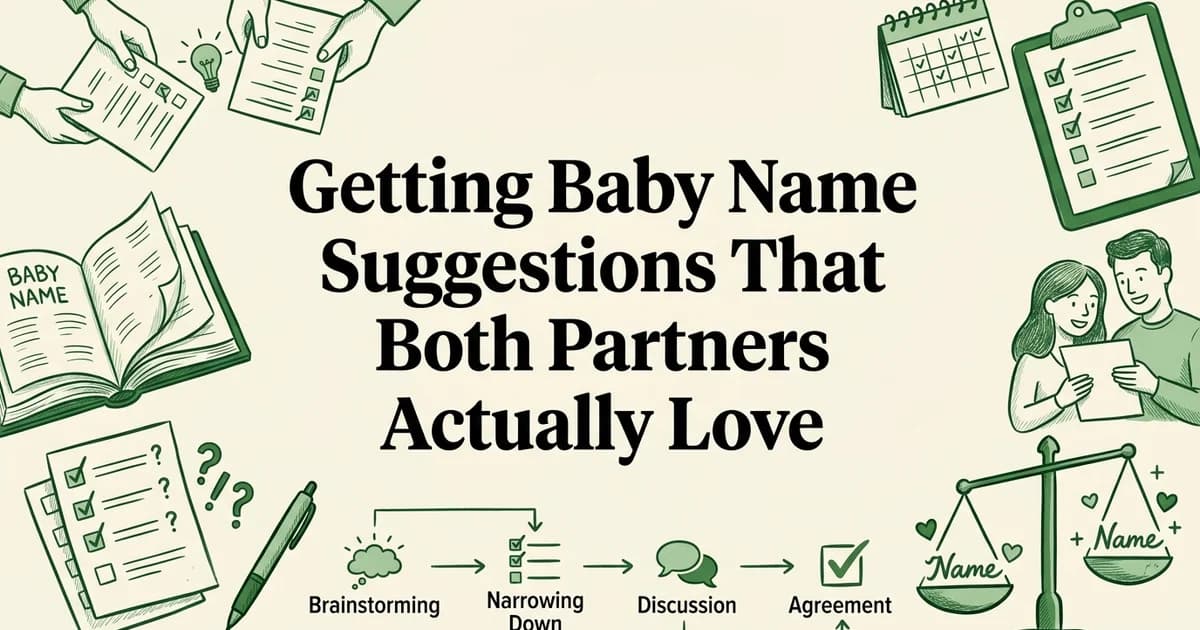
Getting baby name suggestions that both partners actually love
- Both partners ready to engage in collaborative decision-making
- Access to internet for baby name tools and databases
- Willingness to discuss naming priorities and cultural preferences
- Minimum 1-2 hours of uninterrupted time for initial discussion
Introduction: Why choosing baby names together matters
Choosing a baby name is one of the first major decisions you will make as parents, and how you make that decision matters just as much as the name itself. A shared, structured approach to finding baby name suggestions for couples can reduce conflict, prevent decision fatigue, and actually bring you closer together during one of the most meaningful seasons of your relationship.
The emotional weight of naming a child is real. A name carries identity, heritage, and hope. When one partner dominates the process or the conversation stalls into repeated vetoes, it can create unnecessary tension at a time when connection matters most. Approaching the search as a team, with clear steps and the right tools, transforms a potential sticking point into a genuinely bonding experience.
That bonding often starts earlier than you might expect. According to London Mums Magazine, around 60% of parents-to-be give their baby bump a nickname during pregnancy, and 71% of those couples continue using it throughout the child's life. That small, playful act of naming signals something important: couples are already wired to name together, they just need a better framework for the real decision.
At BumpNames, our analysis of how couples navigate the naming process shows that the biggest barrier is not a lack of good names. It is a lack of a shared system. This guide walks you through exactly that, step by step, so both partners finish the process feeling heard, excited, and genuinely happy with the name you choose together.
What you'll need before starting the naming process
Before you dive into lists and debates, gathering the right tools and conditions sets you up for a much smoother process. Having everything in place means fewer distractions, less frustration, and a better chance of reaching a name you both genuinely love.
Here is what to prepare:
- Dedicated time: Block out at least one to two hours of uninterrupted discussion. Trying to squeeze this into a spare ten minutes rarely works. Choose a relaxed evening or weekend slot where neither partner feels rushed.
- A way to track preferences: Keep a notebook or open a shared digital document. Recording names you like, dislike, or feel uncertain about gives you something concrete to return to across multiple sessions.
- A baby name tool or database: Browsing names without structure can feel overwhelming. Modern baby-name tools now emphasize searchable databases and match-style interfaces that make exploration far more focused and enjoyable.
- The BumpNames app: This free tool lets both partners swipe through over 104,000 US baby names independently, then sends an instant notification the moment you both like the same name. It removes the awkwardness of real-time negotiation and turns the process into something genuinely fun. You can learn more about how it works in our guide to using a collaborative baby naming tool.
- A shared understanding of priorities: Before your first session, each partner should loosely consider cultural background, family naming traditions, and any firm preferences or dealbreakers.
Step 1: Identify your naming priorities as a couple
Before you look at a single name, get clear on what each of you actually wants from one. Sit down separately and write out 5 to 10 non-negotiable criteria. This independent step matters: it prevents one partner's enthusiasm from quietly overriding the other's instincts before the conversation has even begun.
Write down your individual priorities separately
Each partner should independently list 5 to 10 non-negotiable criteria for the baby name. Consider factors like cultural significance, sound preferences, length, spelling simplicity, family connections, and any names you want to avoid. Keep these lists private at this stage to avoid influencing each other's honest preferences.
Compare your priority lists and identify overlaps
Sit down together and share your lists. Look for common themes—do you both value cultural heritage? Do you both prefer short names or longer ones? Highlight the priorities you share and note where your preferences diverge. This reveals your true common ground without requiring compromise yet.
Create a unified priority framework
Merge your individual priorities into a single, agreed-upon set of criteria. This becomes your filter for evaluating names in the next step. For example: 'Must work in English and Spanish, no more than 2 syllables, no family names, and must feel modern but timeless.'
What to cover in your individual lists:
- Origin and cultural significance: Does the name need to reflect a specific heritage, language, or tradition? Are there family naming customs on either side that feel important to honour?
- Practical usability: Think about how the name sounds in everyday life. Is it easy to pronounce for people outside your cultural background? Is the spelling intuitive, or will your child spend a lifetime correcting people?
- Nickname potential: Research suggests parents are increasingly focused on long-term usability, including whether a name shortens naturally into something they also like. A full name you love paired with a nickname you dislike is worth flagging early.
- Feel and style: Classic or modern? Common or rare? One syllable or three? These preferences are often instinctive but rarely discussed until conflict arises.
Once you have both written your lists independently, compare them together. Highlight the criteria you share and be honest about where you differ. Document both clearly. Shared values become your filter; individual preferences become your negotiation points.
This is also the moment to acknowledge that compromise is not failure. You are two people with different histories, families, and instincts. The goal, as explored in our guide to the best way to choose a baby name, is not for one person to win but for both of you to feel genuinely good about the final choice.
When you open BumpNames in the next step, these priorities will shape how you each rate names, making your matches far more meaningful than random swipes.
Step 2: Create your initial shortlist using data-driven methods
Build your initial pool of names by filtering a large database against the priorities you identified in step one. Aim for 20 to 30 names at this stage. Too few and you risk tunnel vision; too many and decision fatigue sets in before you have even started comparing.
Use a searchable baby name database filtered by your priorities
Start with a large, curated database of baby names (20,000+ names) and apply your unified criteria as filters. Search by origin, length, popularity trends, meaning, and style. Aim to generate 20 to 30 names that meet your priorities. This data-driven approach removes subjective bias and ensures you're exploring a representative sample.
Review trend data and popularity rankings
Check where each name ranks in current popularity trends. Decide as a couple whether you prefer names that are rising in popularity, stable classics, or rare gems. Understanding trend context helps you anticipate how the name might feel in 5, 10, or 20 years.
Organize your initial list by category
Group your 20-30 names into loose categories (e.g., 'Strong contenders,' 'Interesting but uncertain,' 'Backup options'). This organization makes the next step—gamified matching—easier to navigate and less overwhelming.
Open BumpNames and choose your database tier. The app gives you two starting points: a curated list of the top 1,000 names (500 girls, 500 boys) or the full database of 104,819 US baby names complete with meanings and origins. If you want mainstream options, start with the top 1,000. If you are hunting for something less common, unlock the full database. You should see name cards appear immediately, each displaying origin, meaning, and pronunciation guidance.
Apply your filters before you begin rating. Use the origin and style filters to reflect both partners' cultural backgrounds. If one of you has Irish heritage and the other has Japanese roots, explore both separately. This is important: names from both families deserve equal space on your initial list. Culturally inspired names are increasingly popular, and surfacing them early prevents one partner's background from dominating the process by default.
Test each name out loud as you go. For every name that catches your eye, do the following:
- Say the full name with your surname attached
- Say it as if calling across a playground
- Identify the most obvious nickname and say that too
- Check whether the initials spell anything unintended
This quick verbal audit takes about 30 seconds per name and eliminates surprises later. You can also explore more strategies for building a shortlist together in our guide to finding the perfect baby name together.
Once both partners have independently browsed and flagged their initial selections, you will have the raw material needed for the matching stage coming up next.
Step 3: Use gamified matching to find mutual favorites
Gamified matching lets both partners rate names independently, then surfaces the names you both loved without the pressure of real-time negotiation. This low-friction approach reduces decision fatigue and makes it far easier to build genuine consensus rather than reluctant compromise.
Rate names independently using a swipe-based system
Both partners independently swipe through or rate the 20-30 names on your shortlist. Use a simple scale: 'Love it,' 'Maybe,' or 'No thanks.' The key is that each partner rates independently without seeing the other's responses. This prevents one partner's enthusiasm from influencing the other's honest reaction.
Identify mutual matches and maybes
Once both partners have rated all names, reveal the results. Look for names where you both said 'Love it'—these are your mutual favorites and deserve focused attention. Also note the 'Maybe' names where you both expressed some interest. These mutual matches represent genuine consensus, not compromise.
Set aside names with conflicting ratings
Names where one partner loved it and the other said no should be set aside for now. You'll address these potential conflicts in Step 5. For now, focus your energy on the mutual favorites and maybes, which represent the path of least resistance.
How to run the matching session:
Invite your partner into the same game. In BumpNames, share your unique game code so both of you are rating the same pool of names. Each partner works through the list independently, at their own pace, using the swipe-style interface to mark each name as like, dislike, or maybe.
Rate honestly, not strategically. Resist the urge to second-guess your partner's preferences. The system works best when both of you respond instinctively to each name rather than trying to predict what the other person wants.
Watch for instant matches. BumpNames sends a notification the moment both partners swipe right on the same name. These instant matches are your priority list. Names that generate immediate mutual enthusiasm from both sides deserve to sit at the very top of your shortlist.
Capture your 'maybe' names separately. Any name one partner loved and the other marked as maybe, rather than dislike, still has potential. Note these for the structured discussion coming in the next step.
Identify hard rejections. Names one partner actively disliked can be set aside cleanly, saving significant time and avoiding repeated conversations about names that were never going to work.
What you should see: After both partners complete a session, you will have three clear categories: confirmed mutual favorites, negotiable maybes, and eliminated names. This structure gives your next conversation a focused starting point rather than an overwhelming open list.
Step 4: Narrow down through structured comparison and discussion
With your mutual favorites and maybes identified, the next task is to evaluate them side by side using clear, consistent criteria. Pull your top 5 to 8 shared names into a focused shortlist and assess each one against the priorities you agreed on before you started, whether that was meaning, origin, uniqueness, or ease of pronunciation.

Open the Matches screen in BumpNames to see your confirmed mutual favorites displayed in one place. This removes the mental load of trying to remember which names you both liked and gives you a clean, shared reference point for the conversation ahead.
Work through each name using this structured framework:
Say it aloud with your last name. Rhythm and flow matter more than most couples expect. A name that looks beautiful written down can feel awkward when spoken in full. Test it at a normal conversational pace, not just slowly and deliberately.
Check sibling compatibility. If you already have children, say all the names together as a set. Look for unintentional rhymes, repeated initials, or a jarring shift in style. If you are also navigating twin names, the expert tips for choosing unique names for your twins can help you apply the same side-by-side logic.
Test the name across life stages. Picture it on a school register, a job application, and a teenager introducing themselves to new friends. A name that works at every stage is far more resilient than one that only fits a newborn.
Score each name against your original criteria. Give each shortlisted name a simple rating of one to three against each priority. This turns a subjective conversation into a structured one, reducing the chance of circular disagreement.
Note emotional reactions honestly. If one partner feels genuinely neutral about a name rather than enthusiastic, flag it now. Mild tolerance rarely grows into love once the name becomes permanent.
What you should see: By the end of this step, your shortlist should shrink to two or three names that both partners feel positively about, with clear reasoning behind each remaining contender rather than vague preference.
Step 5: Address common naming conflicts and reach compromise
Even after structured comparison, you may find one or two names where you and your partner simply cannot align. Identify these sticking points clearly: is the conflict about sound, spelling, cultural meaning, or associations? Naming the exact source of disagreement makes it far easier to resolve.
Try the priority trading technique. Offer each partner a defined decision zone: one partner holds final say over the first name, the other chooses the middle name. This approach respects both voices without forcing endless negotiation, and it gives each person genuine ownership over part of your child's identity.
If you still cannot agree, establish shared decision-making criteria to act as a tiebreaker. Rank the following factors together and let the scores guide you:
- Practicality: Is the name easy to spell, pronounce, and use daily?
- Nickname risk: Does it shorten into something neither of you likes? This is one of the most commonly overlooked issues couples face when over-shortlisting names.
- Popularity: Are you comfortable with your child sharing their name with several classmates?
- Family significance: Does the name carry meaningful heritage or honour someone important?
Run a trial period using bump nicknames. Before committing, test your shortlisted names as temporary nicknames for your bump. According to London Mums Magazine, popular bump names like Peanut, Bean, and Berry are widely used precisely because they give parents a low-stakes way to practise the habit of naming. Applying your actual shortlisted names the same way reveals quickly whether a name feels natural or awkward in daily conversation.
Within BumpNames, revisit your matched names list and use the "maybe" category to flag names still under discussion. Seeing them alongside your confirmed matches often brings surprising clarity.
Set a firm decision deadline. Choose a specific date, perhaps your next prenatal appointment, and commit to it. Prolonged indecision rarely produces better outcomes; it usually just increases anxiety for both partners.
What you should see: A clear front-runner or a fair, agreed process for making the final call, with both partners feeling heard rather than overruled.
Step 6: Finalize your choice and validate your decision
Once you have a front-runner, resist the urge to immediately announce it everywhere. Take 48 to 72 hours to sit with the name privately before sharing it widely. Both partners should feel genuinely excited, not just relieved the process is over. Confidence and enthusiasm are your clearest signals that the right choice has been made.
See how BumpNames - Baby Name Matcher App handles baby name suggestions for couples BumpNames - Baby Name Matcher App.
Confirm both partners are truly on board. Ask each other directly: "Does this name feel like our child's name?" A hesitant "I suppose it works" is worth addressing now rather than after the birth certificate is signed.
Test it with a trusted inner circle. Share the name with one or two close friends or family members whose honesty you value. Keep the group small to avoid decision fatigue from too many opinions. Listen for genuine reactions, then weigh that feedback against your own instincts.
Run a practical verification checklist before committing:
- Say the full name aloud, including middle and surname combinations
- Check spelling variations to avoid lifelong correction frustrations
- Research cultural or linguistic meanings in relevant communities
- Consider nickname potential and how the name will grow with your child. Research suggests parents are increasingly prioritising long-term usability over first-name aesthetics alone
In our experience at BumpNames, couples who revisit their matched names list at this stage often find the decision feels more settled. Open your BumpNames match list, review the meanings and origins attached to your top choice, and compare it against your remaining shortlist one final time.
Create a documented backup shortlist. Write down your top three names and the reasoning behind each. If your chosen name feels unexpectedly wrong after the birth, having a pre-approved alternative removes enormous pressure in an already emotional moment.
What you should see: Both partners saying the name aloud with a smile, a completed checklist, and a written record of your decision and the thinking behind it.
Common mistakes to avoid when choosing baby names as a couple
Even couples who approach the naming process thoughtfully can fall into predictable traps. Recognising these pitfalls early saves significant frustration and helps you reach a decision you both feel genuinely confident about.
Mistake 1: Over-shortlisting. Keeping more than 30 names in active consideration creates decision paralysis. The more options you hold onto, the harder it becomes to commit. Trim your list aggressively and early.
Mistake 2: Ignoring pronunciation and spelling complexity. A name you love on paper can become a daily frustration if teachers, doctors, and strangers consistently mispronounce or misspell it. Say it aloud in different contexts before committing.
Mistake 3: Dismissing nickname potential. Consider what the name naturally shortens to. A formal name you love may produce a nickname you dislike, and children rarely escape them. Think long-term usability across childhood, adolescence, and adulthood.
Mistake 4: Making the decision unilaterally. One partner steamrolling the other creates resentment that can linger well beyond the naming process. Both voices must carry equal weight. Tools like BumpNames are specifically designed to prevent this, giving each partner an independent rating experience before revealing shared matches.
Mistake 5: Chasing trends without considering timelessness. A name topping popularity charts today may feel dated in a decade. Balance current appeal against long-term staying power.
Mistake 6: Not testing the full name with your surname. Always say the complete name, including middle name, aloud. Rhythm, initials, and unintended associations only become obvious when you hear the full combination.
Mistake 7: Rushing the decision. Pressure to announce a name quickly leads to choices that feel hollow later. Give yourselves adequate discussion time, and use the pause and resume flexibility built into tools like BumpNames to revisit ratings without pressure.
Why this collaborative naming method works
A structured, gamified approach to baby naming works because it removes the two biggest obstacles couples face: emotional defensiveness and decision fatigue. When both partners follow the same process, with clear criteria established upfront, disagreements become about preferences rather than personalities.

The core insight is simple. When you rate names independently before comparing results, neither partner feels like their suggestions are being rejected by the other. BumpNames uses this principle directly: its Tinder-style interface lets both partners swipe through names privately, then sends an instant match notification only when both select the same name. That moment of mutual discovery creates shared excitement rather than negotiation stress.
Data-driven filtering also plays a crucial role. With access to a database of over 104,000 names, the challenge is never finding options. It is narrowing them down without exhausting each other. A structured rating system does that work automatically, surfacing only the names worth discussing.
Perhaps most importantly, documented reasoning helps both partners feel genuinely heard. When you can point to a mutual match and say "we both chose this independently," the decision carries equal ownership. Research suggests that bonding activities during pregnancy, including something as simple as giving the bump a playful nickname, strengthen the connection between partners and their growing family. A collaborative naming process extends that same spirit into one of pregnancy's most meaningful decisions.
Alternative methods for couples who struggle to agree
When the collaborative framework still leaves couples at an impasse, several practical alternatives can break the deadlock. These methods range from professional guidance to creative compromise, giving you a fallback plan when standard approaches aren't enough.
Hire a professional baby naming consultant. Naming consultants offer structured sessions where they assess both partners' preferences, cultural backgrounds, and naming priorities. Their outside perspective can cut through emotional gridlock and surface options neither partner considered independently.
Use online voting platforms for extended family input. Sharing a shortlist with trusted family members via a poll can reveal which names resonate most broadly. This works best as a tiebreaker rather than a primary decision tool, keeping final authority firmly with you both.
Combine initials or syllables from favourite names. If one partner loves Elara and the other prefers Nora, a blended option like Elnora honours both instincts. This method often produces genuinely unique names with personal meaning built in.
Split the decision by name position. One partner selects the first name, the other chooses the middle name. This clean division eliminates prolonged negotiation and gives each person clear ownership over part of the final choice.
Keep a shared name journal over several weeks. Add names as inspiration strikes, without pressure to decide immediately. Returning to entries with fresh eyes often reveals surprising agreement.
Research suggests that gamified approaches to baby naming are increasingly effective at building consensus with minimal friction. BumpNames applies exactly this principle: its Tinder-style swiping interface lets both partners rate names independently, then sends an instant notification the moment you match. It is free to use and requires no credit card, making it an easy first step before exploring the alternatives above.
Real-world example: How one couple used this framework to find consensus
This case study demonstrates how one couple applied clear priority-setting combined with structured decision-making tools to transform their disagreement into a mutually satisfying consensus. Their experience shows how the framework moves partners from conflict toward decisions both genuinely support.
One couple came to the naming process with very different instincts. Partner A wanted a name rooted in cultural heritage and family history. Partner B prioritized modern names that were easy to spell and carried positive associations. Rather than debating endlessly, they each wrote down their criteria first, then built a shared shortlist of 25 names that reflected both perspectives.
From there, they used BumpNames to work through the list independently. Each partner swiped through their candidates using the app's like, dislike, and maybe ratings, without the pressure of real-time negotiation. When the match notifications came in, six names had earned enthusiasm from both sides.
The final choice honored Partner A's heritage while offering a shorter, contemporary nickname for everyday use. Research suggests parents are increasingly prioritising exactly this kind of flexibility, valuing names that work across different contexts as the child grows.
The key takeaway: structured individual reflection followed by a gamified matching step removed the friction that face-to-face discussion often creates, leaving only genuine shared favorites to choose from.
Time and cost breakdown for the naming process
The full naming process, done thoughtfully, typically takes 5-8 hours spread across 2-4 weeks and costs anywhere from nothing to around $20. Breaking it into distinct phases makes the investment feel manageable rather than overwhelming.
Phase-by-phase estimate:
Initial priority discussion (1-2 hours, free): Define what matters most to each partner before any names enter the conversation.
Shortlist creation and research (2-3 hours, free or low-cost): Use a baby name generator or searchable database to explore options independently. Most tools are free or require only a small one-time payment.
Gamified matching and comparison (1-2 hours, free or $4.99-9.99 for app access): This is where BumpNames fits naturally. Both partners swipe through names at their own pace using the Tinder-style rating interface, and instant match notifications flag every name you both liked, no awkward negotiation required.
Final decision and validation (1 hour, free): Review your matched shortlist together and confirm the winner.
Total investment: 5-8 hours across 2-4 weeks, $0-20 depending on tools chosen.
The time spreads naturally across pregnancy, making each conversation feel low-stakes rather than pressured.
Conclusion: Start your naming journey with confidence
Finding a baby name you both love is genuinely achievable when you approach it as a shared project rather than a negotiation. The six-step framework in this guide, covering priorities, style mapping, list building, conflict resolution, cultural considerations, and final validation, gives every couple a clear path forward regardless of how different your tastes seem right now.
Disagreement is normal. It does not mean you are incompatible or that the process is broken. It means you are two distinct people making one of the most personal decisions of your lives together. Structure turns that tension into progress.
Your action step this week is simple: sit down and complete the priority discussion from step one. That single conversation will reveal more common ground than you expect.
Remember that the naming process itself matters. Every compromise reached and every name laughed over together builds the partnership you will rely on throughout parenthood. The journey is part of the bonding.
When you are ready to move from conversation to action, BumpNames makes the matching stage genuinely enjoyable. The free, gamified interface lets both partners swipe through names independently, then surfaces instant notifications the moment you both say yes to the same name.
When that match notification appears and you look at each other and feel it, you will know. The right name has a way of making itself obvious once both partners are finally on the same page.
Frequently asked questions
How do couples choose a baby name together?
Most couples find success by browsing names independently before comparing notes. This reduces the influence of one partner's enthusiasm on the other's honest reaction, making it easier to identify names you both genuinely love rather than names one person has simply talked the other into.
What is the best way to compromise on a baby name?
Start with a shared shortlist of 10 to 20 names, then take turns eliminating rather than adding. Focusing on what you can both accept, rather than what each person prefers individually, tends to produce faster agreement.
Are there apps that help couples agree on baby names?
Yes. BumpNames lets both partners swipe through over 104,000 names independently and sends an instant match notification when you both like the same name, removing the awkwardness of real-time negotiation.
How many baby names should couples shortlist?
Research suggests 10 to 20 names is a manageable range. Too few limits your options; too many creates decision fatigue.
How do you avoid fighting over baby names?
Set ground rules early: no dismissing names without explanation, and no campaigning aggressively for a single favourite. Treating it as a collaborative search rather than a debate keeps the process positive.
Should you decide on a baby name before birth?
Many couples prefer having one or two firm favourites ready but leaving final confirmation until they meet their baby. Either approach works as long as both partners feel comfortable with the timeline.
Based on our work at BumpNames, couples who approach naming as a shared game rather than a negotiation consistently reach agreement faster and feel more confident in their final choice.
More from Our Blog
Beyond Standard Tools: Reddit Karma Growth Options You Should Know
Compare top Reddit karma growth tools, reputation management platforms, and cleanup services. Find the best alternative for your needs.
Read more →
Getting Started with Turboscribe's Free Transcription Tool
Learn how to transcribe audio to text using Turboscribe's free plan. Step-by-step guide covering setup, uploads, and exporting transcripts.
Read more →
How Publishers Achieved Professional Translation in Days, Not Months
See how one indie author translated their bestselling novel into 12 languages in just 3 weeks using AI-powered book translation, reaching 50K+ new readers.
Read more →