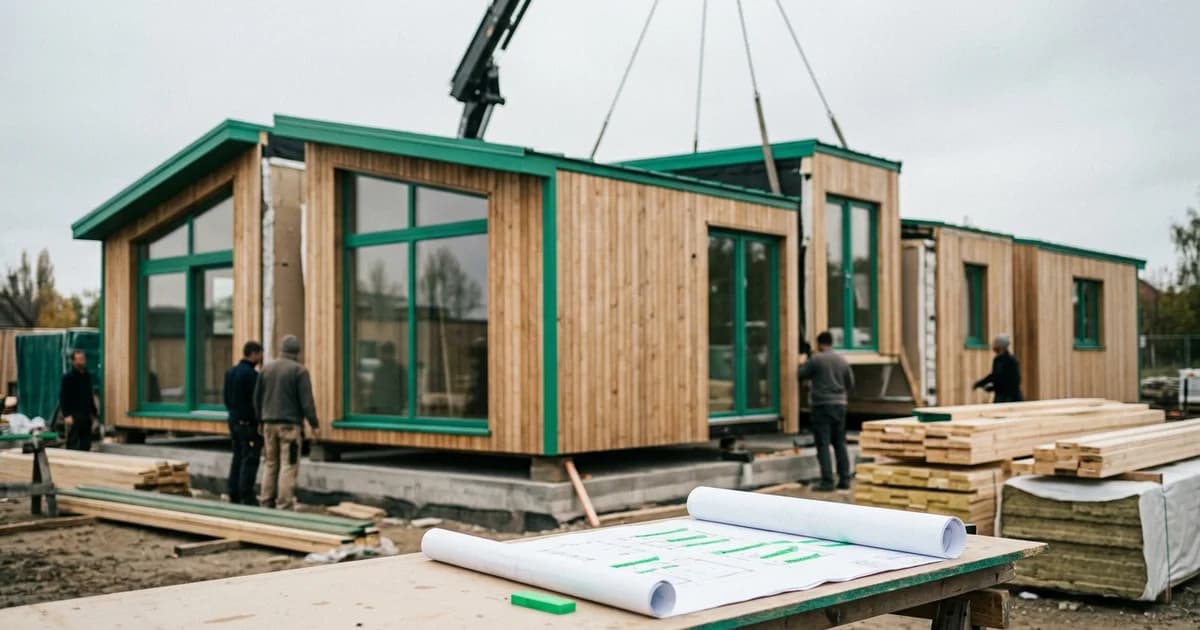
7 Verified Places to Buy Prefab Homes That Actually Deliver
Introduction: why prefab homes are becoming the future of affordable housing
The housing market is shifting fast, and prefab homes are no longer a niche alternative. They are becoming a mainstream solution for buyers who are tired of skyrocketing construction costs, endless delays, and limited inventory. The global modular construction market was valued at USD 153.1 billion in 2024 and is projected to reach USD 227.9 billion by 2030, a trajectory that signals genuine momentum, not just hype.
Consumer interest is following the same curve. Research shows that 55% of recent homebuyers would consider a prefab home to save money or time, and 73% of U.S. adults would consider a tiny home as an affordable housing option. These numbers reflect a real shift in how people think about homeownership.
The appeal is straightforward. Prefab homes can be delivered 20 to 50% faster than traditional construction, they often cost significantly less per square foot, and many manufacturers now prioritize sustainable materials and energy-efficient design. For remote workers, first-time buyers, eco-conscious consumers, and real estate investors alike, the value proposition is hard to ignore.
At Prefab Catalog, our analysis of thousands of home models and manufacturer listings shows that the biggest barrier buyers face is not budget or land. It is access to reliable, transparent information about where to actually buy a prefab home and which sources can be trusted.
That is exactly what this guide addresses. We have reviewed and verified seven of the best places to buy prefab homes, evaluating each on selection depth, manufacturer transparency, pricing clarity, and real-world usability. Whether you are searching for a modular family home, a compact tiny house, or a scalable investment property, this list gives you a clear starting point backed by data, not guesswork.
1. Prefab Catalog: the most comprehensive prefab home directory and smart matching system
Editor's Pick. Prefab Catalog earns the top spot on this list because it solves the single biggest problem facing prefab home buyers: fragmentation. Instead of spending weeks hunting across dozens of manufacturer websites, you can search, filter, and compare thousands of options in one place, with verified information at every step.
Prefab Catalog
Comprehensive searchable database of 3,500+ prefab, modular, and tiny home models from 580+ manufacturers worldwide. Features smart matching system and map-based explorer for location-based filtering.
What Prefab Catalog is
Prefab Catalog is the world's largest searchable directory of prefab, modular, and tiny homes, featuring more than 3,500 models from over 580 manufacturers worldwide. Think of it as the definitive answer to the question of where to buy prefab homes, built specifically for buyers who want clarity without the noise.
The platform addresses a well-documented gap in the market. Curated platforms that vet manufacturers and present verified specifications side by side are rare, and most buyers currently piece together research from scattered sources with no way to confirm accuracy.
Key features
- AI-powered Smart Matching System: Answer a few questions about your budget, location, lifestyle, and size requirements, and the platform returns personalized recommendations ranked by relevance. This cuts research time dramatically for buyers who are not yet sure which home type suits them.
- Map-Based Explorer: Browse manufacturers and available models geographically, which is especially useful for buyers who need to factor in delivery radius, regional building codes, or proximity to a specific plot of land.
- Manufacturer profiles with verified information: Each listing includes detailed specifications, pricing ranges, certifications, and direct contact details. This transparency matters because, as the prefab market grows, so does the risk of encountering unverified sellers.
- Advanced filtering: Narrow results by home type, square footage, price bracket, sustainability certifications, and more.
Pros and cons
Pros: Unmatched selection depth, verified manufacturer data, no middleman costs, global reach, free to use for buyers.
Cons: You will still need to contact manufacturers directly to finalize pricing and customization details.
For buyers who want to understand how real customers rate specific manufacturers before reaching out, the guide on what buyers really ask about prefab home reviews and ratings is a useful companion resource to use alongside the directory.
2. Direct manufacturer websites: buying straight from the source
Buying directly from a manufacturer cuts out the middleman entirely, giving you cleaner pricing, clearer warranty terms, and direct access to customization options. For buyers who already know the style and size of home they want, going straight to the source is often the most efficient path forward.
Direct Manufacturer Websites
Buy straight from the source with cleaner pricing, clearer warranty terms, and direct access to customization options. Requires more coordination responsibility from the buyer.
Key strengths:
- No commission layers: Without a dealer markup, cost savings of up to 20% are possible in high-cost markets, according to industry research
- Custom configurations: Most manufacturers offer direct buyers more flexibility on floor plans, finishes, and structural options than third-party retailers can accommodate
- Warranty clarity: You negotiate terms directly with the party responsible for honoring them, reducing ambiguity
- Faster communication: Design questions, site requirements, and delivery logistics are handled by people who actually build the product
Popular direct-to-consumer brands worth exploring include Clayton Homes, Cavco Industries, and Blu Homes, each of which publishes detailed model specifications and pricing frameworks on their websites. Experts consistently note that the safest way to buy a prefab home is directly from a reputable manufacturer or certified dealer, making credential verification an essential first step.
How to verify a manufacturer before committing:
- Confirm HUD certification or state modular approval documentation
- Check Better Business Bureau ratings and third-party review platforms
- Request references from recent buyers in your region
- Review warranty documentation before signing anything
Potential challenges to plan for:
- Lead times can run 16 to 26 weeks depending on production schedules and customization complexity
- Some manufacturers set minimum order values or restrict sales to specific geographic zones
- Site preparation and foundation work remain your responsibility to coordinate separately
The typical ordering process moves from design consultation to contract signing, permitting support, factory production, and then delivery. Research suggests that 90% of builders cite faster construction as a core benefit of prefab, and buying direct keeps that timeline as tight as possible by eliminating approval layers between you and the factory floor.
3. Prefab home dealers and local representatives: expert guidance and support
Certified dealers and local representatives fill a critical gap in the prefab buying process. Where direct manufacturer purchases put coordination responsibility on you, dealers handle the on-the-ground complexity: site assessments, permit applications, contractor coordination, and installation oversight. For first-time buyers especially, that support is genuinely valuable.
Prefab Home Dealers & Local Representatives
Certified dealers and local representatives provide expert guidance, handle on-the-ground coordination, and offer support throughout the buying and installation process.
What dealers actually do differently
Unlike buying direct, a dealer acts as your local project manager. They visit your land, evaluate soil conditions, assess utility access, and flag zoning issues before you commit to a model. This pre-purchase groundwork can prevent costly surprises during installation.
Industry experts consistently note that the safest prefab purchases happen through certified dealers who understand both the manufacturer's specifications and local building codes. That dual knowledge protects buyers from compliance gaps that can delay or derail a project entirely.
Finding and vetting qualified dealers
- Search manufacturer websites for their official dealer locator tools
- Ask your local building department which prefab dealers operate in your county
- Check whether a dealer carries multiple manufacturer lines or is exclusive to one brand
Before signing anything, ask these questions:
- How many installations have you completed in this county?
- Which permits do you handle, and which remain my responsibility?
- Do you offer in-house financing or work with specific lenders?
- What is your timeline from contract to installation completion?
Red flags worth watching for
- Dealers who cannot provide local installation references
- Vague answers about permit responsibilities
- No formal contract outlining post-installation support
Dealer networks often unlock financing options unavailable through direct manufacturer channels, including construction-to-permanent loans and regional incentive programs. That financing access alone makes the dealer route worth serious consideration for buyers without cash reserves.
4. Online real estate marketplaces: Zillow, Redfin, and Realtor.com prefab listings
Traditional real estate platforms have evolved well beyond stick-built homes. Zillow, Redfin, and Realtor.com now feature prefab, modular, and manufactured home listings alongside conventional properties, giving buyers a familiar interface to begin their search with built-in buyer protections and agent support.
Research suggests that 55% of homebuyers would consider a prefab home, and major platforms have responded by expanding their inventory categories accordingly. Filtering for prefab options varies by site. On Zillow, selecting "Manufactured" under home type surfaces relevant listings. Redfin allows similar filtering, and Realtor.com includes a dedicated manufactured homes category with map-based browsing.
Key advantages of marketplace listings
- Access to licensed real estate agents familiar with modular transactions
- Integration with conventional and FHA mortgage financing
- Verified seller profiles and user review systems
- Side-by-side comparison of listed price, lot size, and location
Where these platforms fall short
The listings themselves often lack the depth prefab buyers genuinely need. Specifications like wall thickness, energy ratings, and foundation requirements are frequently missing. Installation costs, site preparation fees, and utility hookup expenses rarely appear in the listing price, which can create significant budget surprises later. Experts in the prefab industry have consistently pointed to a need for greater transparency around exactly what is and is not included in a listed price.
Verifying seller credibility
- Check agent licensing through your state's real estate commission
- Request the manufacturer's name and model number, then cross-reference independently
- Confirm whether the listing price covers delivery and setup
For buyers who want a far more specification-rich starting point before engaging any agent, Prefab Catalog (https://prefabcatalog.com) offers a searchable directory of 3,500+ models from 580+ verified manufacturers worldwide. Its advanced filtering by location, price, size, and home type addresses exactly the transparency gap that marketplace listings leave open, making it a practical research companion before you ever call an agent.
5. Amazon and global e-commerce platforms: convenience with caution
E-commerce platforms like Amazon and Alibaba have quietly become legitimate channels for purchasing smaller prefab structures, from garden studios and tiny home shells to full ADU kits. The convenience is real, but so are the risks, and understanding both is essential before you add a home to your cart.
The rise of prefab on e-commerce platforms reflects broader consumer demand for transparent pricing and fast fulfillment. Amazon now lists hundreds of prefab cabin kits, steel-frame tiny homes, and modular garden offices, many with verified buyer reviews and competitive price comparison across sellers. Alibaba opens access to international manufacturers, often at significantly lower price points for buyers willing to manage their own shipping logistics.

What you can typically find:
- Tiny home shells and A-frame cabin kits
- Backyard ADU and garden studio structures
- Steel-frame and SIP panel building kits
- Prefab container home components
The critical risks buyers overlook:
Current trends in e-commerce prefab purchases show growing consumer protection concerns, particularly around generic online listings that lack any clarity on permits, installation, or site preparation. What the listing price almost never covers includes foundation work, local permit fees, utility hookups, delivery beyond a curbside drop, and professional assembly. A $15,000 cabin kit can easily become a $60,000 project once those realities land.
Verifying seller legitimacy matters enormously here. Look for sellers with verifiable business addresses, detailed specification sheets, and responsive pre-sale communication. Cross-reference any manufacturer name against a verified directory before committing.
When e-commerce makes sense: Buyers purchasing a garden studio, a secondary structure, or a shell they plan to finish themselves can find genuine value here. For a primary residence, the gaps in support and accountability make it a risky starting point.
Before browsing Amazon or Alibaba, running the same model names through Prefab Catalog (https://prefabcatalog.com) lets you compare verified manufacturer specs against what e-commerce sellers are actually delivering, a useful reality check that takes minutes.
6. Prefab home communities and developer projects: move-in ready neighborhoods
Prefab home communities offer something individual manufacturer purchases rarely can: a fully realized neighborhood with infrastructure, shared amenities, and neighbors already in place. For buyers who want the efficiency of prefab construction without the complexity of developing raw land, these master-planned developments are worth serious consideration.
What makes community buying different
Rather than sourcing a home and a lot separately, developer-backed prefab communities bundle both into a single transaction. Roads, utilities, landscaping, and sometimes shared spaces like parks or community centers are already built or planned. This dramatically simplifies the buying process and reduces the number of contractors and permits a buyer must coordinate independently.
Financing is often smoother too. Developer relationships with lenders mean buyers may access pre-approved loan products tailored specifically to the community, sidestepping the financing friction that standalone prefab purchases sometimes encounter.
Finding communities in your target region
Locating these developments requires more targeted research than browsing a single manufacturer's website. A practical starting point is the Prefab Catalog (https://prefabcatalog.com), which maps 3,500+ prefab and modular home models from 580+ manufacturers worldwide. Its geographic map-based explorer helps buyers identify which manufacturers and developers are active in specific regions, making it easier to discover community projects that might not appear in standard real estate searches.
Many developers now offer virtual tours and model villages, a trend that has accelerated significantly across the modular sector. Research suggests modular construction now accounts for 52% of residential construction revenue in some markets, reflecting genuine industry scale.
Customization and resale considerations
Community standards typically allow limited exterior customization to maintain neighborhood cohesion, but interior finishes often remain flexible. Resale values in established prefab communities have generally tracked conventional neighborhoods, particularly where infrastructure quality is high and amenities are well maintained.
7. Specialty platforms for ADUs and tiny homes: Blokable, Blok, and niche marketplaces
Specialty ADU and tiny home platforms focus exclusively on smaller prefab structures, offering curated inventory, zoning guidance, and financing tools that general directories rarely provide. For buyers interested in backyard studios, rental units, or compact primary residences, these niche marketplaces cut through the noise considerably.
Why ADU-specific platforms matter
The market for accessory dwelling units has expanded sharply as homeowners look for rental income, multigenerational living solutions, and dedicated remote work spaces. Research suggests ADU demand has outpaced general prefab growth in coastal and urban markets, driven partly by zoning reform in states like California, Oregon, and Washington. Specialized platforms understand this regulatory landscape in ways that broad prefab directories simply do not.
Key advantages of ADU-focused platforms include:
- Zoning pre-screening: Many filter inventory by local permit requirements, saving buyers weeks of research
- Permit support: Some platforms connect buyers directly with local expeditors
- Curated size ranges: Inventory typically runs from 200 to 1,200 square feet, purpose-built for secondary structures
- ADU-specific financing: Renovation loans, home equity products, and ADU-dedicated lenders are often listed alongside units
Editor's pick: Prefab Catalog
For buyers who want the broadest possible starting point, Prefab Catalog stands out as the most comprehensive resource available. Its searchable database covers 3,500+ models from 580+ verified manufacturers worldwide, with filtering by size, price, home type, and location. The map-based explorer is particularly useful for identifying manufacturers within delivery range, and direct manufacturer contact removes middleman costs entirely. Whether you are sourcing a 400-square-foot backyard rental unit or comparing tiny home builders across regions, the platform's depth makes initial research genuinely efficient.
Evaluating niche ADU platforms
Prioritize platforms that verify manufacturer credentials, display transparent pricing, and offer documented zoning resources rather than vague guidance. Use cases worth confirming before committing include rental income projections, utility connection requirements, and HOA restrictions specific to your property.
8. Green and sustainable prefab marketplaces: eco-certified homes and net-zero options
Green prefab is no longer a niche category. Manufacturers are accelerating net-zero and energy-efficient offerings at a pace that now rivals conventional prefab production, with solar-ready roofs, high-performance insulation packages, and certified sustainable materials becoming standard talking points across the industry.
See how Prefab Home Directory handles where to buy prefab homes.
What to look for in a sustainable prefab marketplace
Not every platform that uses the word "green" backs it up with verified credentials. When comparing options, prioritize these certifications:
- LEED certification: Recognizes homes meeting rigorous energy, water, and materials standards
- Passive House standard: Focuses on extreme energy efficiency through airtight construction and heat recovery ventilation
- Net-zero ready designation: Confirms the home is built to produce as much energy as it consumes, typically with solar integration
- Energy Star for New Homes: A more accessible benchmark, still meaningful for long-term utility savings
Pricing and incentives
Green prefab homes typically carry a 10 to 20 percent premium over comparable standard models. However, federal tax credits, state rebates, and utility incentives can offset a meaningful portion of that gap. The Inflation Reduction Act expanded residential clean energy credits, making solar-integrated prefab homes significantly more financially attractive than they were even three years ago.
Finding verified green options
In our experience at Prefab Catalog, filtering specifically for energy-efficient and sustainable models across 3,500+ listings reveals a surprisingly wide range of price points. The platform's manufacturer profiles include documented specifications, so you can compare sustainability claims directly rather than relying on marketing language alone. Visiting https://prefabcatalog.com and applying the home-type and feature filters surfaces certified options alongside standard builds for side-by-side evaluation.
Evaluating sustainability claims
Request third-party certification documentation before committing. Manufacturer self-reporting without independent verification is common, and the difference between a "solar-ready roof" and a fully net-zero system represents both significant cost and performance variation.
9. International prefab suppliers and global manufacturers: expanding your options
International sourcing opens a genuinely wider pool of prefab options, particularly for buyers seeking advanced engineering, specific architectural styles, or price points unavailable domestically. Countries including Sweden, Germany, Japan, and Canada have built reputations for precision manufacturing, energy efficiency, and rigorous quality control that often exceed local standards.

The global modular construction market reflects this momentum, with research indicating that roughly 52% of modular construction activity worldwide comes from residential projects. That volume means established international manufacturers have refined their export processes considerably, though navigating import regulations, shipping logistics, and customs documentation still requires careful planning and often a local import agent.
Key considerations before buying internationally
- Quality certifications: Verify that the manufacturer holds certifications recognized in your destination country. European CE marking, Japanese JIS standards, and Canadian CSA certification each carry different implications for local building permit approval.
- Shipping timelines: International orders typically add four to twelve months to delivery schedules, depending on origin country, port availability, and customs clearance.
- Currency risk: Contracts denominated in foreign currencies expose buyers to exchange rate fluctuation. Locking in rates through forward contracts with your bank is worth exploring early.
- Import duties and compliance: Structural components may attract tariffs, and local building codes may require modifications that erode initial cost savings.
When international sourcing makes financial sense
The math works best for buyers purchasing multiple units, developers sourcing at scale, or remote-location projects where domestic supply is genuinely limited.
Prefab Catalog's map-based explorer at https://prefabcatalog.com includes manufacturer profiles from over 580 suppliers worldwide, making it straightforward to filter by country of origin and compare international options against domestic alternatives before committing to the additional complexity of a cross-border purchase.
How to get started: your step-by-step action plan
Turning your prefab home research into a real purchase requires a clear sequence of decisions. Skipping steps, especially early ones around budgeting and verification, is the most common reason buyers end up disappointed. Follow this framework to move from curiosity to keys in hand.
Step 1: Define your needs clearly Before browsing a single model, write down your budget ceiling, desired square footage, preferred location, target move-in date, and any sustainability priorities. This single document will filter out roughly half your options immediately.
Step 2: Research using structured platforms Start your search at Prefab Catalog, where you can filter across 3,500+ models from 580+ verified manufacturers by size, price, location, and home type. Having everything in one place dramatically reduces the time spent chasing dead-end leads.
Step 3: Compare at least 3 to 5 quotes Never accept the first price you receive. Gathering multiple quotes reveals the true market range and gives you negotiating leverage.
Step 4: Verify credentials and check references Request manufacturer ratings, licensing documentation, and real customer references. Transparency about what is actually included in a purchase, from delivery to installation, is a strong signal of a trustworthy supplier.
Step 5: Calculate total costs Factor in land acquisition, site preparation, permits, utility connections, and installation. The base home price is rarely the final number.
Step 6: Secure prefab-friendly financing Some lenders specialize in modular and manufactured home loans. Explore these options before defaulting to a conventional mortgage.
Step 7: Review contracts line by line Confirm warranties, delivery timelines, and what happens if specifications change.
Step 8: Plan your site and installation timeline Coordinate site prep with your manufacturer's production schedule to avoid costly delays.
Bonus tips: insider strategies for finding the best prefab home deals
Beyond following the right process, knowing a few insider strategies can meaningfully reduce what you pay. Research suggests buyers who time purchases strategically and tap into community knowledge can save significantly, with cost savings reaching up to 20% in high-cost markets.
Timing and pricing tactics:
- Shop in the off-season. Manufacturers often run promotions in late fall and winter when order volumes slow down.
- Ask about floor plan overstock. Discontinued or overstocked models frequently carry discounts without sacrificing quality.
- Consider slightly older model years. Last season's designs often perform identically to new releases at a lower price point.
- Negotiate bulk pricing. Developers and investors purchasing multiple units have real leverage, so use it.
Network and financing advantages:
- Leverage builder networks. Established relationships between contractors and manufacturers can unlock pricing unavailable to the general public.
- Combine prefab with owner-builder financing. This approach can reduce borrowing costs considerably.
- Join prefab buyer communities. Online groups share manufacturer reviews, deal alerts, and negotiation tips that save members real money.
Before approaching any manufacturer, use Prefab Catalog to compare verified pricing across 3,500+ models. Knowing the market rate before you negotiate is one of the most powerful advantages you can have.
Common mistakes to avoid when buying prefab homes
Even well-researched buyers can stumble on avoidable errors. Knowing where decisions go wrong helps you protect your budget, timeline, and long-term satisfaction. Here are the most costly mistakes prefab buyers make, and how to sidestep each one.
Ignoring hidden costs. The purchase price is rarely the full story. Site preparation, permits, utility hookups, foundation work, and installation fees can add tens of thousands of dollars to your total. Always request a fully itemized cost breakdown before signing anything.
Buying from unverified sellers. Generic marketplace listings often lack clarity around permits, installation responsibilities, and manufacturer credentials. Without verification, you risk purchasing from intermediaries who cannot support you post-sale.
Skipping zoning research. Prefab and modular homes face varying restrictions depending on your municipality. Confirm local zoning rules, deed restrictions, and HOA policies before committing to any model.
Skipping the pre-payment inspection. Never release final payment without a thorough inspection. Defects caught before delivery are far easier to resolve than those discovered after installation.
Underestimating timelines. Permitting, manufacturing, and site preparation routinely take longer than expected. Build buffer time into your plans.
Comparing purchase price alone. Energy efficiency, maintenance costs, and resale value vary significantly across manufacturers. Compare total cost of ownership, not just sticker price.
Overlooking warranty terms. Manufacturer support quality differs widely. Review what is covered, for how long, and how claims are handled.
Rushing without visiting model homes. Reading specifications is not the same as experiencing a space. Request references and visit showrooms whenever possible before committing.
Tools and resources for prefab home buyers
Armed with the right tools, your prefab home search becomes significantly more focused and efficient. From AI-powered directories to financing calculators, these resources help buyers research, compare, and connect with manufacturers without wasting months on fragmented information.
Editor's Pick: Prefab Catalog (prefabcatalog.com)
Prefab Catalog is the most comprehensive starting point for any serious buyer. Its searchable directory covers 3,500+ home models from 580+ verified manufacturers worldwide, with advanced filtering by location, size, price, and home type.
Key features worth knowing:
- Smart Matching System: AI-powered recommendations based on your budget, lifestyle, and location preferences
- Map-Based Explorer: Browse available manufacturers and models geographically, ideal for buyers with site-specific constraints
- Manufacturer profiles: Verified ratings, direct contact information, and detailed specifications in one place
Beyond Prefab Catalog, consider building your research toolkit with:
- Financing calculators and mortgage pre-approval tools specific to modular construction loans, which differ from traditional mortgages
- Zoning and permit databases searchable by county or municipality, since regulations vary dramatically by location
- Buyer forums and review communities where owners share honest post-move-in experiences
- Sustainability certification databases covering LEED, Passive House, and Energy Star ratings for eco-conscious comparisons
- Shipping and logistics calculators for international orders, particularly relevant for container and flat-pack models
- Quality assurance checklists developed by home inspectors familiar with factory-built construction standards
Conclusion: your path to affordable, fast, and sustainable homeownership
The prefab housing market is no longer a fringe alternative for budget-conscious buyers or off-grid enthusiasts. With the global market valued at USD 153.1 billion in 2024 and projected to reach USD 227.9 billion by 2030, factory-built homes have firmly entered the mainstream. Research indicates that 55% of homebuyers would now consider a prefab option, and project delivery runs 20-50% faster than traditional construction. The numbers reflect a genuine shift in how people think about building and buying homes.
Throughout this guide, you have explored seven verified sources for purchasing prefab homes, each serving a distinct buyer profile. Whether you are drawn to the design flexibility of modular builders, the minimalist appeal of tiny home manufacturers, the sustainability credentials of passive house specialists, or the global reach of flat-pack suppliers, there is a verified pathway that fits your goals.
The smartest starting point for most buyers remains thorough, unbiased research before committing to any manufacturer. Prefab Catalog makes that step significantly easier, giving you access to 3,500+ home models from 580+ verified manufacturers in one searchable directory. Its map-based explorer, smart matching system, and direct manufacturer connections remove the guesswork and the middleman, letting you compare real options at real prices.
Your next steps are straightforward:
- Define your budget, location, and must-have features
- Use a comprehensive directory to shortlist compatible manufacturers
- Request quotes directly and verify credentials independently
- Consult local planning authorities early
Speed, affordability, and sustainability are no longer trade-offs in homeownership. With the right research, they come as a package.
Frequently asked questions
Where can I buy a prefab home near me?
Start with a directory like Prefab Catalog, which includes a map-based explorer filtering 3,500+ models by location. Many manufacturers also list regional dealers on their websites, and local home shows frequently feature prefab builders serving your area.
What is the best website to find prefab homes for sale?
Prefab Catalog is currently the most comprehensive resource, covering 580+ verified manufacturers with detailed specs and direct contact information. It removes the guesswork around where to buy prefab homes by centralizing options that would otherwise require dozens of separate searches.
Can you buy prefab homes on Amazon or other online marketplaces?
Some kit homes and tiny home shells appear on Amazon, but as one industry expert notes, "many of those listings are marketing shells rather than turnkey homes." Permits, delivery, and installation are rarely included, making dedicated prefab platforms significantly safer.
Where do real estate investors buy prefab or modular homes for rentals and ADUs?
Investors typically source directly from modular manufacturers or through directories that filter by unit type, including ADUs and multi-family configurations. Direct manufacturer relationships often unlock volume pricing.
What companies sell affordable prefab homes under $100k?
Several tiny home and panelized kit manufacturers offer models under $100k for the base structure. Prefab Catalog's price filter surfaces these options quickly, though site prep and installation costs should always be factored separately.
Where can I see prefab homes in person before buying?
Many manufacturers maintain model home villages or showrooms. Trade events like the International Builders' Show also feature prefab displays. Manufacturer profiles on Prefab Catalog often list showroom locations.
Can I buy a prefab home directly from the manufacturer or do I need a dealer?
Both routes are available. Buying direct typically saves money, and most reputable manufacturers welcome direct inquiries. Dealers add value mainly when local permitting support or site coordination is needed.
Where is the cheapest place in the U.S. to buy land and put a prefab home?
Rural areas of the Midwest and South, including parts of Arkansas, Mississippi, and Kansas, consistently rank among the most affordable for land acquisition. Zoning rules vary widely, so always verify prefab-friendly regulations locally before purchasing land.
Based on our work at Prefab Catalog, buyers who research manufacturers thoroughly before committing, rather than relying on generic listings, report smoother permitting processes and fewer unexpected costs.
More from Our Blog
Expert Tips for Choosing Unique Names for Your Twins
Expert tips for choosing unique twin names that feel coordinated yet distinct. Data-backed strategies to avoid regret and celebrate each child's identity.
Read more →
Why Your Reddit Posts Get Removed (And What to Do About It)
Learn why Reddit posts and comments get removed, how to access removed content safely, and tools to preserve discussions before they disappear.
Read more →
Audible Free Trial Compared to Premium Audiobook Services
Compare Audible's free trial with AudiobookGen's AI audiobook generator. See pricing, features, and who should choose each option.
Read more →