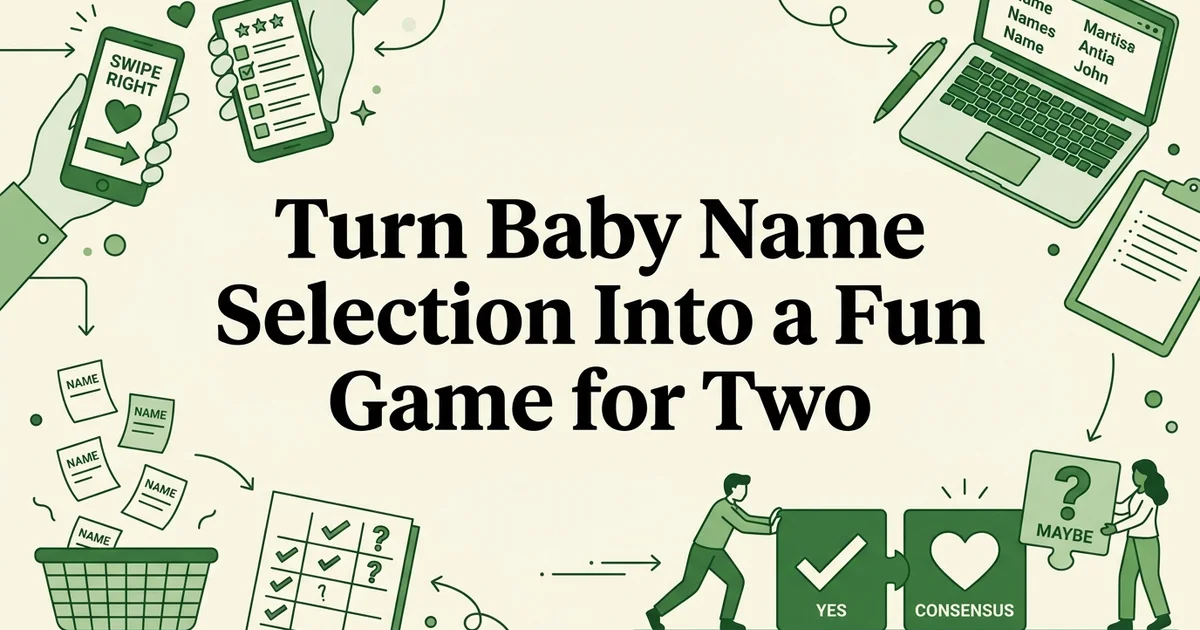
Turn Baby Name Selection Into a Fun Game for Two
- Both partners should be ready to discuss baby naming
- Access to a smartphone, tablet, or computer for the naming app or tool
- Willingness to be open-minded about different naming styles and preferences
Introduction: why turning baby naming into a game matters
Choosing a baby name is one of the most personal, emotionally loaded decisions a couple makes together. Without a structured approach, it can quickly become a source of friction, with each partner attached to different names and neither willing to budge. Turning the process into a baby naming game changes that dynamic entirely.
Why naming decisions cause relationship tension
Names carry deep personal meaning. They connect to family history, cultural identity, and individual taste. When two people approach a list of thousands of options without a clear process, disagreements are almost inevitable. The good news is that structure and a little playfulness go a long way.
How gamification changes the experience
At BumpNames, our analysis shows that couples who approach naming as a shared game rather than a negotiation reach decisions faster and with far less conflict. Research suggests that 64% of parents say making naming fun actively reduced conflict with their partner. That tracks with broader trends: studies indicate that 72% of US parents now use apps or websites to help choose baby names, and 41% have turned the process into a game format.
What this guide covers
This guide walks you through practical, structured baby naming games designed to move couples from an overwhelming list of options to a name you both genuinely love. Each step is built around real decisions, not just inspiration.
What you'll need before starting your baby naming game
Before you dive into your first session, gathering the right tools and aligning on a few basics will make the whole process smoother and more enjoyable. Think of this as a five-minute setup that saves hours of circular conversation later.
Gather your tools
Decide whether you'll use a dedicated app like BumpNames, a spreadsheet, a voting website, or a bracket-style tournament format. Have the tool open and ready to go before your first session.
Set aside dedicated time
Block out 20-30 minutes for your first session when you're both relaxed and free from distractions. Avoid naming sessions when either partner is tired, stressed, or rushed.
Agree on basic ground rules
Establish that this is a judgment-free zone where 'no' is just feedback, not criticism. Agree that you'll both participate equally and that no name is off-limits to suggest or reject.
Prepare a backup list
Have a few name sources ready (baby name websites, family suggestions, cultural or heritage names) so you're not starting from scratch or relying on a single database.
A gamified naming tool you both can access
The right app transforms a potentially tense conversation into something genuinely playful. BumpNames is built specifically for this: it uses a Tinder-style swiping interface to let both partners rate names independently, then sends an instant match notification when you both like the same one. It draws from a database of 104,819 US baby names with meanings and origins, and it's free to use with no credit card required. Research suggests that 36% of parents have used a dedicated baby name generator, and studies indicate that 58% of millennial and Gen Z parents used more than one digital tool during the process, so having a primary tool you return to consistently helps keep things organised.
Dedicated, distraction-free time
Plan for at least 30 to 60 minutes for your first session. Rushing through names while half-watching television produces half-hearted decisions. Block the time deliberately, treat it like a date, and give it your full attention.
A few agreed-upon preferences before you start
Align on the broad strokes before swiping a single name. Consider:
- Style: classic, modern, nature-inspired, or invented
- Origin and cultural significance: family heritage, language roots, or meaning
- Length and nickname potential: one syllable or three, formal or casual
These guardrails prevent you from rating 200 names in completely opposite directions. For a deeper look at why the swiping format works so well for narrowing preferences, see Why swiping through baby names solves the selection problem.
A shared place to track your matches
Whether you use BumpNames' built-in match notifications or a simple shared notes document, both partners need visibility into the growing shortlist. Matches mean nothing if one person forgets them by morning.
Realistic expectations about the timeline
Most couples won't land on a final name in one sitting, and that's completely normal. Treat each session as progress, not a deadline.
Step 1: select your baby naming game format and tool
Choose your format before you open a single app or spreadsheet. The right structure keeps both partners engaged and prevents the session from collapsing into an endless scroll through a baby name website. Pick a format that matches how you two naturally make decisions together.
Evaluate your format options
Consider swipe-and-match apps (like BumpNames), voting spreadsheets, bracket tournaments, or collaborative lists. Think about which format matches your communication style and how much structure you both prefer.
Test your chosen tool
If using an app, download it and walk through the interface together. If using a spreadsheet or bracket, set it up and do a practice round with 5-10 names to ensure you both understand how it works.
Confirm the name database or source
Decide whether you're pulling from a curated app database, a comprehensive name website, family suggestions, or a mix. A larger database (500+ names) prevents you from running out of options too quickly.
Set expectations for the first session
Agree that the goal is simply to generate a pool of mutual candidates, not to make a final decision. This removes pressure and keeps the first round fun and exploratory.
Swiping games: fast, intuitive, and built for couples
Swiping-style baby naming games work exactly like a dating app, but instead of people, you're rating names. Both partners swipe independently, and the app flags any name you both liked. This format suits couples who prefer quick, gut-level reactions over lengthy deliberation.
BumpNames is built specifically for this. Each partner swipes through names from a database of over 104,819 US baby names, rating each one as like, dislike, or maybe. When both of you like the same name, you get an instant match notification. That moment of mutual agreement is genuinely satisfying, and it removes the awkwardness of pitching names to each other one at a time. You can read more about how that works in our guide to how baby name match notifications help couples agree faster.
Bracket tournaments and voting lists: for deliberate planners
If you prefer to think carefully before committing, a bracket-style tournament might suit you better. Tools like Nameberry let you build curated lists that you can work through together, comparing names head to head until a winner emerges. Simple spreadsheets work too: list 20 names, vote independently, then compare scores.
Test your chosen tool together first
Before your first real session, spend 5 to 10 minutes exploring the tool side by side. If you're using BumpNames, one partner creates a game and shares the code with the other. Both join, run through a handful of names, and confirm the match notifications are working. You should see a shared match appear within the first few swipes.
This quick test eliminates technical friction before it derails your momentum.
Step 2: establish naming style filters and preferences together
Before you swipe a single name, align on what you're actually looking for. Couples who skip this step often find themselves arguing about taste rather than names. Research suggests that 52% of expectant couples experience significant disagreements during the naming process, and having shared criteria upfront is one of the most effective ways to avoid that friction.
Discuss name length and sound preferences
Do you prefer short names (1-2 syllables) or longer ones? Do certain sounds appeal to you more? Agree on whether you want names that are easy to spell and pronounce, or if you're open to more unique options.
Align on cultural, heritage, or family significance
Discuss whether you want to honor family names, cultural traditions, or heritage. Clarify whether both partners need to feel equally connected to the name's origin or if one partner's preference takes priority.
Set boundaries on popularity and trendiness
Decide if you want a name that's currently popular, timeless, or deliberately uncommon. Discuss whether you're concerned about your child sharing a name with classmates.
Filter out dealbreakers together
Identify names you both want to exclude (names of exes, names with negative associations, names that don't work with your last name). Agree on these filters before you start swiping to avoid awkward moments.
Agree on 3 to 5 core naming criteria
Sit down together and work through the following before your first real round:
- Traditional vs. modern: Do you want a timeless classic or something that feels fresh and contemporary?
- Common vs. unique: Are you comfortable with a name that appears in every classroom, or do you want something less familiar?
- Cultural origin: Does the name need to reflect your heritage, or are you open to any background?
- Length and pronunciation: Short and simple, or longer with a nickname? Would a stranger pronounce it correctly on the first try?
- Popularity range: Parents increasingly use data-driven approaches to land outside the top 10 while maintaining cultural fit. Decide whether you want a name inside the top 100 or something beyond the top 500.
Write these down. They become your shared filter for the whole game.
Set your non-negotiables
Name any names, sounds, or associations you will absolutely not consider, and briefly explain why. This is not about winning an argument. It is about giving your partner useful context so the game stays productive.
Use BumpNames filters to match your preferences
Once your criteria are set, open BumpNames and choose your database tier. Select the Top 1,000 names pool if you want recognisable, well-established options, or unlock all 104,819 names if you are hunting for something genuinely rare. This single setting does a lot of the filtering work for you automatically.
If you have different style preferences, that is completely normal. The game is specifically designed to surface unexpected common ground, so let the swipes do the talking.
Step 3: play your first round using your chosen game format
Now that your filters are set and your database tier is chosen, it is time to actually play. The goal of this first session is simple: build a list of mutual candidates without pressure or debate. Research consistently shows that gamified experiences reduce emotional friction and help couples collaborate more naturally, which is exactly why the game format matters so much here.
Swiping independently on BumpNames
Open BumpNames on your separate devices and begin swiping through names on your own. The app's Tinder-style interface gives you three options for each name: like, dislike, or maybe. Respond with your gut. If a name makes you smile, swipe like. If it feels wrong immediately, pass. The "maybe" option is there for names that intrigue you but need more thought.
The key rule here is to avoid discussing individual names as you go. Independent swiping is what makes the format work. The moment BumpNames detects that both of you have liked the same name, you receive an instant match notification. That shared discovery feels genuinely exciting and takes the confrontation out of the conversation entirely.
Keeping your first session short and focused
Commit to 20 to 30 minutes for this opening round. Decision fatigue is real, and pushing past that window tends to make every name feel equally unappealing. When the timer is up, stop swiping regardless of where you are in the list. BumpNames lets you pause and resume at any point, so nothing is lost.
If you are exploring alternative formats such as a daily challenge, commit to reviewing 10 to 15 names each day for five to seven days, then discuss favourites each evening rather than in the moment.
Trusting the process
Do not second-guess every swipe. The baby naming game works best when your responses are instinctive rather than analytical. You can always revisit borderline names later. For now, volume and honesty matter more than perfection. If you want additional name ideas to feed into your queue, getting baby name suggestions that both partners agree on is a useful next step to explore alongside your session.
Step 4: review mutual matches and discuss your top contenders
Once your first round is complete, open BumpNames and check your mutual matches: the names where both of you tapped "like" and triggered an instant match notification. These are your raw material. Even a handful of matches gives you something concrete to work with, which is far more productive than debating from a blank page.

Dig into why each name resonated
For every mutual match, talk through what drew you both to it. Was it the sound, the rhythm when paired with your last name, or a personal association? Consider:
- Meaning and origin: Does the name carry cultural or family significance?
- Nickname potential: Does it shorten naturally, or does it only work in full?
- Spelling and pronunciation: Will teachers, grandparents, and strangers get it right on the first attempt?
- Teasing risk: Say it out loud with your last name and think like a ten-year-old.
BumpNames displays meanings and origins directly on each name card, so you can revisit this detail without needing a separate search.
Build your shortlist
Aim to carry 5 to 10 names forward from this conversation. Resist the urge to over-filter at this stage. Research suggests that couples who align on style preferences early, rather than relying too heavily on popularity scores, tend to reach consensus more smoothly. A name that feels uncertain today can feel right after a few days of living with it.
According to Bounty, around 60% of UK parents use a nickname for their baby bump during pregnancy, which reflects how naturally extended naming exploration works. Giving shortlisted names time to breathe before eliminating them follows the same logic.
For a deeper look at how collaborative tools support this process, using a collaborative baby naming tool walks through the approach in more detail.
Step 5: play multiple rounds over several days or weeks
Resist the urge to power through the baby naming game in a single sitting. Planning 3-5 sessions spread across one to four weeks gives both partners time to process their reactions honestly, and research suggests that structured, multi-session approaches help couples reach consensus far more naturally than marathon decision-making.
Schedule your sessions in advance
Block out short, low-pressure windows rather than squeezing naming conversations into busy evenings. Thirty minutes every few days works well for most couples. BumpNames supports this directly with its pause and resume functionality, so you can pick up exactly where you left off without losing your progress or your matched names.
Keep fresh names flowing each round
Open a new batch of names at the start of every session. BumpNames draws from a database of over 104,000 US baby names, so there is no shortage of options to explore. Studies indicate that 58% of millennial and Gen Z parents used more than one digital tool during their naming process, which suggests that variety and continued discovery matter. Rotating through new names each round keeps the game feeling fresh rather than repetitive.
Let names sit between sessions
This step is where the real filtering happens. After each session, say your shortlisted names out loud during the week. Call them across an imaginary playground. Use them in a sentence. Notice which ones feel natural after a few days and which ones quietly fade. Names that survive this informal test are worth keeping.
Track how your preferences shift
Use each round to move names up or down your shortlist based on how they have grown on you. You may find yourself drawn to styles you did not expect, perhaps shorter names, or names from a heritage you had not initially considered. That evolution is useful data, not indecision.
Step 6: narrow down to your final 2-3 names
After several rounds of rating, discussing, and living with names, you should now have a shortlist that reflects what you both genuinely love, not just what you could tolerate. This step is about stress-testing those survivors and arriving at a confident final selection.
Run each finalist through a practical checklist
Take every remaining name and evaluate it across a few real-world scenarios:
- Say it with your last name out loud. Does it flow, or does it create an awkward sound collision?
- Picture it on a resume. Will it serve your child well in professional settings decades from now?
- Imagine calling it across a crowded park. Does it feel comfortable and natural?
- Test it in different tones. Affectionate, stern, celebratory. A name needs to work in all of them.
Names that hold up across every scenario earn their place on your final list.
Consider middle name pairings
A first name that sounds perfect alone can feel clunky when paired with a middle name or your surname. Say the full three-part name slowly. Check the initials. A little attention here prevents surprises later.
If you have been using BumpNames, revisit your matched names list together. The app stores every name you both liked, giving you a clean reference point rather than relying on memory or scattered notes.
Know when to wait
If you are genuinely torn between two names, give yourself permission to leave the decision open. Many parents find that the right name simply clicks the moment they meet their baby.
Document your finalists and the reasons behind each choice. That record is surprisingly useful when family members inevitably ask why you chose the name you did.
Common mistakes to avoid when playing baby naming games
Even the most thoughtful couples can stumble during the baby naming process. Knowing which pitfalls to sidestep will save you time, reduce friction, and help you arrive at a name you both genuinely love rather than one you settled for.
See how BumpNames - Baby Name Matcher App handles baby naming game BumpNames - Baby Name Matcher App.
Not aligning on style filters first
Jumping straight into swiping without agreeing on basic preferences is one of the most common mistakes couples make with baby name apps. If one partner wants classic, timeless names and the other is drawn to modern invented names, you will burn through dozens of rounds without a single match. Spend five minutes agreeing on broad style categories before you start.
Over-relying on popularity scores
A name sitting at number three on a trending list is not automatically right for your family, and a name ranked outside the top 500 is not automatically wrong. Popularity data is useful context, not a verdict. Let your instincts and personal meaning guide the final call.
Ignoring pronunciation and spelling checks
Say the name out loud. Then ask yourself whether a stranger could spell it from hearing it once. Names that look beautiful written down can create a lifetime of corrections if they are routinely mispronounced or misspelled. Test both before committing.
Letting family opinions override your preferences
The baby naming game is designed for two players: you and your partner. External pressure from parents, siblings, or friends can quietly distort choices that felt right before the opinions arrived. Treat outside input as interesting data, not a deciding vote.
Rushing the process
Research suggests that repeated exposure to a name over days or weeks reveals how you truly feel about it. A name that excites you on day one but fades quickly is telling you something. Use BumpNames' pause and resume functionality to revisit your matched names across multiple sessions rather than forcing a decision in a single sitting.
Not using the app's full feature set
In our experience at BumpNames, couples who explore the full database of 104,819 names, rather than limiting themselves to the top 1,000, often discover unexpected options that feel uniquely theirs. Features like origin details and meaning descriptions add depth to each choice and frequently become the reason a name moves from the maybe pile to the finalist list.
Why this method works: the psychology of gamified naming
Understanding the psychology behind gamified naming helps explain why so many couples find it more effective than traditional list-making or open-ended discussion. When naming feels like a game rather than a negotiation, both partners engage more openly, respond more honestly, and reach decisions with less friction.
Gamification reduces emotional pressure
Baby name conversations can carry surprising emotional weight. Strong opinions, family expectations, and fear of conflict all make it harder to think clearly. Turning the process into a game lowers the stakes, creating a lighter atmosphere where both partners feel free to explore without defending every preference. Research suggests that 64% of parents say making naming fun or playful directly reduced conflict with their partner, which reflects just how much the format of a conversation shapes its outcome.
Swiping encourages intuitive, non-defensive responses
The swiping mechanic used in apps like BumpNames creates useful psychological distance from the decision. Instead of debating a name face to face, each partner responds privately and instinctively. This removes the social pressure to justify a reaction, meaning responses reflect genuine feeling rather than a desire to avoid disagreement. The result is cleaner, more honest data about what each person actually likes.
Repeated exposure builds comfort and confidence
Names that feel unfamiliar in round one often feel natural by round three. Multiple sessions allow both partners to sit with options over time, which research in decision-making consistently links to greater confidence in final choices.
Shared tools create a sense of partnership
Couples increasingly use collaborative digital tools for joint decisions, and baby naming is no exception. Real-time match notifications, where both partners discover simultaneously that they liked the same name, turn a private vote into a shared moment. That sense of arriving at something together, rather than one person conceding to the other, makes the final choice feel genuinely mutual.
Alternative baby naming game methods
The swipe-and-match format is just one way to turn name selection into a shared activity. Couples who enjoy more structure, social input, or creative play have plenty of other formats to explore. Each method below suits a different dynamic, so pick the one that fits how you and your partner naturally make decisions together.

Bracket tournament
Build a tournament bracket with 16 to 32 names and treat it like a sports playoff. Each round, both partners vote on head-to-head matchups until one name wins the final. This format works well for couples who already have a long list and need a structured way to narrow it down. Load your bracket with names pulled from BumpNames, using its database of over 104,000 names to fill any gaps in your shortlist.
Daily name challenge
Use a name generator to surface 10 to 15 fresh options each day, then discuss them over dinner. The low-stakes format keeps the conversation light and prevents decision fatigue. BumpNames lets each partner swipe independently at their own pace, so you can both review the same pool of names before comparing reactions at the table.
Bump nickname game
Give your baby bump a playful working name during pregnancy, then use that nickname as a creative springboard for the legal name. According to Wales Online (2023), 60% of UK parents use bump nicknames as part of their naming journey, and a notable share end up choosing something directly inspired by it.
Baby shower naming game
Invite close family to rate a curated shortlist or play "guess our favourite" using names generated through BumpNames. This adds a social layer to the process and can surface surprising consensus from the people who know you best.
Spreadsheet voting
Create a shared spreadsheet, list your candidate names, and have each partner score every entry from 1 to 10 independently. Sort by average score to reveal your combined preferences without either person feeling pressured. Pair this with BumpNames match notifications to cross-reference which names you both swiped right on before scoring.
Real-world example: how one couple used BumpNames to find consensus
Seeing a baby naming game work in practice makes the process feel far more achievable. Sarah and Mike's story shows how a structured, playful approach can bridge genuinely different naming styles and bring two people to a decision they both love.
The challenge: two completely different tastes
Sarah gravitated toward traditional names with weight and history: Eleanor, Margaret, Catherine. Mike wanted something fresher and more distinctive: Aria, Nova, Luna. Left to a simple conversation, this kind of gap can quickly turn into a standoff. Research suggests that around 52% of couples experience significant disagreements over baby names and need a structured tool to reach consensus.
Rather than debating across a kitchen table, they created a shared game on BumpNames and invited each other in using a partner code. Over three weeks, they played two sessions per week, each lasting 15 to 20 minutes, swiping through more than 200 names from the app's database.
The turning point: adjusting the filters
After round one, they had zero mutual matches. Their preferences were simply too far apart. Instead of giving up, they refined their approach. BumpNames lets players narrow the name pool by style and origin, so they reset their session around a specific filter: classic names with modern nicknames. This small adjustment reframed the search around overlap rather than opposition.
Finding 'the one' (or two)
By round three, two names had earned a like from both partners: Hazel and Iris. Both felt classic without being stiff, familiar without being overused. They held onto both names and waited until their daughter arrived. The moment they met her, Iris felt right.
The game did something a spreadsheet alone could not: it helped Sarah and Mike understand each other's instincts, find genuine common ground, and arrive at a name without either person feeling overruled.
Time and cost breakdown for baby naming games
Running a baby naming game is a surprisingly light commitment. Most couples complete the full process in under three hours total, spread across a few weeks, with little to no financial cost involved.
Setup time
Expect to spend 10-15 minutes getting started: choosing a tool, creating an account, and agreeing on basic preferences like name style or cultural origins. With BumpNames, setup takes just minutes. One partner creates a game and shares a code; the other joins instantly, no credit card required.
Per-session and total time
Each swiping session runs 20-30 minutes. Three to five sessions is a comfortable range for most couples, putting your total active play time at roughly 1-3 hours spread over one to four weeks. The pause-and-resume feature in BumpNames makes it easy to fit sessions around busy schedules.
Hidden time costs
Factor in 10-15 minutes of daily conversation between sessions. Letting names sit overnight and talking through favorites casually is where much of the real decision-making happens.
Cost
Most baby naming tools are free or under $10 per month. BumpNames offers full access free, with no premium paywall blocking core features. Research suggests interest in this approach is growing fast, with Google searches for "baby name game" rising 120% since 2019, and studies indicating 36% of parents have already used a name generator as part of their process.
The return on investment
The payoff is real: reduced conflict, faster decisions, and genuine confidence in your final choice. That is hard to put a price on.
Troubleshooting: what to do if you're stuck
Even the most fun baby naming game hits a wall sometimes. Research suggests that 52% of couples experience disagreements during the naming process, so if you're feeling stuck, you are far from alone. The tips below address the most common friction points.
No mutual matches after round one
Don't panic. This usually means your filters are too narrow or too broad. In BumpNames, revisit your settings and expand the name pool, or switch from the Top 1,000 names tier to the full 104,819-name database. More options mean more chances for overlap.
You disagree on every name you see
Step away. A few days of distance resets expectations and softens strong opinions. Return to the game with fresh eyes and no pressure to decide immediately.
Too many options feel overwhelming
Use BumpNames' filter features more aggressively. Narrow by origin, meaning, or starting letter to shrink the field to a manageable size before you start swiping.
One partner isn't engaged
Timing matters. Play together on the sofa after dinner, not squeezed between errands. Frame it as couple time, not a task on a to-do list.
You're running out of time
Set a concrete deadline, such as "we'll decide by week 32," and commit to your top two or three matches from the app. A short list beats an endless search every time.
Conclusion: start your baby naming game today
Choosing a baby name together doesn't have to feel like a negotiation or a chore. When you treat it as a game, something shifts. The pressure drops, the laughter starts, and the right name tends to surface naturally. Research suggests that 64% of couples who use gamified naming approaches report less conflict, and 41% of parents have already discovered how effective playful methods can be.
The process works when you trust it
No single session will hand you a perfect answer, and that's fine. Multiple rounds of swiping, a few themed challenges, and honest conversations about what each name means to you both will gradually build a shortlist you're genuinely excited about. The goal was never perfection. It was consensus and confidence, and those come with time and a little playfulness.
Your next step is simpler than you think
Set aside 20 minutes this week, open BumpNames, and invite your partner with a game code. You'll both swipe through names at your own pace using the Tinder-style interface, and the app sends an instant match notification the moment you both like the same name. There's no credit card required and no complicated setup. Just two people, 104,819 names, and a genuinely enjoyable way to find the one.
The name is a gift you're giving together
Whatever name you land on, you'll remember how you found it. That shared experience, the surprises, the vetoes, the unexpected agreements, is part of your story before your baby's story has even begun. Enjoy every round of it.
Frequently asked questions
How do you play a baby name game with your partner?
Choose a tool or app, set your naming preferences, then swipe or vote on names independently. Review your mutual matches together and repeat the process over several sessions. Apps like BumpNames make this straightforward with a partner invite code and instant match notifications.
What is the baby name Tinder game and how does it work?
Each partner independently swipes "like" or "pass" on names without influencing the other. When both partners like the same name, it registers as a match. This format removes pressure and surfaces genuine agreement naturally.
How can we turn choosing a baby name into a fun game for a baby shower?
Use a generator to create name suggestions, then run bracket tournaments or voting rounds with guests. A "guess our favourite name" challenge works especially well as a group activity.
Are there apps that let couples swipe or match on baby names together?
Yes. BumpNames offers a Tinder-style interface with 104,819 names and real-time match notifications. According to Nameberry, 41% of parents have already turned baby-name discussions into a game using swiping or voting formats.
What are some creative baby naming games to help partners agree?
Popular options include swiping apps, bracket tournaments, daily name challenges, and spreadsheet voting. Each format reduces conflict by separating individual preferences before comparing results.
How long does it usually take couples to agree on a baby name?
Most couples using gamified tools reach a shortlist within one to four weeks. Some prefer to wait until after birth to make a final decision.
What mistakes should we avoid when using baby name generators and games?
Avoid skipping the preference-setting step, over-relying on popularity scores, ignoring how a name sounds aloud, and rushing toward a decision before both partners feel ready.
Can a baby naming game help us find unique names we both like?
Absolutely. Generators and swiping apps expose you to names you would never have searched manually, while filters help you check meaning, origin, and cultural fit before committing.
Based on our work at BumpNames, couples who approach naming as a shared game rather than a negotiation consistently report less conflict and more confidence in their final choice.
More from Our Blog
How to Clean Your Reddit Profile Before a Background Check
Learn how to clean up your Reddit history before background checks. Expert tips on removing posts, managing privacy, and improving hiring outcomes.
Read more →
7 Proven Ways to Translate Academic Papers Into Multiple Languages
Discover 7 proven methods to translate academic papers into multiple languages, from AI tools to professional services. Boost research reach and citations.
Read more →
Kāpēc React Native izstrāde rada izaicinājumus un kā tos pārvarēt
Uzziniet, kā atrisināt biežākās React Native izstrādes problēmas. Praktiskas stratēģijas, risinājumi un prevencijas paņēmieni uzņēmumiem.
Read more →