
Let's be real—keyword research can feel like a total grind. You spend hours digging through spreadsheets, trying to guess what your audience is searching for, only to end up with a list of terms that don't drive traffic. What if you could skip the tedious parts and get straight to the high-value opportunities? The secret isn't working harder; it's working smarter with the right tools.
In this guide, we're cutting through the noise to bring you the 12 best keyword research software options available today. We get it, the market is flooded with platforms all claiming to be the best, and picking one can be overwhelming. That’s why we’ve spent countless hours testing, comparing, and analyzing each one to give you the real scoop. We'll dive into what makes each tool unique, who it's best for, and how you can use it to uncover keywords that actually convert.
We’re not just listing features. We’re providing a hands-on look with screenshots, direct links, and honest pros and cons for every platform. Whether you're an agency pro managing multiple clients, an in-house marketer aiming for the top spot, or a solopreneur trying to make your mark, your perfect tool is on this list. For those just starting out or looking for cost-effective solutions to complement their keyword research, exploring a wider range of the best free SEO tools can be incredibly beneficial.
Ready to find the software that will transform your SEO strategy? Let’s dive in.
1. RankHub
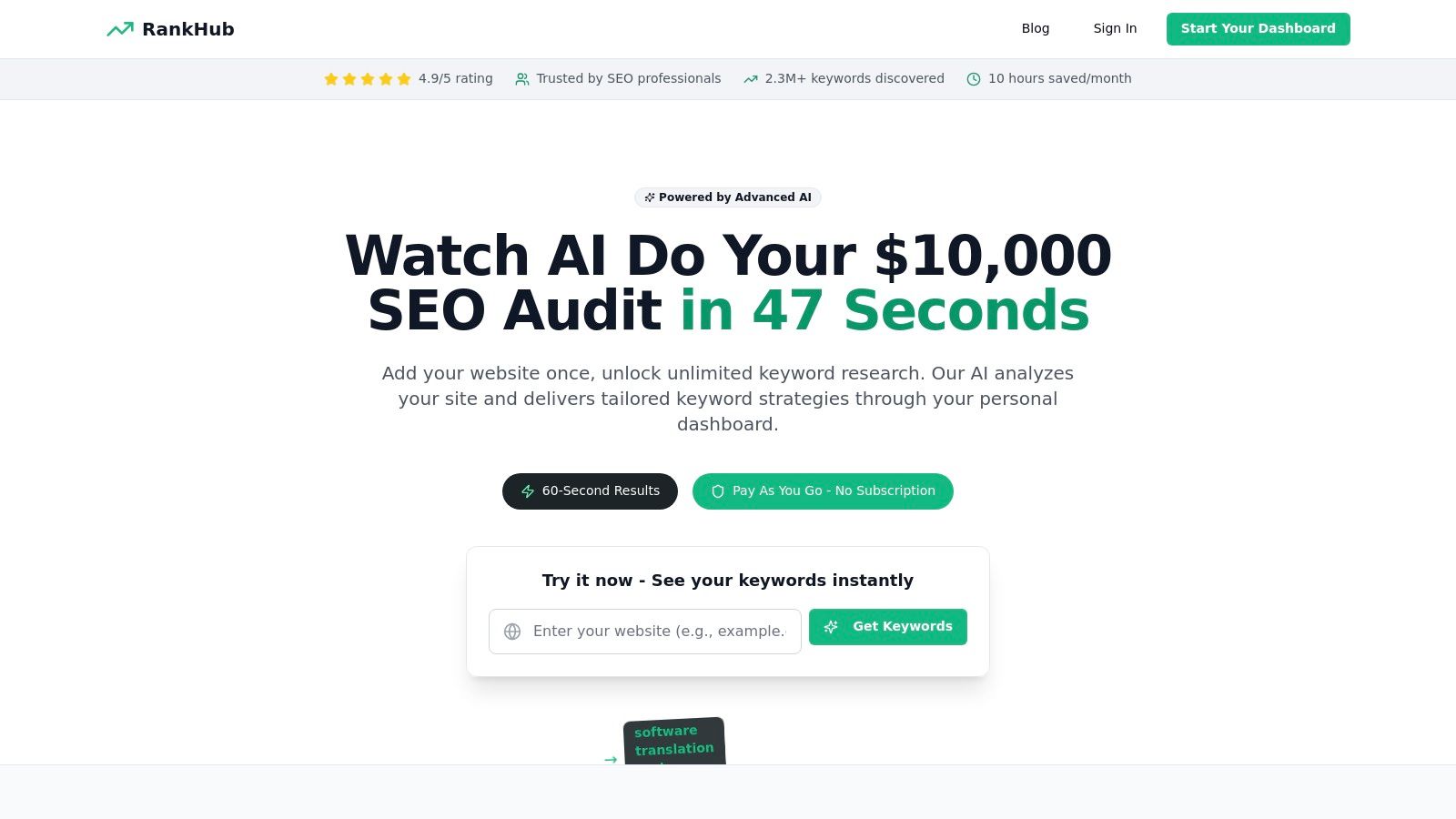
RankHub redefines the keyword research process by leveraging powerful AI to automate what traditionally takes hours, if not days. Instead of manually brainstorming seed keywords and sifting through endless spreadsheets, RankHub scans your entire website and top competitors in under a minute to generate a highly relevant, prioritized list of keyword opportunities. This speed and automation make it an exceptional choice for anyone looking to scale their SEO efforts efficiently.
What truly sets it apart is its contextual understanding. The AI doesn’t just find related terms; it analyzes your business's specific niche to uncover high-value keywords you might have missed. This automated approach is perfect for agencies managing multiple clients, in-house teams needing quick insights, and small business owners who lack deep SEO expertise but want impactful results.
Why RankHub is a Top Contender
RankHub isn’t just another keyword tool; it’s an intelligent strategy partner. Its "Auto Research" feature is a game-changer, performing a comprehensive site-wide analysis and competitor gap analysis automatically. This delivers a ready-to-use content strategy, filtering out irrelevant keywords so you can focus purely on opportunities with the highest potential for growth.
The platform's unique pay-as-you-go pricing model is another significant advantage. You buy credits that never expire, avoiding the pressure of a recurring monthly subscription. This makes it one of the best keyword research software options for businesses of all sizes, allowing you to control costs while accessing enterprise-level AI technology.
- Best for: SEO agencies, in-house marketers, and consultants who need to generate comprehensive keyword strategies quickly and manage multiple projects.
- Standout Feature: The Auto Research function, which delivers a full site and competitor keyword analysis in under 60 seconds.
- Pricing: Pay-as-you-go credit system. Credits are used for reports and never expire.
- Website: https://www.rankhub.ai
Pros:
- Lightning-Fast Analysis: Get a complete keyword and competitor report in less than 60 seconds.
- AI-Powered Relevance: The smart filtering automatically removes irrelevant terms, saving significant time.
- Flexible Pricing: No monthly subscriptions; the pay-as-you-go credits never expire, offering great value.
- User-Friendly Dashboard: Easily manage multiple websites, track research history, and export data.
Cons:
- Upfront Cost: The credit system requires purchasing a credit pack upfront.
- Credit Consumption: The more comprehensive "Auto Research" feature uses more credits than targeted keyword lookups.
2. Ahrefs — Keywords Explorer
Ahrefs is a powerhouse in the SEO world, and its Keywords Explorer tool is a major reason why. It’s an all-in-one suite that goes way beyond basic volume and difficulty scores, offering a level of data granularity that professional SEOs and marketing teams depend on. This platform excels at providing context, not just numbers.
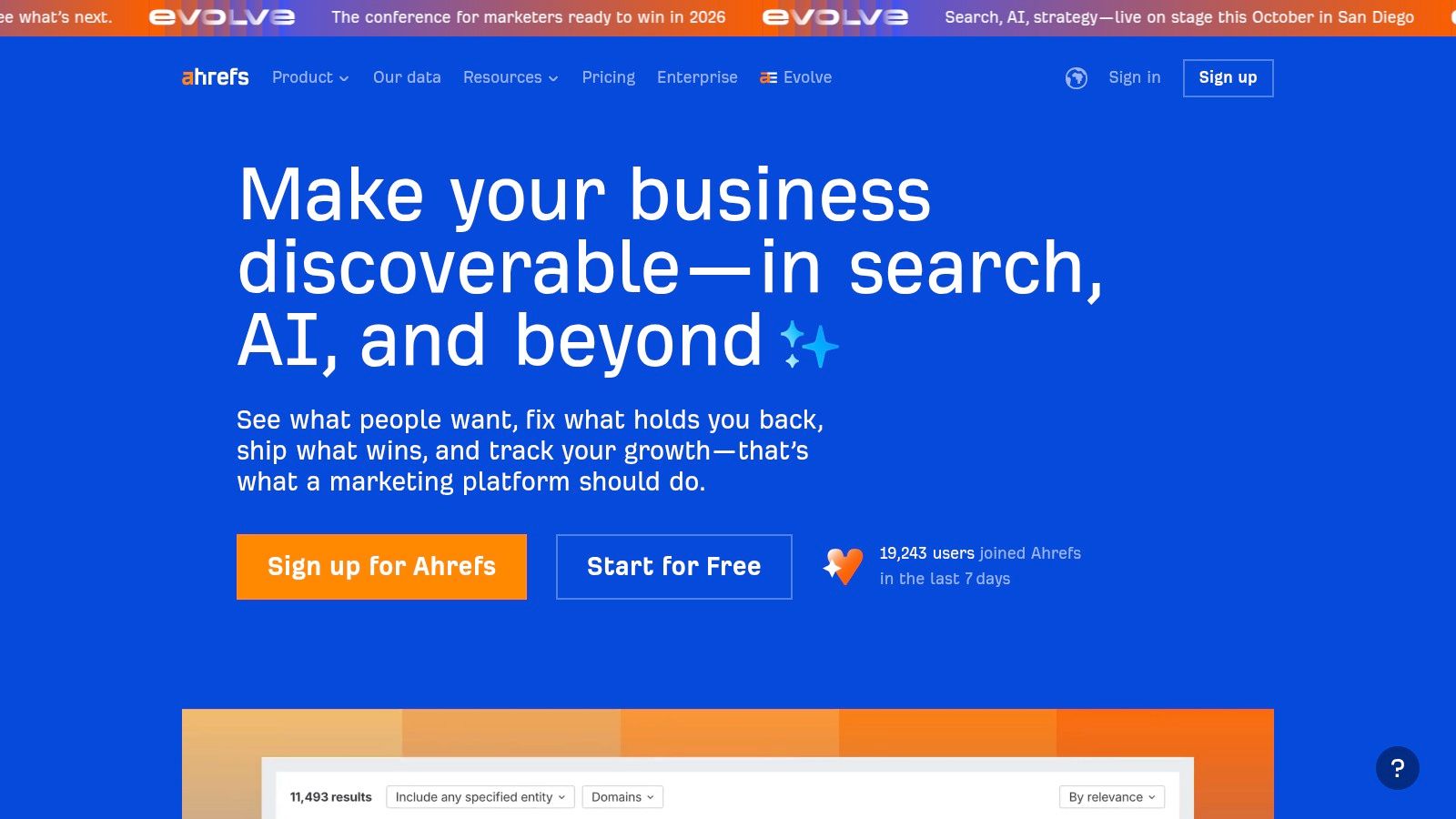
What truly sets Ahrefs apart is its robust dataset and user-friendly interface. You can see how many actual clicks a keyword gets (not just searches), how often people search for it again, and analyze the SERP history to spot ranking volatility. Its ability to research keywords across multiple platforms like Google, YouTube, and Amazon from one place makes it one of the best keyword research software options for comprehensive strategies.
Quick Look at Ahrefs
| Feature | Highlights |
|---|---|
| Best For | SEO professionals, agencies, and in-house teams needing deep data. |
| Standout Metric | Clicks & Clicks Per Search (CPS): Shows if a keyword actually drives traffic. |
| Starting Price | $99/month for the Lite plan. |
| User Experience | The interface is clean, fast, and packed with helpful tooltips and guides. |
Pros & Cons
Pros:
- Trusted Data: Ahrefs’ backlink and keyword databases are among the largest and most accurate available.
- Intuitive Workflow: The platform seamlessly integrates keyword research with rank tracking, site audits, and competitor analysis.
- Excellent Resources: Their blog and tutorials are industry-leading, helping you master not just the tool but also SEO concepts. To get the most out of it, make sure you understand the fundamentals with these keyword research best practices.
Cons:
- Higher Price Point: It's a significant investment compared to more entry-level tools.
- Credit System: Key actions consume credits, which can limit usage on lower-tier plans.
Website: https://ahrefs.com
3. Semrush — Keyword Magic Tool
Semrush is a complete digital marketing toolkit, and its Keyword Magic Tool is a cornerstone of its offering. It’s an incredibly powerful platform for generating massive keyword lists and organizing them into tight, topically relevant clusters. This approach helps marketers build out entire content hubs, not just target single terms.
What makes Semrush a favorite is its seamless integration with other marketing disciplines like PPC, content marketing, and competitive analysis. You can research a keyword, analyze its search intent, see which competitors are bidding on it, and send it directly to a position tracking campaign or content template. This tight workflow makes it one of the best keyword research software choices for teams that need a unified platform to manage all their search marketing efforts.
Quick Look at Semrush
| Feature | Highlights |
|---|---|
| Best For | Agencies and in-house teams managing integrated SEO and PPC campaigns. |
| Standout Metric | Keyword Intent: Classifies keywords as Informational, Navigational, Commercial, or Transactional. |
| Starting Price | $129.95/month for the Pro plan. |
| User Experience | Comprehensive but can feel overwhelming for beginners due to the sheer number of tools. |
Pros & Cons
Pros:
- Broadest All-in-One Toolkit: Covers nearly every aspect of SEO, PPC, content, and social media marketing.
- Mature Reporting: Excellent collaboration and reporting features, with powerful integrations for Looker Studio.
- Strong US Data: Offers exceptionally deep and reliable data for US-based search and advertising campaigns.
Cons:
- Additional Costs: Many specialized toolkits and apps are billed separately from the core subscription.
- Per-User Pricing: Costs can escalate quickly for larger teams needing multiple user seats.
Website: https://www.semrush.com
4. Moz Pro — Keyword Explorer
Moz Pro is a veteran in the SEO space, and its Keyword Explorer is known for making complex data accessible and easy to understand. It’s an excellent choice for those who want reliable core SEO metrics without the overwhelming complexity of some other platforms. The tool is designed around a straightforward workflow, guiding users from keyword ideas to SERP analysis and rank tracking.
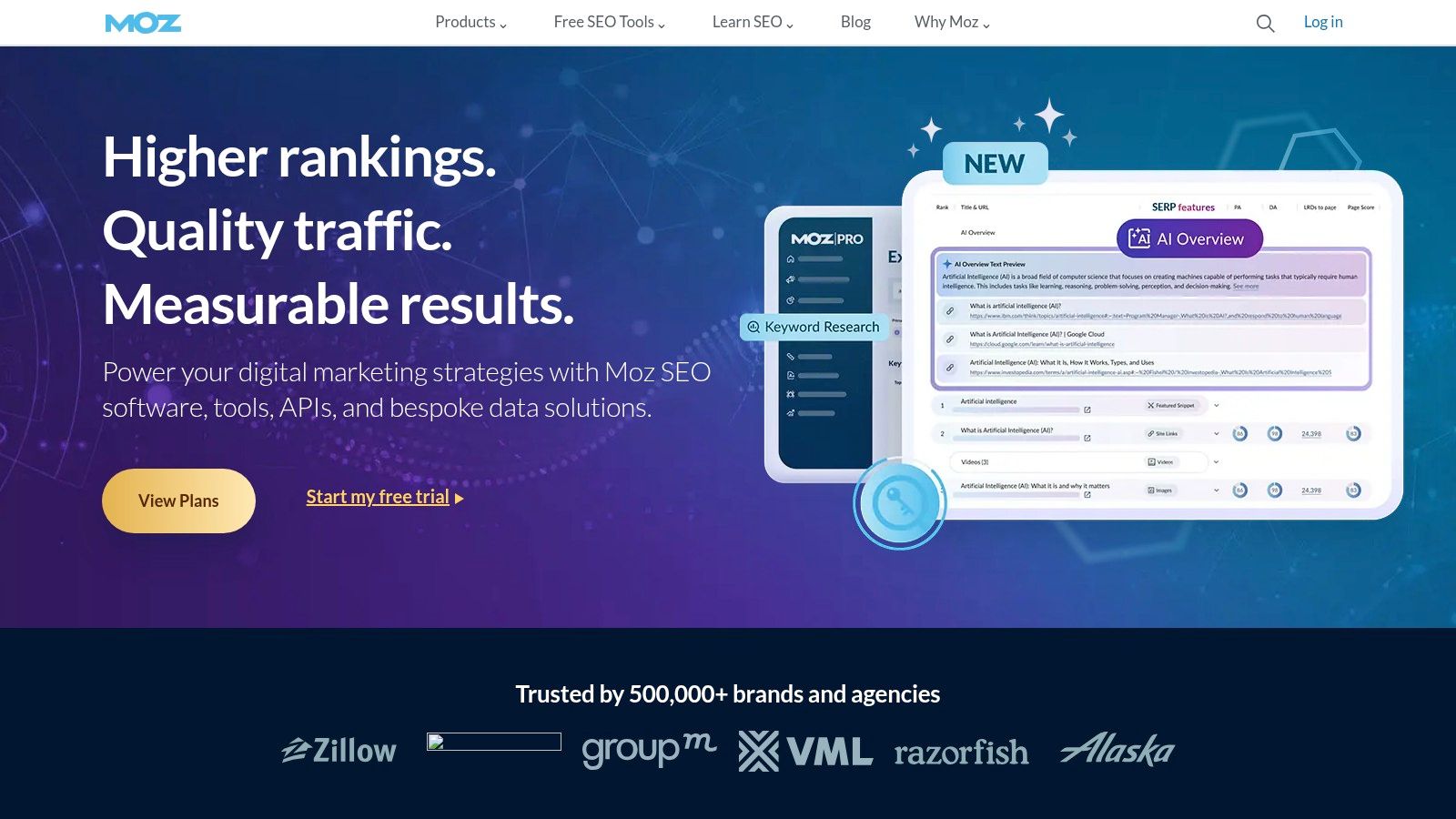
What makes Moz stand out is its emphasis on user-friendliness and education. Metrics like Keyword Difficulty and Organic CTR are presented clearly, helping even SEO newcomers make informed decisions. Its "Priority" score combines multiple metrics into a single, actionable number, streamlining the process of identifying high-impact keywords. This approach makes it one of the best keyword research software options for teams and individuals seeking a balance between powerful data and an approachable user interface.
Quick Look at Moz Pro
| Feature | Highlights |
|---|---|
| Best For | Small businesses, in-house teams, and SEOs who value a clean interface. |
| Standout Metric | Priority Score: A single metric that balances volume, difficulty, and opportunity. |
| Starting Price | $99/month for the Standard plan. |
| User Experience | Very intuitive and beginner-friendly, with excellent support and learning resources. |
Pros & Cons
Pros:
- Gentle Learning Curve: The platform is incredibly easy to navigate, supported by strong educational resources.
- Reliable Core Metrics: Moz has been a trusted data source for years, especially for its Domain Authority metric.
- Free Trial: You can test out the full suite of tools before committing to a paid plan.
Cons:
- Smaller Data Index: Its backlink and keyword databases are less extensive than top competitors like Ahrefs.
- Tiered Feature Access: Many advanced features and higher usage limits are locked behind more expensive plans.
Website: https://moz.com
5. Google Ads — Keyword Planner
Straight from the source, Google's Keyword Planner is the OG of keyword tools and remains a go-to starting point for many. While primarily built for pay-per-click (PPC) advertisers, it offers foundational search volume data directly from Google, which is invaluable even for SEO. It’s a no-frills, data-first tool for validating keyword ideas and getting a baseline understanding of search demand.
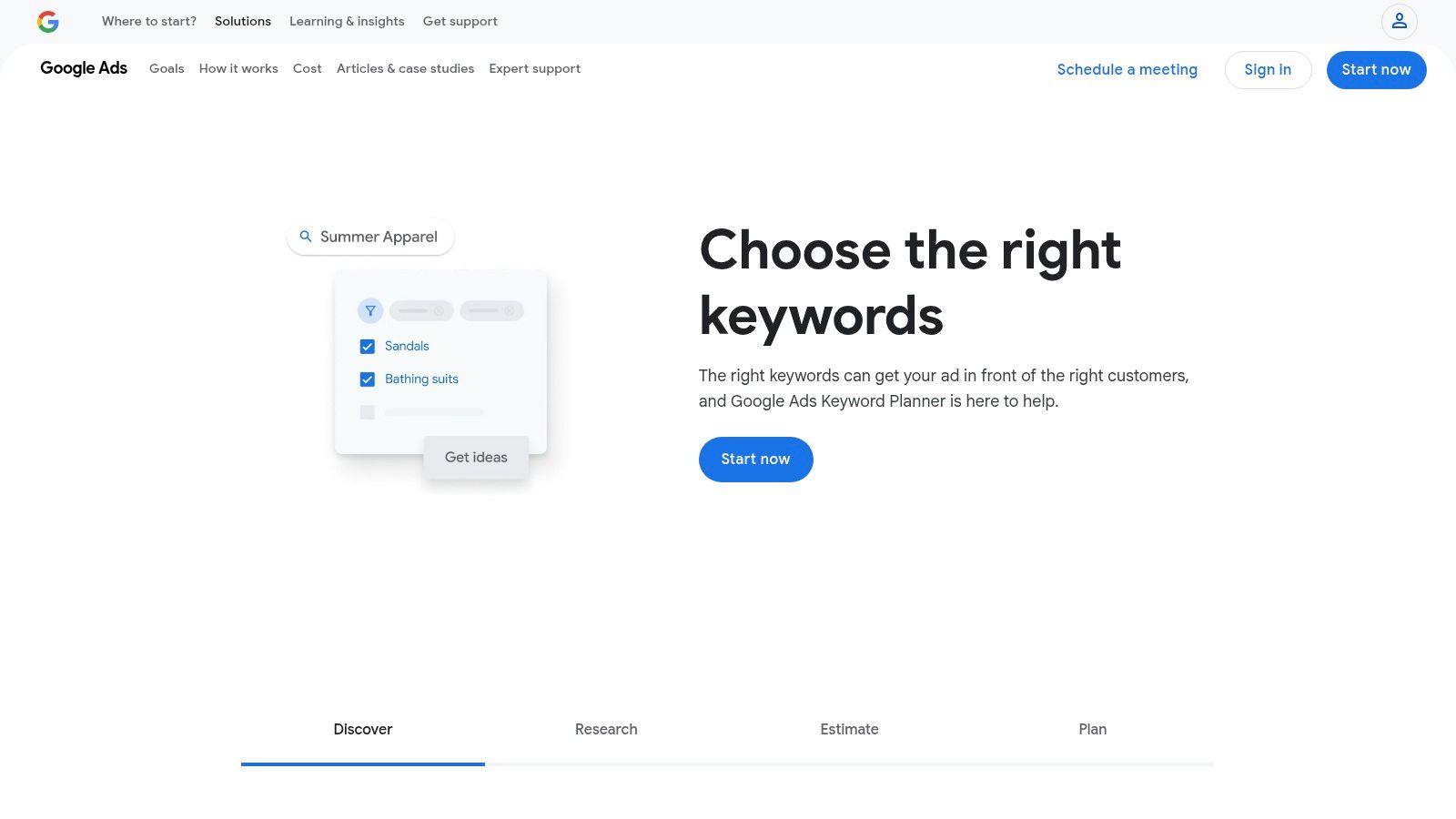
What makes the Keyword Planner a staple is its direct access to Google's data and its forecasting capabilities for ad campaigns. You can discover new keywords, get historical metrics, and see future performance predictions. For those just starting out or needing quick, reliable volume ranges without a paid subscription, it’s one of the best keyword research software options available, though its SEO features are intentionally limited.
Quick Look at Google Ads Keyword Planner
| Feature | Highlights |
|---|---|
| Best For | PPC advertisers, beginners, and SEOs needing a free, first-party data source. |
| Standout Metric | Top of page bid (low/high range): Direct insight into commercial intent. |
| Starting Price | Free with a Google Ads account. |
| User Experience | Functional but can be clunky; requires navigating the Google Ads interface. |
Pros & Cons
Pros:
- Completely Free: Accessible to anyone with a Google account, offering incredible value.
- First-Party Data: The information comes directly from Google's search engine.
- Strong Forecasting: Excellent for planning PPC budgets and estimating ad performance.
Cons:
- PPC-Focused: Lacks crucial SEO metrics like keyword difficulty or SERP analysis.
- Broad Volume Ranges: Non-advertisers often see wide search volume ranges (e.g., 1K-10K) instead of exact numbers. If you're looking for more precise data, you can learn how to find profitable keywords using a mix of tools.
Website: https://ads.google.com/home/tools/keyword-planner/
6. Ubersuggest
Acquired and massively expanded by marketing guru Neil Patel, Ubersuggest has carved out a niche as an incredibly accessible and user-friendly SEO platform. It’s designed to demystify keyword research for beginners, small business owners, and solopreneurs who might find more advanced tools overwhelming. It simplifies complex data into straightforward, actionable insights.
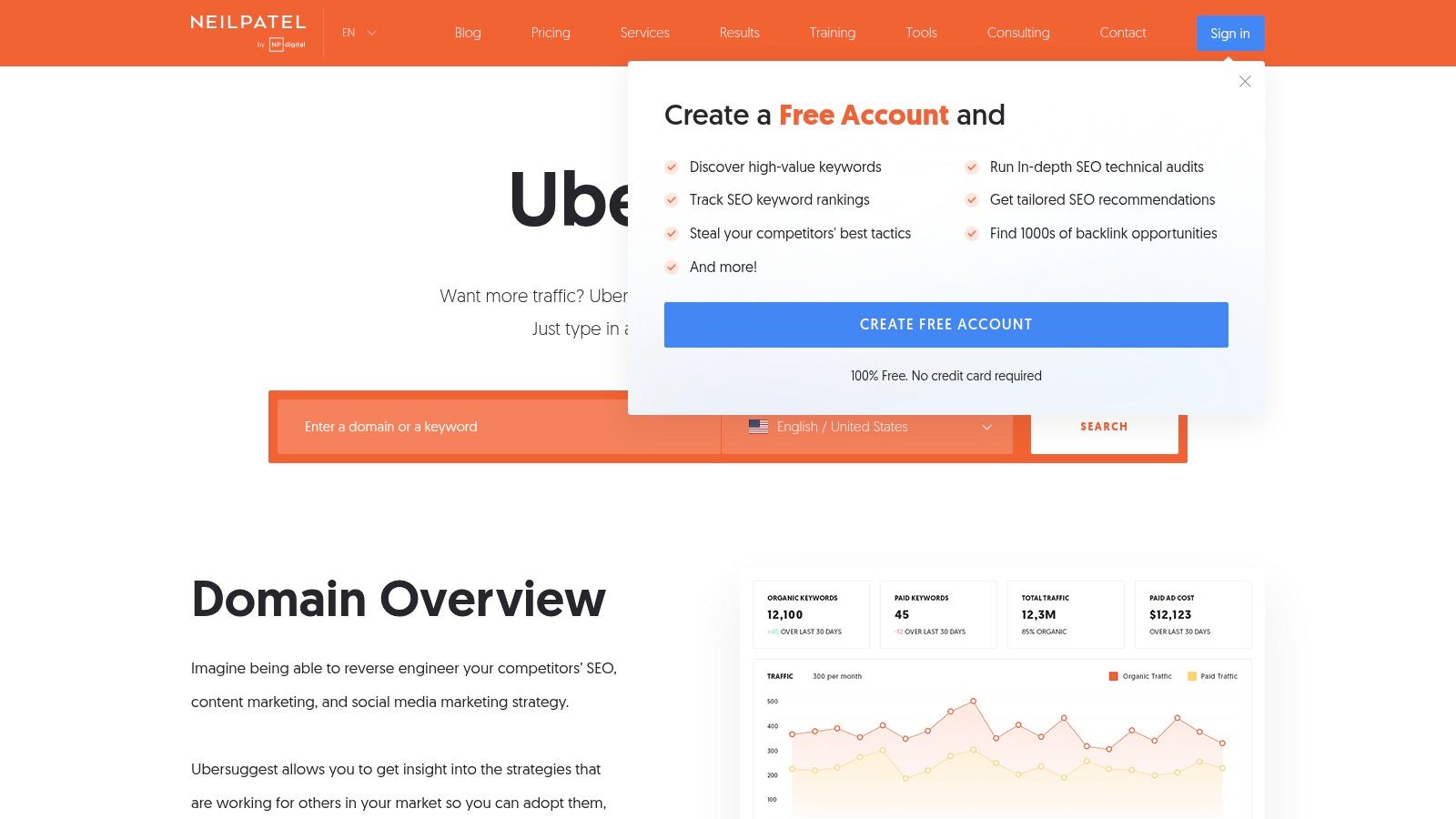
What makes Ubersuggest a contender for the best keyword research software is its exceptional value proposition. It bundles keyword discovery, competitor analysis, rank tracking, and site audits into one affordable package, even offering lifetime payment plans. While it may not have the immense data depth of enterprise-level tools, its focus on simplicity and core SEO functions makes it a powerful starting point for growing a business online.
Quick Look at Ubersuggest
| Feature | Highlights |
|---|---|
| Best For | Small businesses, bloggers, and SEO beginners on a budget. |
| Standout Metric | SEO Difficulty: Provides a simple 1-100 score to gauge ranking potential. |
| Starting Price | $29/month for the Individual plan; lifetime plans are also available. |
| User Experience | Very intuitive and beginner-friendly, with clear explanations for each metric. |
Pros & Cons
Pros:
- Low Cost of Entry: The monthly and lifetime pricing options make it highly affordable.
- User-Friendly: Its clean interface is perfect for those new to SEO and keyword research.
- All-in-One Features: Combines essential SEO tools like site audits and rank tracking in one place.
Cons:
- Less Comprehensive Data: The data and SERP analysis are not as deep as top-tier competitors.
- Regional Price Variations: The cost can differ depending on your geographic location.
Website: https://www.ubersuggest.com
7. Mangools — KWFinder
Mangools offers a suite of SEO tools that prioritize simplicity and usability, with KWFinder being the star of the show. It’s designed for bloggers, freelancers, and small businesses who need powerful data without the overwhelming complexity of enterprise-level platforms. The interface is clean, colorful, and makes finding profitable long-tail keywords an incredibly straightforward process.
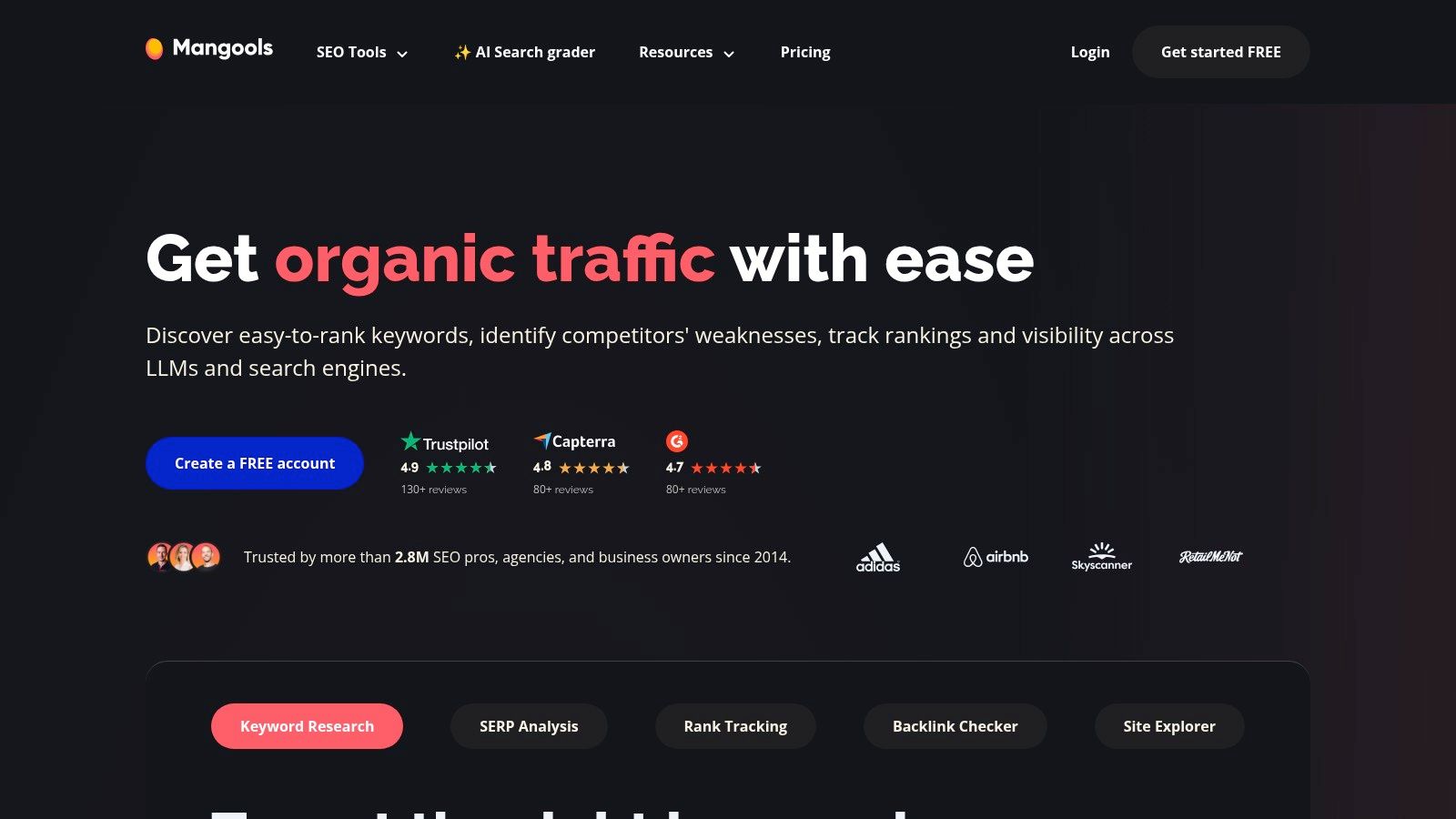
What makes KWFinder a favorite is its focus on getting you the essential data quickly. It provides one of the most accurate keyword difficulty scores available, alongside a clear SERP analysis that shows you exactly who you’re competing against. For those who want a robust yet budget-friendly option, Mangools delivers a complete package that makes it one of the best keyword research software choices for getting started and scaling up.
Quick Look at Mangools
| Feature | Highlights |
|---|---|
| Best For | Bloggers, affiliate marketers, and SMBs who value ease of use. |
| Standout Metric | Keyword Difficulty Score: A highly accurate 0-100 score to gauge ranking potential. |
| Starting Price | $29/month for the Basic plan (billed annually). |
| User Experience | Exceptionally user-friendly and visually appealing, ideal for beginners. |
Pros & Cons
Pros:
- Fantastic Value: The suite includes keyword research, SERP analysis, rank tracking, and backlink analysis for a very competitive price.
- Intuitive Interface: The learning curve is minimal; you can start finding valuable keywords within minutes.
- Great for Long-Tails: KWFinder excels at uncovering low-competition, high-intent long-tail keyword opportunities.
Cons:
- Lookup Limits: Lower-tier plans have daily limits on keyword lookups and SERP analyses, which can be restrictive for heavy users.
- Smaller Database: Its data pools are not as vast as those of more expensive competitors like Ahrefs or Semrush.
Website: https://mangools.com
8. SpyFu
SpyFu is the digital equivalent of a private investigator for your competition. Its entire platform is built around competitive intelligence, allowing you to uncover the exact keywords your rivals are ranking for organically and bidding on in Google Ads. This makes it an incredibly powerful tool for reverse-engineering successful strategies and finding profitable keyword gaps.
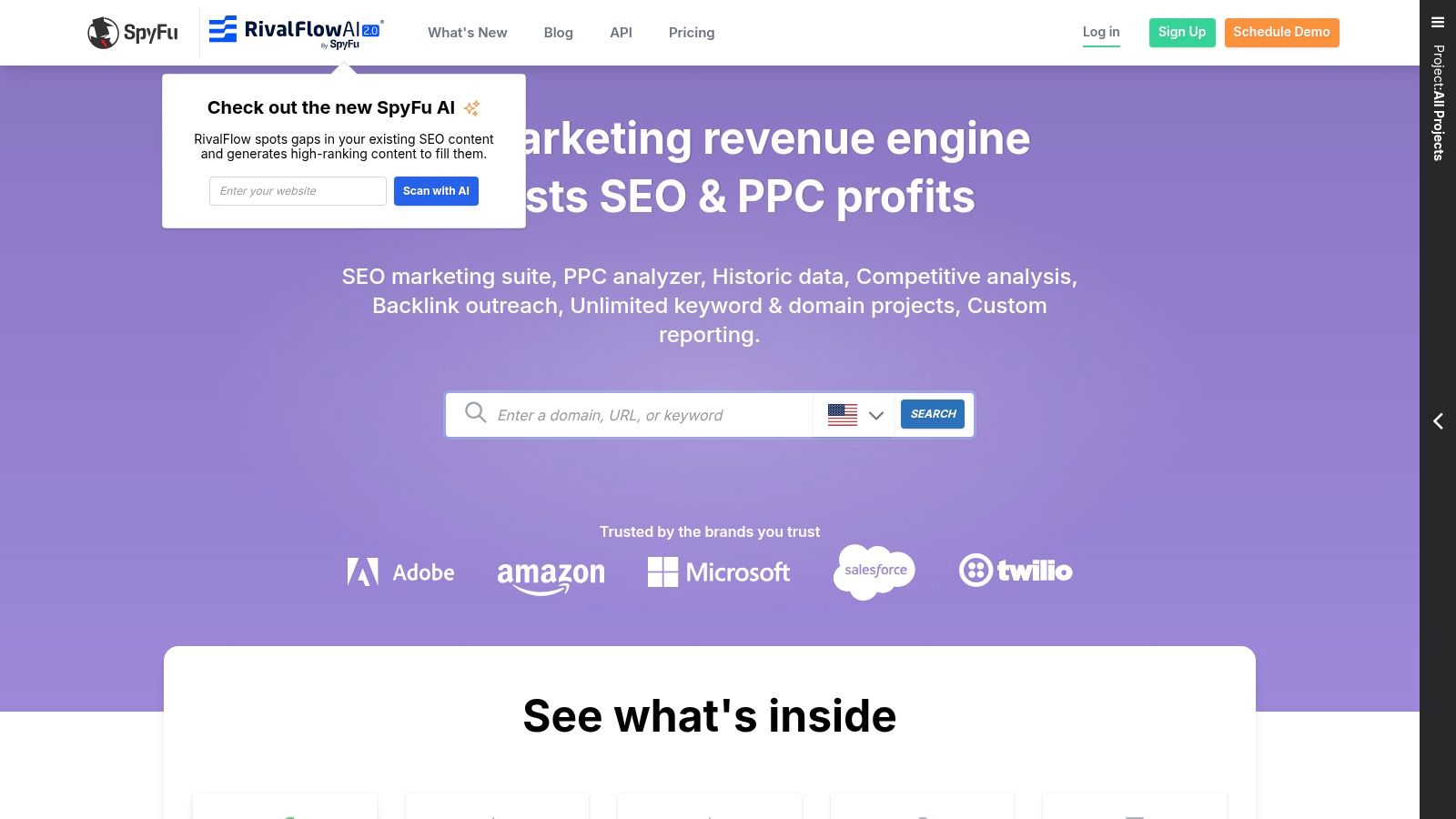
What makes SpyFu a unique entry in the best keyword research software category is its laser focus on competitor-driven data. Instead of starting with a seed keyword, you start with a competitor's domain. The tool reveals years of historical ad copy, keyword rankings, and estimated ad spend, providing a treasure trove of insights for both PPC and SEO campaigns. Its generous data allowances on higher plans are a major draw for agencies and consultants who need to pull large reports frequently.
Quick Look at SpyFu
| Feature | Highlights |
|---|---|
| Best For | PPC managers and SEOs focused on competitive analysis. |
| Standout Metric | "Kombat" Feature: A visual Venn diagram showing shared and unique keywords between you and competitors. |
| Starting Price | $39/month for the Basic plan. |
| User Experience | The interface is data-rich but can feel a bit utilitarian and dated compared to more modern suites. |
Pros & Cons
Pros:
- Strong Competitor Focus: Unmatched for dissecting competitor SEO and PPC strategies from the ground up.
- Generous Data Limits: Higher-tier plans offer virtually unlimited searches and data exports, a huge value proposition.
- Historical Data: Access to over a decade of ranking and ad history provides deep strategic context.
Cons:
- Dated Interface: The UI isn't as slick or intuitive as some of its more expensive counterparts.
- Organic Data Scope: Its organic keyword database and volume metrics can sometimes lag behind larger, all-in-one platforms.
Website: https://www.spyfu.com
9. SE Ranking
SE Ranking has rapidly emerged as a powerful, all-in-one SEO platform that offers exceptional value, especially for small to medium-sized businesses and agencies. It balances a comprehensive feature set, including robust keyword research, with a pricing model that doesn't break the bank. The platform provides all the core tools you need, from competitor analysis to rank tracking and site audits, in one unified dashboard.
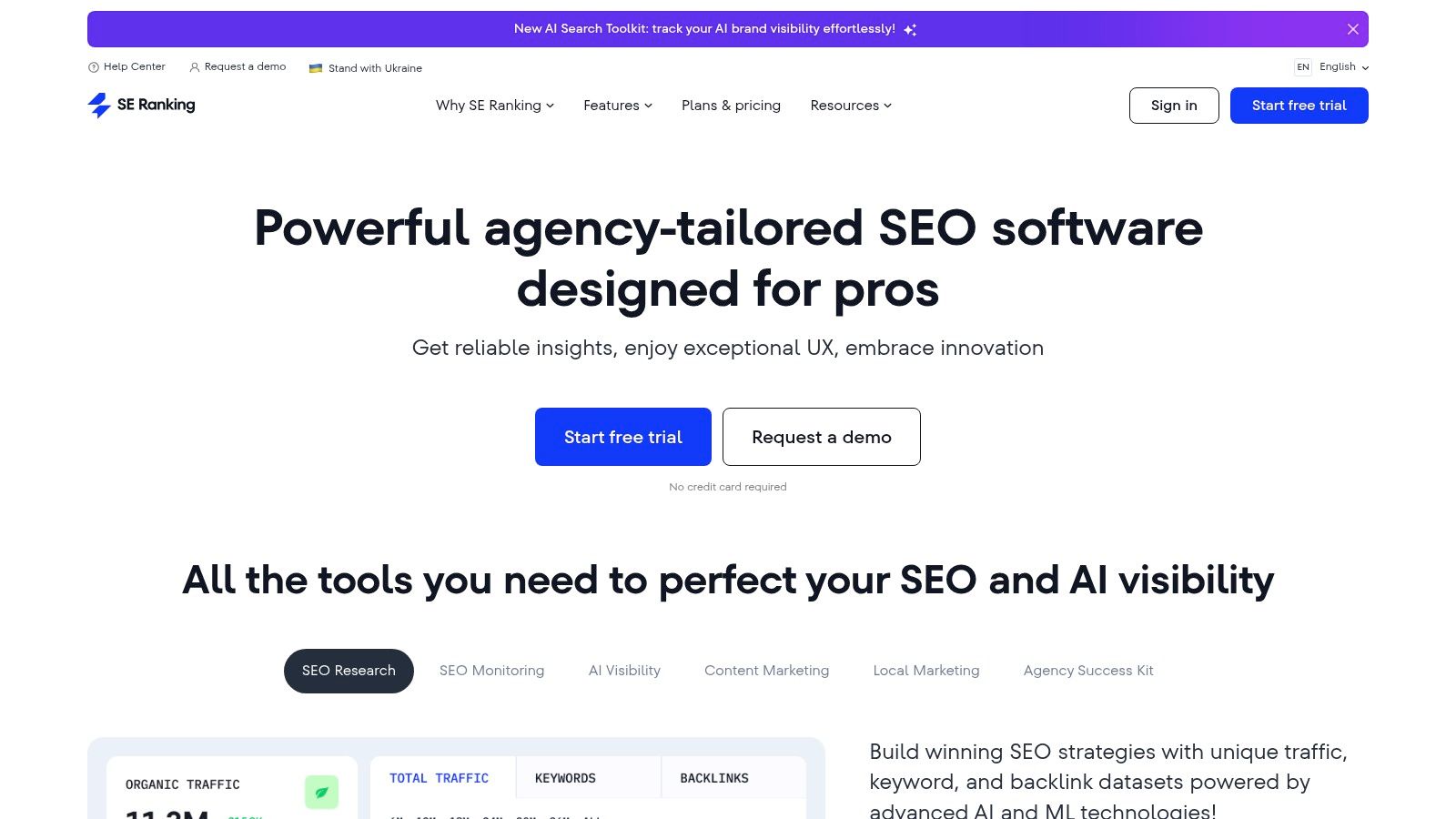
What makes SE Ranking a compelling choice is its accessibility and scalability. It delivers reliable data for keyword difficulty, search volume, and SERP features, making it a strong contender for anyone needing more than a free tool but not quite ready for the enterprise-level investment of its main rivals. Its user-friendly interface and detailed on-page SEO checker position it as one of the best keyword research software options for users who want to grow their capabilities alongside their business.
Quick Look at SE Ranking
| Feature | Highlights |
|---|---|
| Best For | SMBs, freelancers, and agencies seeking a cost-effective, full-suite tool. |
| Standout Metric | Share of Voice: Tracks your overall organic visibility against competitors. |
| Starting Price | $55/month for the Essential plan (with annual billing discounts). |
| User Experience | Clean and modern, with straightforward navigation and helpful data visualizations. |
Pros & Cons
Pros:
- Affordable Pricing: Offers a feature-rich platform at a significantly lower cost than top-tier competitors.
- Accurate Rank Tracking: Provides precise daily rank tracking updates for multiple locations and search engines.
- Comprehensive Toolset: Integrates keyword research, site audits, competitor analysis, and reporting in one place.
Cons:
- Smaller Database: Its keyword and backlink databases are still growing and may not be as deep as Ahrefs or Semrush in certain niches.
- Feature Gating: Some advanced functionalities, like API access, are reserved for higher-priced plans.
Website: https://seranking.com
10. Serpstat
Serpstat positions itself as an all-in-one SEO growth hacking tool, offering a comprehensive suite that spans keyword research, rank tracking, site auditing, and competitor analysis. It's a robust platform that provides a tremendous amount of data, making it a strong contender for users who need a multi-faceted tool without the premium price tag of some top-tier competitors. It excels in uncovering keyword variations and analyzing SERP features.
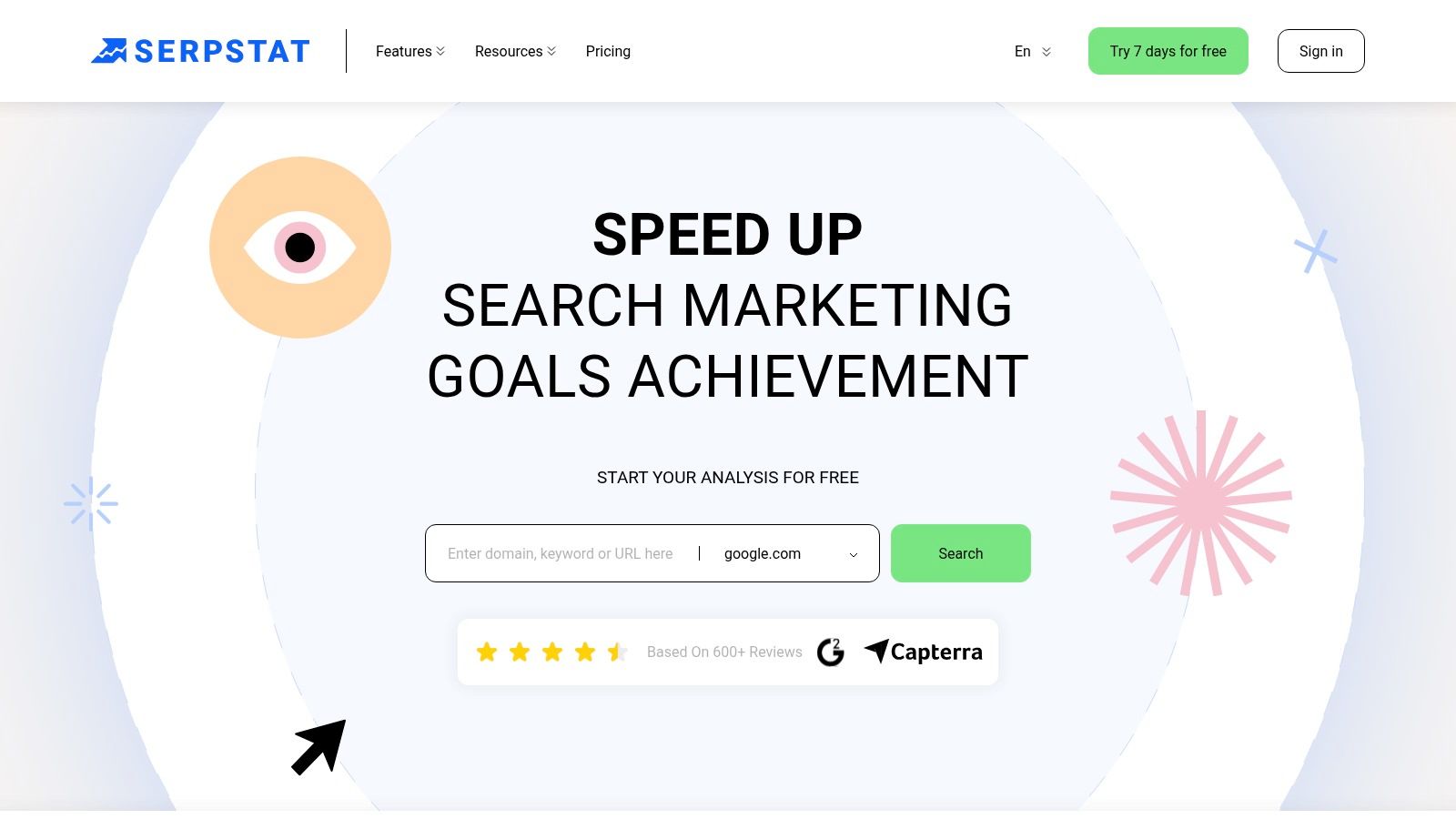
What makes Serpstat a unique choice is its blend of affordability and extensive features, particularly for agencies. With API access and white-label options available on higher-tier plans, it allows teams to build custom reports and dashboards. While its interface can feel dense at first, the depth of its "missing keywords" and competitor graph features provides actionable insights, positioning it as one of the best keyword research software options for those on a moderate budget.
Quick Look at Serpstat
| Feature | Highlights |
|---|---|
| Best For | Agencies, freelancers, and in-house teams looking for an affordable all-in-one tool. |
| Standout Metric | Keyword Difficulty: Provides a clear, actionable score to prioritize targets. |
| Starting Price | $50/month for the Lite plan. |
| User Experience | The interface is data-rich but can have a steeper learning curve for beginners. |
Pros & Cons
Pros:
- Competitive Pricing: Offers generous query limits and features for its price point.
- All-in-One Platform: Integrates keyword and domain analysis, rank tracking, and site audits effectively.
- Agency-Friendly: White-label and team collaboration features make it scalable for agency use.
Cons:
- Dense Interface: New users may find the sheer amount of data and options overwhelming.
- Backlink Data: Its backlink index is less comprehensive than industry leaders like Ahrefs or Semrush.
Website: https://serpstat.com
11. KeywordTool.io
KeywordTool.io is a master of suggestion, generating thousands of long-tail keyword ideas from a single seed term. It uses Google Autocomplete to pull its suggestions, giving you a direct line into what real users are actively searching for. Where it really shines is its ability to generate keywords for platforms beyond Google, including YouTube, Bing, Amazon, eBay, and even Instagram.
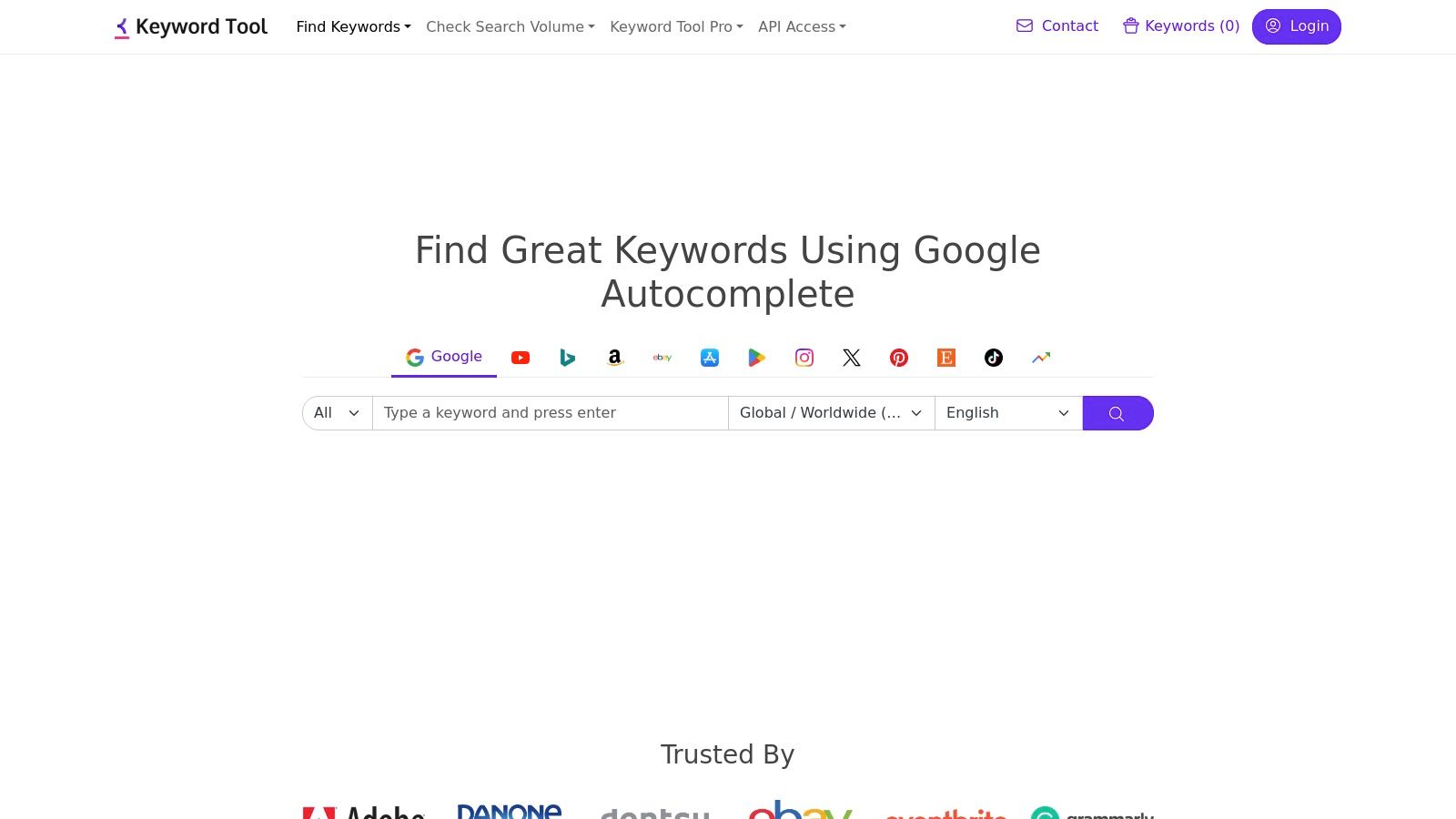
Unlike all-in-one SEO suites, this tool is laser-focused on one thing: keyword discovery. It’s incredibly simple to use and provides a massive volume of ideas perfect for content brainstorming, niche research, and PPC campaigns. While the free version is great for generating ideas, the Pro version unlocks crucial data like search volume, CPC, and competition, making it a contender for the best keyword research software for multi-channel marketers.
Quick Look at KeywordTool.io
| Feature | Highlights |
|---|---|
| Best For | E-commerce managers, content creators, and marketers needing long-tail ideas. |
| Standout Metric | Platform-Specific Suggestions: Generates keywords for Amazon, YouTube, and more. |
| Starting Price | $69/month for the Pro Basic plan. |
| User Experience | Extremely simple and fast. Just type a keyword and get results instantly. |
Pros & Cons
Pros:
- Excellent for Discovery: Uncovers hundreds of long-tail keywords you might miss with other tools.
- Multi-Platform Support: Essential for those with YouTube, Amazon, or social media strategies. To better organize these extensive lists, you should consider using dedicated keyword grouping tools.
- Risk-Free Guarantee: Offers a 30-day money-back guarantee, letting you test the Pro features confidently.
Cons:
- Data Behind Paywall: The most valuable metrics (volume, CPC) are only available in paid plans.
- Lacks Deep SERP Analysis: It's a discovery tool, not a full-fledged competitor or SERP analysis platform.
Website: https://keywordtool.io
12. Long Tail Pro
Long Tail Pro is a specialized tool that, as its name suggests, excels at finding low-competition, long-tail keywords. It was one of the original platforms built specifically for niche site builders and affiliate marketers, and it continues to serve that audience exceptionally well by simplifying the process of uncovering profitable keyword opportunities that larger, broader tools might overlook.
What makes Long Tail Pro a unique contender is its laser focus on keyword competitiveness. The platform provides a proprietary "KC" (Keyword Competitiveness) score that helps you quickly gauge how difficult it will be to rank for a term. This streamlined workflow is perfect for users who want to find viable keywords without getting lost in overwhelming data, making it one of the best keyword research software options for those prioritizing speed and simplicity.
Quick Look at Long Tail Pro
| Feature | Highlights |
|---|---|
| Best For | Affiliate marketers, niche site builders, and bloggers. |
| Standout Metric | Keyword Competitiveness (KC): A simple 0-100 score to find easy wins. |
| Starting Price | $59/month for the Pro plan (significant discounts on annual billing). |
| User Experience | The interface is straightforward and purpose-built for its core function. |
Pros & Cons
Pros:
- Purpose-built: Its entire workflow is optimized for finding and analyzing long-tail keywords.
- Affordable: More accessible for solopreneurs and small projects compared to full SEO suites.
- Helpful Training: Plans often include access to SEO bootcamps and training materials, adding extra value.
Cons:
- Limited Scope: It lacks the broad features of all-in-one platforms like competitor analysis or site audits.
- Smaller Dataset: Its keyword database is not as extensive as industry leaders like Ahrefs or Semrush.
Website: https://longtailpro.com
Keyword Research Software Comparison Overview
| Tool | Core Features/Capabilities | User Experience & Quality ★ | Value & Pricing 💰 | Target Audience 👥 | Unique Selling Points ✨ |
|---|---|---|---|---|---|
| 🏆 RankHub | AI-powered keyword & competitor research, dual modes, multi-site dashboard | ★★★★★ Very fast, AI-driven, intuitive | Pay-as-you-go credits, no subscriptions 💰 Flexible & scalable | Agencies, consultants, SMBs, enterprises 👥 | Auto business context analysis, 85% time saved, GDPR & SOC2 compliant ✨ |
| Ahrefs — Keywords Explorer | Large keyword DB, SERP history, rank tracking, backlinks | ★★★★☆ Trusted, fast interface | Premium pricing, add-ons for daily rank updates 💰 | SEO pros, agencies, enterprises 👥 | Deep metrics, strong workflows, API access ✨ |
| Semrush — Keyword Magic Tool | Comprehensive SEO/PPC platform, keyword clustering, multi-location tracking | ★★★★☆ Broad toolkit, mature reports | Per-user pricing, extra app fees 💰 | Agencies, in-house marketing teams 👥 | Full SEO+PPC integration, Looker Studio API ✨ |
| Moz Pro — Keyword Explorer | Keyword suggestions, SERP & link metrics, rank tracking | ★★★★☆ User-friendly, good basics | Subscription tiers, free trial 💰 | Beginners to mid-level SEOs 👥 | Educational resources, approachable UI ✨ |
| Google Ads — Keyword Planner | PPC focused keyword forecasting and bid planning | ★★★☆☆ Basic SEO metrics, PPC-centric | Free with Google Ads account 💰 | PPC advertisers, beginner SEOs 👥 | First-party Google data, geo filters ✨ |
| Ubersuggest | Keyword ideas, audits, rank tracking, AI writer | ★★★☆☆ Simple UI, beginner-friendly | Low-cost monthly & lifetime plans 💰 | Small businesses, novices 👥 | AI writing tools, lifetime pricing ✨ |
| Mangools — KWFinder | Keyword difficulty, SERP analysis, rank tracking | ★★★☆☆ Clean, simple interface | Bundle subscription 💰 | Freelancers, SMBs 👥 | All-in-one SEO bundle, browser extension ✨ |
| SpyFu | Competitor PPC/SEO keywords, historical ads | ★★★☆☆ Functional but dated UI | Competitive pricing 💰 | PPC teams, competitor research 👥 | Unlimited exports on Pro, sales leads ✨ |
| SE Ranking | Keyword research, rank tracking, audits | ★★★☆☆ Good AI insights, easy migration | SMB pricing tiers 💰 | SMBs, small teams 👥 | Share of Voice metric, daily updates ✨ |
| Serpstat | Keyword/site analysis, rank tracking, white-label | ★★★☆☆ Dense interface, flexible plans | Competitive pricing 💰 | Agencies, enterprises 👥 | White-label, team collaboration ✨ |
| KeywordTool.io | Long-tail keyword suggestions for multiple platforms | ★★★☆☆ Simple UI, fast exports | Paywall for full data, no trial 💰 | Marketplaces, social media marketers 👥 | Multi-platform keyword discovery ✨ |
| Long Tail Pro | Long-tail keyword research, difficulty scoring | ★★★☆☆ Focused but limited features | Affordable with annual plans 💰 | Affiliate marketers, niche sites 👥 | SEO bootcamps, niche specialization ✨ |
Making Your Final Pick: Which Tool Will You Choose?
And there you have it, a deep dive into the absolute best keyword research software available today. We've navigated the complex landscapes of SEO titans like Ahrefs and Semrush, explored the user-friendly interfaces of Mangools' KWFinder, and even uncovered the free, foundational power of Google's own Keyword Planner.
This journey wasn't just about listing features; it was about understanding the different philosophies behind each tool. The choice you make will fundamentally shape your SEO workflow, influencing how you discover opportunities, analyze competitors, and ultimately, connect with your audience.
So, How Do You Actually Choose?
Let's be real: the sheer number of options can feel overwhelming. To cut through the noise, you need to turn the focus back to your unique situation. Forget about finding the single "best" tool and instead concentrate on finding the best tool for you.
Here’s a simple framework to guide your decision:
- For the Data-Driven Enterprise or Agency: If you manage multiple large-scale projects and need the most comprehensive, granular data on the market, your decision likely comes down to Ahrefs or Semrush. Their all-in-one suites provide unparalleled depth for competitive analysis, backlink audits, and rank tracking, justifying their premium price tags with a mountain of actionable data.
- For the SMB or In-House Team: Your focus is on efficiency and ROI. You need powerful features without the enterprise-level complexity or cost. Tools like SE Ranking, Moz Pro, and Serpstat offer a fantastic balance, providing robust keyword and competitor data in a more accessible package.
- For the Solopreneur, Freelancer, or Vibe Coder: Budget and time are your most precious resources. You need something intuitive that delivers results without a steep learning curve. Mangools is a standout for its fantastic user experience, while Ubersuggest offers a generous free tier and affordable plans that are perfect for getting started.
- For the Innovator Focused on Speed and Automation: If your primary bottleneck is the sheer time it takes to sift through data and build content plans, a new breed of tool is your answer. RankHub is a game-changer here, using AI to automate the tedious parts of keyword research and content clustering, turning weeks of work into mere minutes.
Final Factors to Weigh Before You Commit
Before you pull out your credit card, take a moment to consider these final, crucial factors. The best keyword research software is the one you'll actually use consistently.
- Test the User Interface (UI): This is non-negotiable. If you dread logging into a platform because it’s clunky and confusing, you won’t use it effectively. Almost every tool on this list offers a free trial or a limited free version. Use them. Spend a few hours inside your top 2-3 contenders to see which one "clicks" with your brain.
- Assess Your True Needs: Are you just doing keyword research, or do you also need rank tracking, site audits, and backlink analysis? Be honest about what you'll actually use. Paying for an all-in-one suite when you only need a fraction of its features is a surefire way to burn through your budget.
- Consider Your Workflow: Do you prefer a manual, hands-on approach, or do you want a tool that automates the process and hands you a ready-made strategy? Your answer will point you toward either a traditional platform or a more modern, AI-powered solution.
Ultimately, the right software is more than just a data provider; it's a strategic partner. It’s the tool that empowers you to stop guessing and start making strategic, data-backed decisions that drive real, measurable growth. Choose wisely, implement thoughtfully, and get ready to watch your organic traffic soar.
Ready to skip the manual grunt work and get straight to a winning content strategy? RankHub leverages AI to automate your entire keyword research and clustering process, delivering a comprehensive content plan in minutes, not weeks. See why it’s becoming the go-to choice for smart marketers by trying RankHub today.
More from Our Blog
7 Content Writing Tools That Boost Your SEO Rankings
Discover the top 9 SEO content writing tools to automate drafting, optimization, and publishing. Boost rankings with AI-assisted workflows.
Read more →
Zoho Marketing Automation Explained: Is It Right for You?
Compare Zoho Marketing Automation vs HubSpot on pricing, features, ease of use, and automation depth. See which wins for small teams and solo founders.
Read more →
Looking for an SEO Company? Here Are Your Best Options
Compare top SEO companies, AI platforms, and agencies. Find the best fit for your budget, from $49/month tools to full-service retainers.
Read more →