
Keeping tabs on your keyword rankings is like checking the pulse of your SEO efforts. Without it, you're flying blind, guessing what’s working and what isn’t. But with dozens of platforms all claiming to be the best, how do you pick the right one? Are you an agency juggling multiple clients, a solopreneur on a tight budget, or an in-house team that needs deep, actionable data? The "best" tool is rarely a one-size-fits-all solution.
This guide cuts through the marketing fluff. We're diving deep into the top 11 keyword tracking software options for this year, giving you a no-nonsense breakdown of what really matters. We’ll go beyond generic feature lists and explore the nitty-gritty details, from daily ranking accuracy and local pack tracking to user interface quirks and integration capabilities. We'll give you an honest look at the pros, cons, and specific use cases for each platform, so you can find the perfect fit for your workflow and goals.
For each tool, we’ve included screenshots, direct links, and practical insights to help you visualize how it works in a real-world setting. Our goal is to help you make a choice that actually moves the needle on your search visibility and simplifies your reporting.
If you’re just starting your SEO journey and feel a bit overwhelmed, exploring a broader array of the best SEO tools for beginners can provide valuable foundational insights. But if you're ready to get serious about monitoring your performance, you're in the right place. Let’s find the perfect partner for your ranking goals.
1. Semrush
Semrush is far more than just a keyword tracking software; it's a full-blown SEO and digital marketing Swiss Army knife. While its toolkit is vast, its Position Tracking feature is a powerhouse that earns it the top spot. It delivers daily updates on your keyword rankings across different devices and locations, which is critical for dynamic campaigns where every 24 hours can make a difference.
What makes Semrush stand out is the sheer context it provides around your keyword data. You’re not just seeing if you went up or down; you’re seeing it alongside competitor rankings, SERP feature opportunities (like featured snippets or local packs), and overall visibility trends. This integrated approach means you can move from identifying a ranking drop to diagnosing the cause, whether it's a new competitor or a lost backlink, all within one ecosystem.
Key Info & Use Case
- Best For: SEO agencies, in-house marketing teams, and e-commerce managers who need an all-in-one solution. It’s ideal for users who manage multiple projects and require deep competitive insights alongside their own tracking.
- Pricing: Plans start at $129.95/month. The price reflects its comprehensive nature, so it's an investment.
- Pro Tip: Use the "Cannibalization" report within the Position Tracking tool. It helps you find pages on your site that are competing against each other for the same keyword, a common issue that can tank your rankings.
Pros:
- Extremely comprehensive data and reporting
- User-friendly interface despite its complexity
- Daily ranking updates are standard
Cons:
- Higher price point compared to single-purpose tools
- Can be overwhelming for true beginners
Check out Semrush here: https://www.semrush.com
2. Ahrefs
Ahrefs is a juggernaut in the SEO world, revered for its legendary backlink index, but its Rank Tracker is a top-tier piece of keyword tracking software in its own right. It provides clear, reliable data on your keyword performance across desktop and mobile, with updates available at different frequencies depending on your plan. You can easily track rankings for multiple countries per project, making it a strong choice for international SEO campaigns.
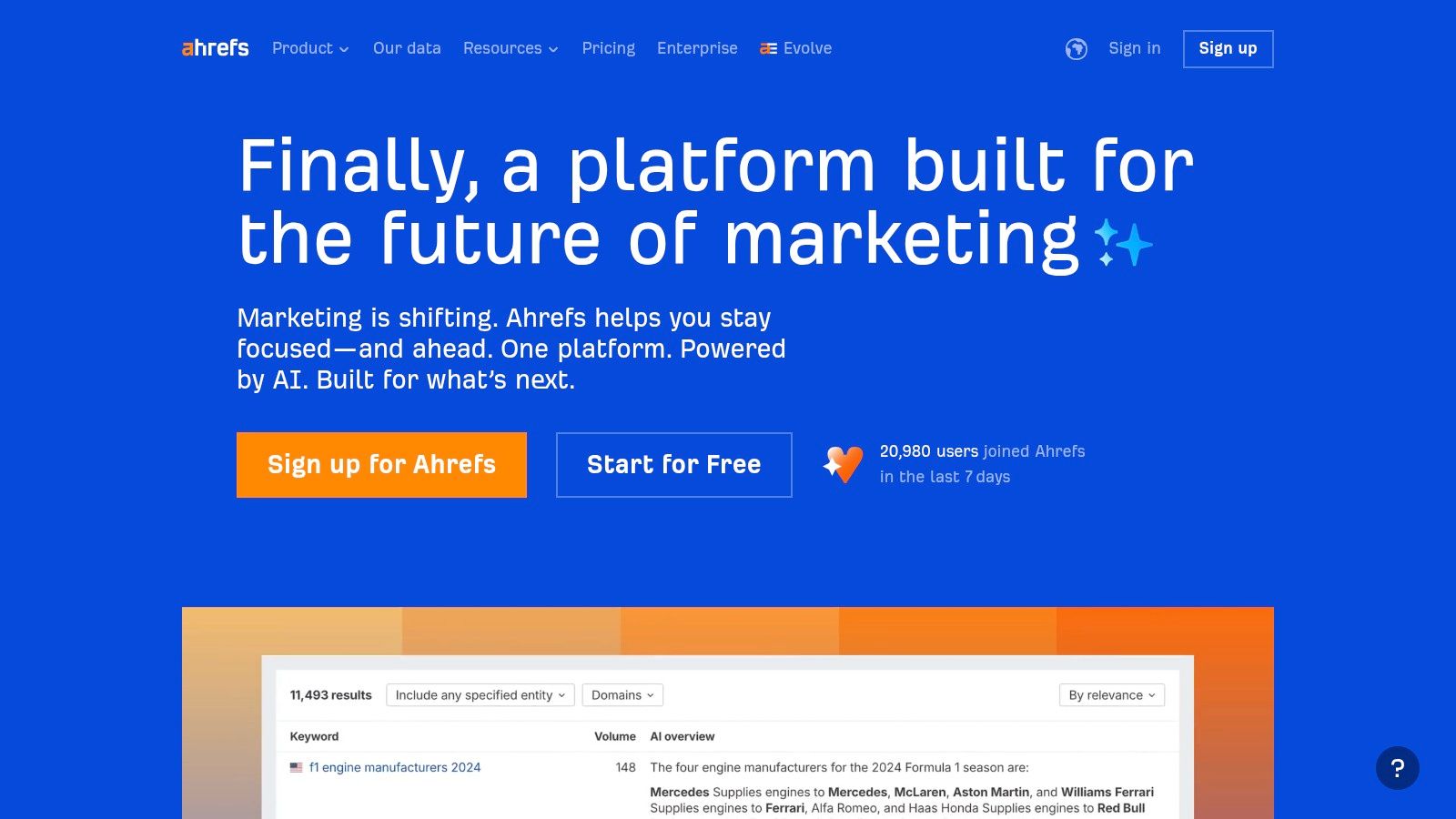
The real power of Ahrefs lies in its integration. When you see a ranking shift in the Rank Tracker, you are just one click away from its Site Explorer tool to investigate backlink changes or its Site Audit tool to find technical issues. This seamless workflow is what sets it apart; you can analyze SERP history, see who owns the featured snippet, and track your share of voice against competitors, all within a clean, intuitive interface. It’s less about just tracking a number and more about understanding the "why" behind your rank.
Key Info & Use Case
- Best For: SEO professionals, content marketers, and agencies who prioritize data accuracy and deep competitive analysis. It's perfect for those who live and breathe link building and want their rank tracker connected to the best backlink data available.
- Pricing: Plans start at $99/month. While it’s a premium tool, its data quality often justifies the cost for serious practitioners.
- Pro Tip: Use the "SERP features" filter in the Rank Tracker. This allows you to see not just your organic rank, but also whether you own valuable real estate like featured snippets, image packs, or "People Also Ask" boxes. Tracking these can be more valuable than a simple #1 position.
Pros:
- Incredibly accurate and extensive backlink and keyword data
- Beautiful and intuitive user interface
- Excellent competitor analysis and SERP history features
Cons:
- Premium pricing can be a barrier for small businesses
- Keyword update frequency is tied to the pricing tier
Check out Ahrefs here: https://ahrefs.com
3. Moz Pro
Moz Pro is a legendary name in the SEO world, and for good reason. It offers a well-rounded suite of tools with its Rank Tracker being a core component. It provides a reliable and clean way to monitor your keyword performance across major search engines, delivering weekly updates that are perfect for tracking long-term campaign progress and identifying steady trends.
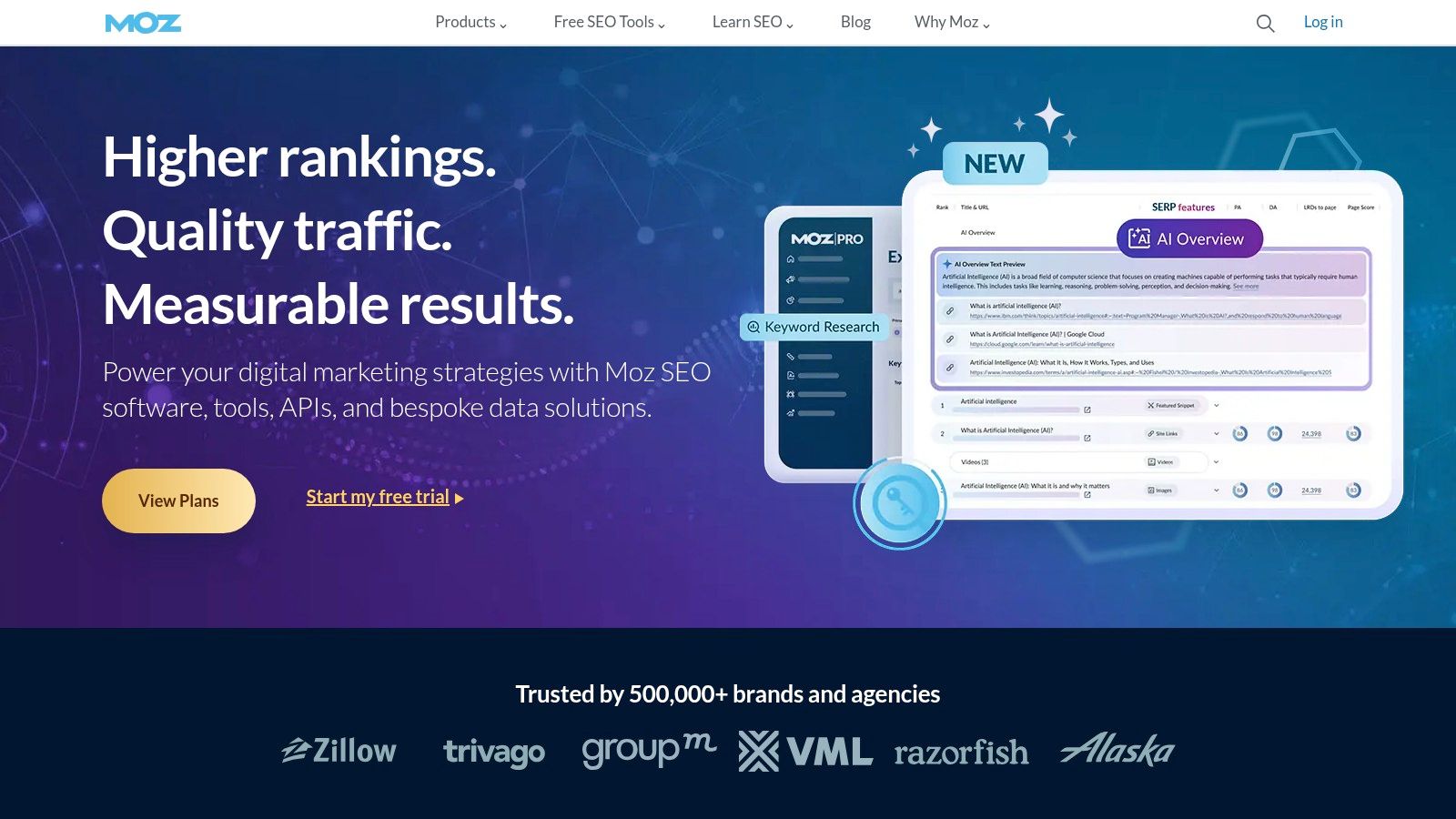
What sets Moz Pro apart is its emphasis on user-friendliness and actionable metrics like "Keyword Difficulty." While other tools offer similar data, Moz's presentation is often more intuitive for those who aren't deep in the weeds of SEO daily. The platform does a fantastic job of integrating its rank tracking data with its other powerful features, such as site audits and backlink analysis. This allows you to easily connect a drop in rankings to a potential on-page technical issue or a lost link, all within a single, cohesive interface.
Key Info & Use Case
- Best For: Small business owners, freelance marketers, and in-house teams who want a comprehensive yet accessible SEO toolkit without the overwhelming complexity of some enterprise-level platforms.
- Pricing: Plans start at $99/month, with a 30-day free trial available, making it a more accessible entry point.
- Pro Tip: Pay close attention to the SERP Analysis feature within the Rank Tracker. It shows you the top-ranking pages for your tracked keywords, which is invaluable for reverse-engineering competitor strategies and identifying content gaps.
Pros:
- Very user-friendly interface and clean data presentation
- Strong integration with its other trusted SEO tools
- Excellent educational resources and community support
Cons:
- Standard plans have weekly, not daily, ranking updates
- Data limits on lower-tier plans can be restrictive for larger sites
Check out Moz Pro here: https://moz.com
4. SpyFu
SpyFu built its reputation on being the ultimate competitor intelligence tool, and it brings that same laser focus to its keyword tracking. Instead of trying to be everything to everyone, SpyFu excels at one thing: showing you exactly what your competitors are doing, what they’re ranking for, and how you can beat them at their own game. Its approach to keyword tracking software is inherently competitive.
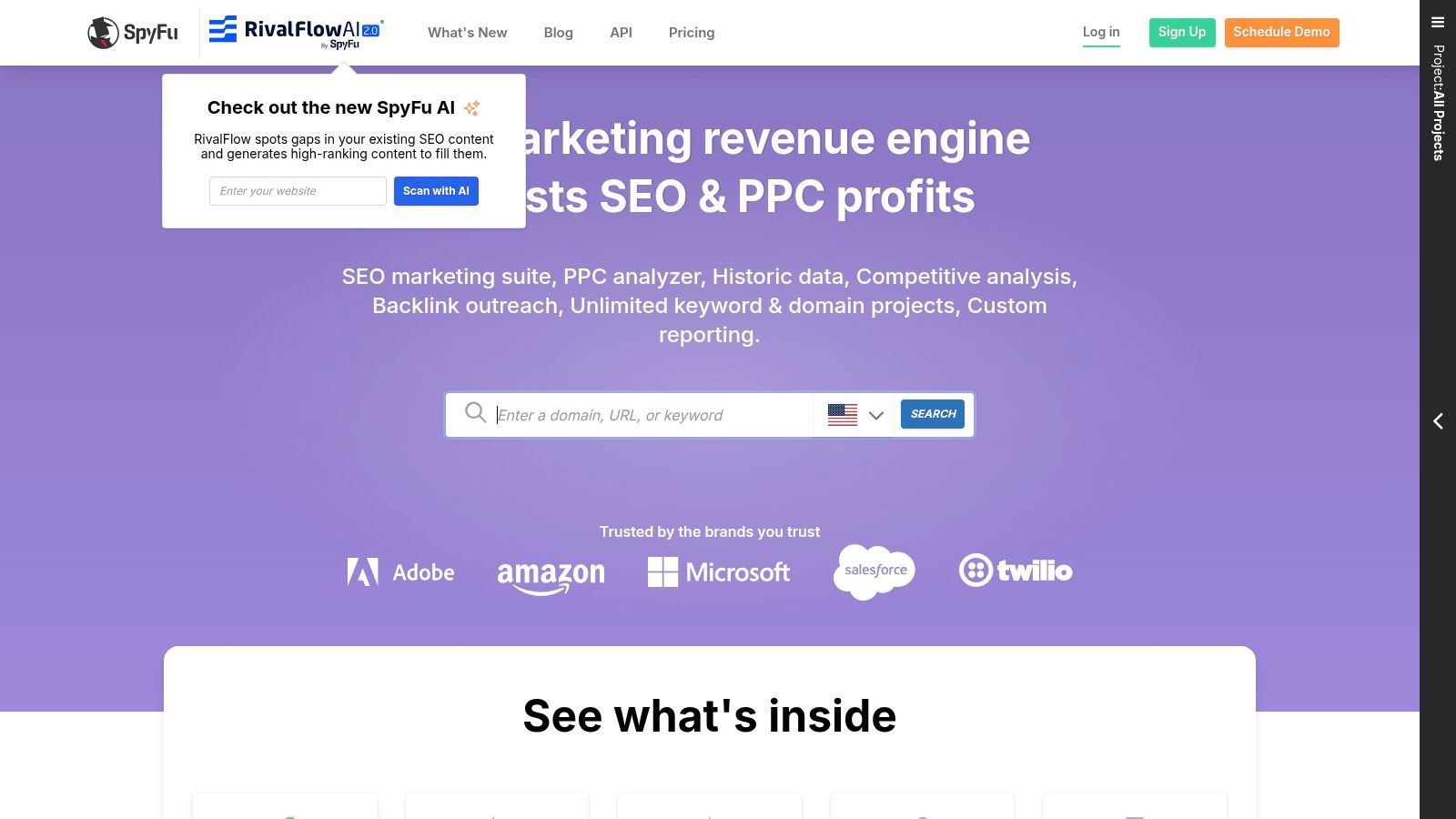
What makes SpyFu a unique player is its historical data. You can essentially travel back in time to see a competitor's ranking history for any given keyword. This context is invaluable for understanding if their success is a recent fluke or a long-term strategy you need to counter. It frames your rank tracking not just as a measure of your own performance, but as a direct response to the market landscape. For a deep dive into using these insights, you can learn more about how to conduct a thorough competitor analysis in SEO.
Key Info & Use Case
- Best For: Small businesses, freelancers, and marketers on a budget who are primarily focused on outranking a specific set of competitors. It's perfect for reverse-engineering successful strategies.
- Pricing: Plans start at an affordable $39/month, offering a low barrier to entry for powerful competitor data.
- Pro Tip: Use the "Kombat" feature. It allows you to enter your domain and two competitors' domains to see a Venn diagram of keywords. The "Weaknesses" section shows you keywords your competitors rank for but you don't, providing a ready-made content strategy.
Pros:
- Exceptional at competitor keyword analysis
- Very affordable pricing with unlimited search results
- Provides years of historical ranking data
Cons:
- Less comprehensive than all-in-one SEO platforms
- The user interface can feel a bit dated compared to newer tools
Check out SpyFu here: https://www.spyfu.com
5. SE Ranking
SE Ranking has carved out a powerful niche for itself by offering a robust, all-in-one SEO platform without the enterprise-level price tag. It's a fantastic choice for those who want comprehensive data but can't justify the budget for more expensive suites. Its Keyword Rank Tracker is precise, reliable, and provides daily updates, making it a highly effective piece of keyword tracking software for staying on top of your performance.
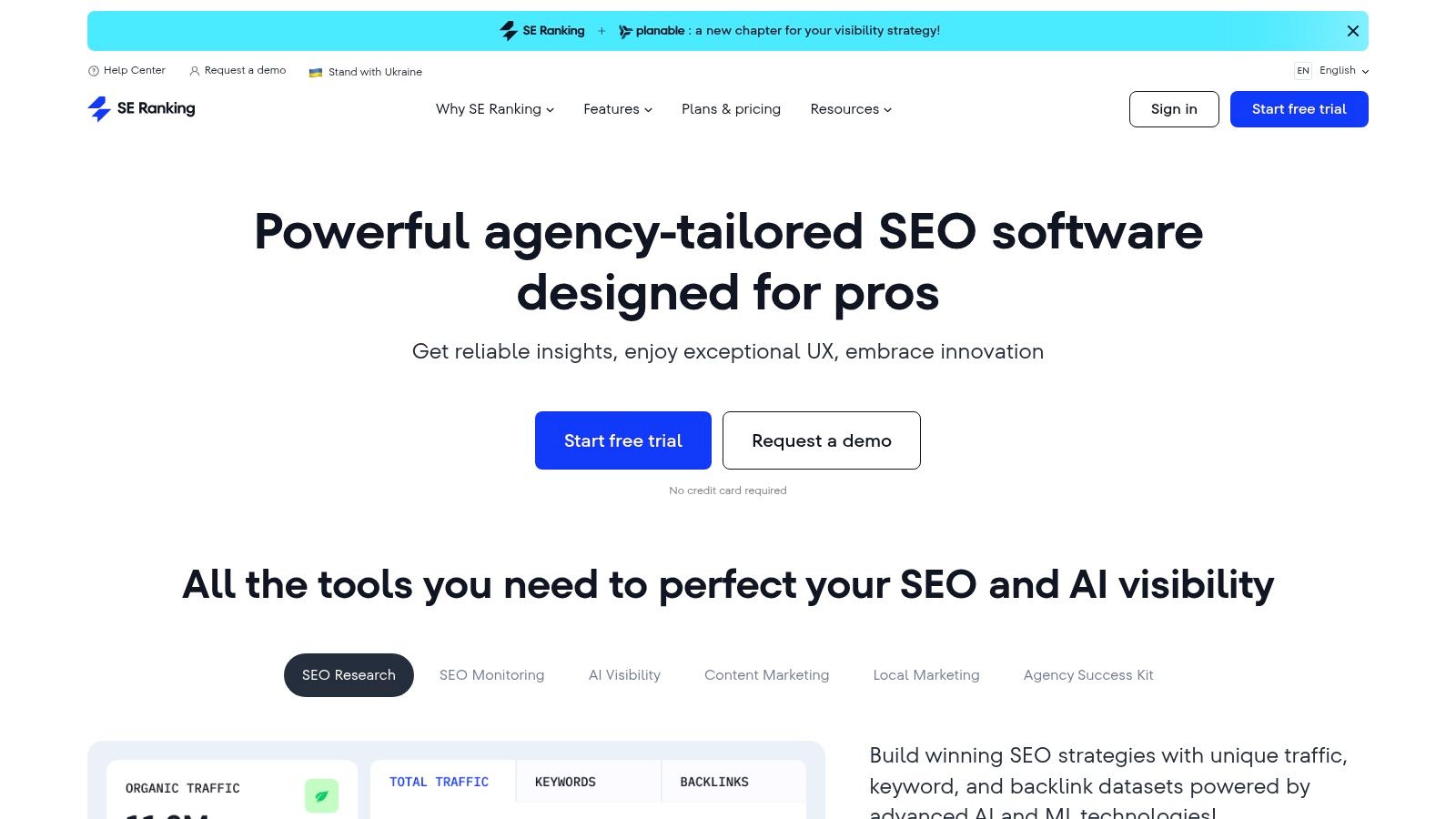
What truly makes SE Ranking a standout is its balance of affordability and functionality. You get the core features needed for a successful SEO campaign, including competitor analysis, site audits, and backlink monitoring, all wrapped in a clean, intuitive interface. It doesn't overwhelm you with features you may never use, instead focusing on delivering actionable insights that freelancers, small businesses, and growing agencies can immediately put to work.
Key Info & Use Case
- Best For: Freelancers, small to mid-sized businesses (SMBs), and SEO agencies looking for a cost-effective yet powerful all-in-one solution. It's perfect for users who need solid daily tracking and reporting capabilities on a tighter budget.
- Pricing: Plans are highly flexible and start around $55/month, based on the number of keywords tracked and the frequency of ranking updates.
- Pro Tip: Use the "Marketing Plan" feature. It’s a built-in SEO checklist that guides you through on-page and off-page tasks, making it an invaluable tool for beginners or for standardizing your workflow across different client projects.
Pros:
- Excellent value for the price
- Clean, user-friendly, and easy-to-navigate interface
- Comprehensive feature set that covers all SEO basics
Cons:
- Data updates can sometimes feel slightly slower than premium competitors
- Fewer third-party integrations compared to larger platforms
Check out SE Ranking here: https://seranking.com
6. AccuRanker
AccuRanker has carved out a niche for itself by being the "world's fastest" keyword rank tracker, and it lives up to the hype. While many all-in-one suites offer rank tracking as part of a larger package, AccuRanker’s sole focus is on providing incredibly fast, accurate, and on-demand keyword data. This makes it an invaluable tool for agencies and SEOs who need immediate feedback on their efforts, such as after a site update or during a high-stakes campaign launch.
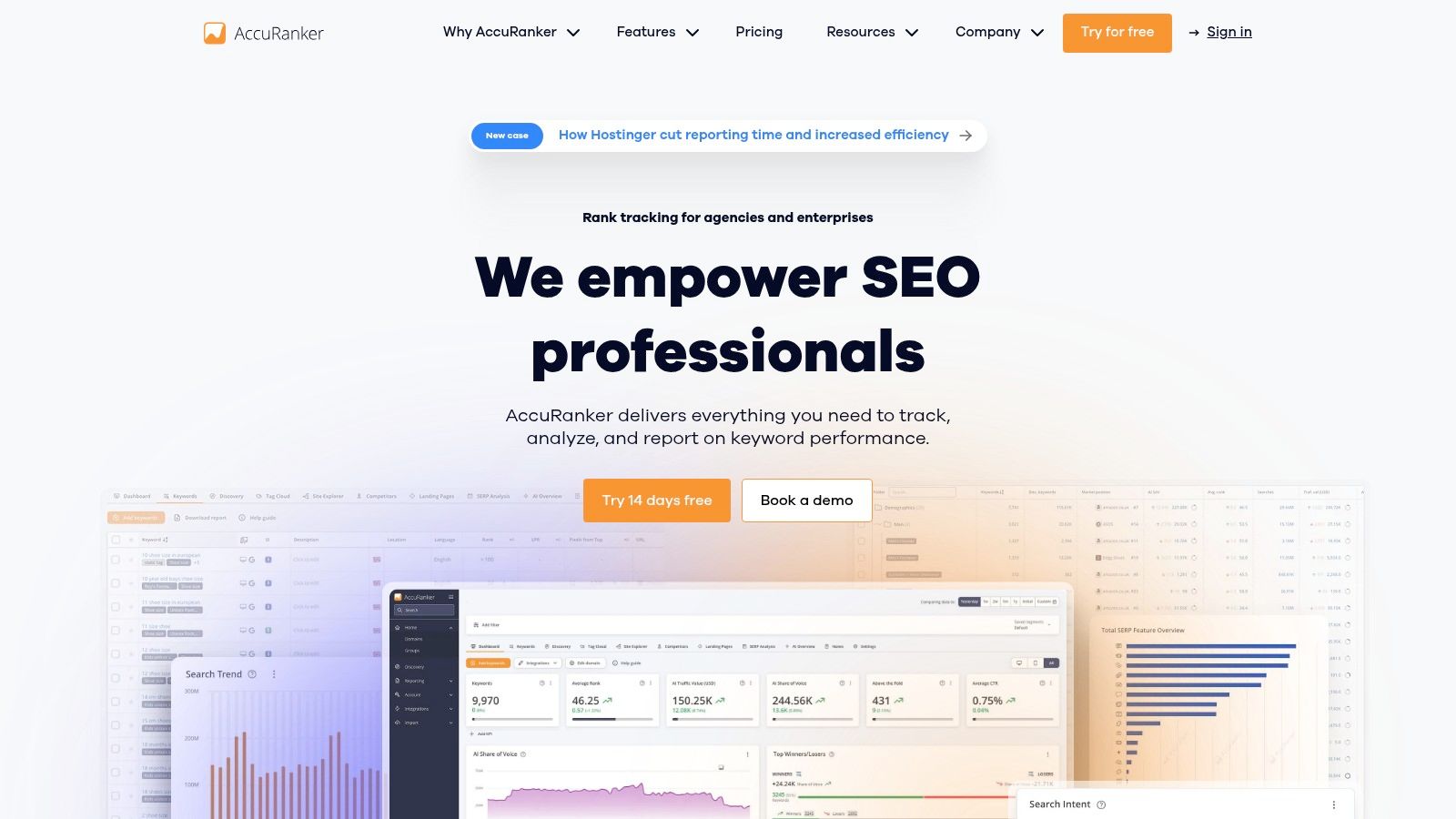
What truly sets AccuRanker apart is its "refresh" button. Instead of waiting for a scheduled daily update, you can request fresh ranking data for any keyword at any time and get results in seconds. This level of responsiveness is a game-changer for time-sensitive analysis. The platform also excels at historical SERP data, allowing you to see exactly how the search results page looked on any given day, complete with all SERP features. To get a deeper understanding of how to implement such tools, you can learn more about how to track keyword rankings.
Key Info & Use Case
- Best For: SEO agencies, consultants, and in-house teams who manage large keyword portfolios and require high-speed, accurate data without the fluff of a full SEO suite.
- Pricing: Plans start at $129/month for tracking 1,000 keywords. Pricing is based on keyword volume, making it scalable.
- Pro Tip: Use the "Share of Voice" metric to measure your overall market visibility against your competitors. It goes beyond simple rank to estimate the percentage of traffic you're capturing from your tracked keywords, giving you a more holistic view of your SEO performance.
Pros:
- Blazing-fast, on-demand ranking updates
- Clean, intuitive, and user-friendly interface
- Excellent for managing very large keyword lists
Cons:
- Lacks the broader SEO tools found in platforms like Semrush or Ahrefs
- Pricing can be high for small businesses or those with minimal keyword needs
Check out AccuRanker here: https://www.accuranker.com
7. Mangools (SERPWatcher)
Mangools positions itself as the user-friendly, design-focused alternative in the often-complex world of SEO. Its dedicated keyword tracking software, SERPWatcher, perfectly embodies this philosophy. It strips away the overwhelming dashboards of larger platforms and focuses on delivering core ranking data in a clean, visually intuitive way that beginners and solopreneurs can immediately understand and act upon.
What makes SERPWatcher a standout choice is its emphasis on a single, powerful metric: the Dominance Index. This is an aggregated score that represents your overall share of organic traffic based on your current keyword positions and their search volumes. Instead of getting lost in individual fluctuations, you can see your site's true market presence at a glance. It’s an elegant solution that simplifies reporting while still providing a meaningful measure of your SEO performance.
Key Info & Use Case
- Best For: Bloggers, freelancers, solopreneurs, and small businesses who need effective, no-fuss rank tracking without the enterprise-level price tag or complexity.
- Pricing: Plans bundle all Mangools tools and start at a very accessible $49/month ($29/month if billed annually).
- Pro Tip: Pay close attention to the "Biggest Changes" module on the main dashboard. It instantly highlights your most significant ranking gains and losses, allowing you to quickly prioritize your efforts on keywords that are either surging or in need of immediate attention.
Pros:
- Extremely intuitive and visually appealing interface
- Affordable pricing makes it great for smaller budgets
- Dominance Index metric simplifies performance overview
Cons:
- Fewer advanced features than all-in-one suites
- Limited historical data on lower-tier plans
Check out Mangools here: https://mangools.com
8. Nightwatch
Nightwatch positions itself as a forward-thinking SEO performance tracker, and its strength lies in its incredible flexibility and granularity. For those who feel constrained by other tools, Nightwatch offers a breath of fresh air with its highly customizable views and powerful segmentation. It’s a keyword tracking software designed for users who want to slice and dice their data in very specific ways, moving beyond basic national rankings.
The platform provides daily, accurate ranking data not just on a national level, but down to specific cities and zip codes, which is a massive advantage for local SEO campaigns. What truly sets it apart is the ability to visualize this data in beautiful, easy-to-digest graphs. You can overlay competitor data, search volume, and SERP feature presence to quickly spot correlations and trends without getting lost in a spreadsheet.
Key Info & Use Case
- Best For: Freelancers, small to mid-sized agencies, and businesses with a strong local focus. It's perfect for those who need precise local tracking and advanced data segmentation without the enterprise-level price tag.
- Pricing: Plans start at $32/month (billed annually), making it one of the most accessible and affordable options on this list.
- Pro Tip: Leverage the powerful filtering options to create custom segments. For example, create a segment for "non-branded keywords with high search intent" to monitor your most valuable commercial terms separately from your general brand visibility.
Pros:
- Excellent for precise local and mobile tracking
- Highly flexible and customizable data visualization
- Very competitive pricing for the features offered
Cons:
- Fewer integrations compared to larger all-in-one suites
- The depth of features can have a slight learning curve for new users
Check out Nightwatch here: https://nightwatch.io
9. Wincher
Wincher positions itself as the no-nonsense, accessible keyword tracking software for users who want accuracy without complexity. It's designed for small businesses, freelancers, and site owners who need to know where they stand without getting bogged down in an overwhelming suite of tools. The platform delivers reliable daily ranking updates, allowing you to react quickly to changes in the SERPs.
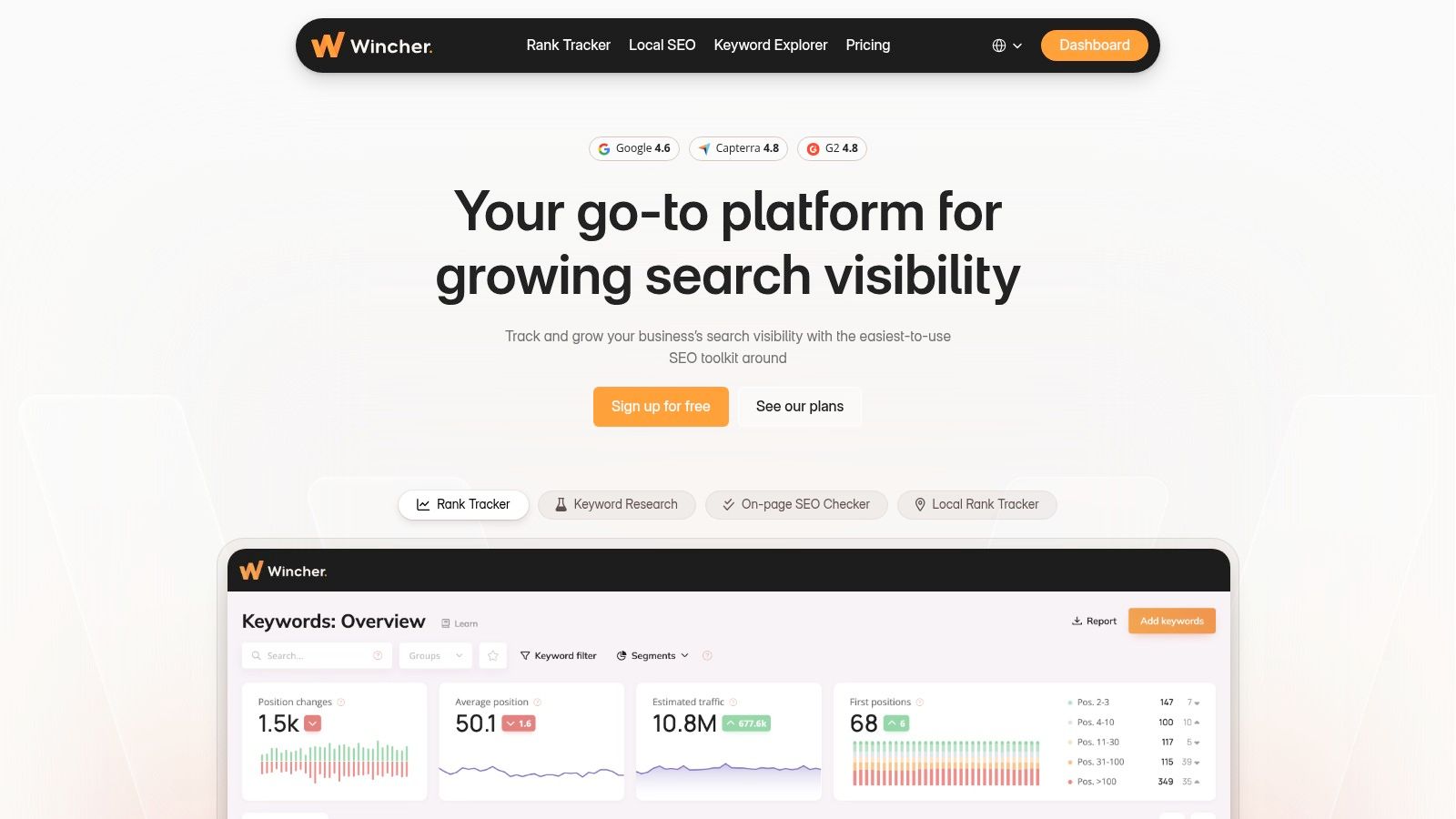
What makes Wincher a compelling choice is its laser focus on doing one thing exceptionally well: rank tracking. It offers a clean, intuitive interface that makes it easy to add projects, track keywords, and monitor competitors. While it may not have the expansive feature set of an all-in-one suite, it provides essential on-page SEO suggestions and straightforward reporting, making it a perfect entry-level tool or a cost-effective solution for those with specific tracking needs.
Key Info & Use Case
- Best For: Small business owners, solopreneurs, and bloggers who need an affordable, easy-to-use tool specifically for keyword rank tracking. It's also great for agencies needing a simple tool for smaller clients.
- Pricing: Plans are highly affordable, starting at just €39/month for tracking 1,000 keywords. This pricing model makes it one of the most budget-friendly options on the market.
- Pro Tip: Use the on-page SEO tool to get quick, actionable recommendations for your target pages. It analyzes factors like keyword density and meta tags, giving you a simple checklist to improve a page's optimization for its target keyword.
Pros:
- Extremely affordable pricing plans
- Very user-friendly and easy to set up
- Provides accurate daily rank tracking
Cons:
- Lacks the advanced features of larger SEO suites
- The interface can feel a bit basic for power users
Check out Wincher here: https://www.wincher.com
10. Keyword.com
Keyword.com strips away the complexity of larger SEO suites to focus on one thing: delivering exceptionally accurate, real-time keyword rank tracking. It’s built for professionals who need immediate, reliable data without the fluff. The platform’s main draw is its on-demand rank checker, which provides live SERP results whenever you need them, bypassing the standard 24-hour update cycle common in many other tools. This makes it invaluable for monitoring algorithm updates or the immediate impact of on-page changes.
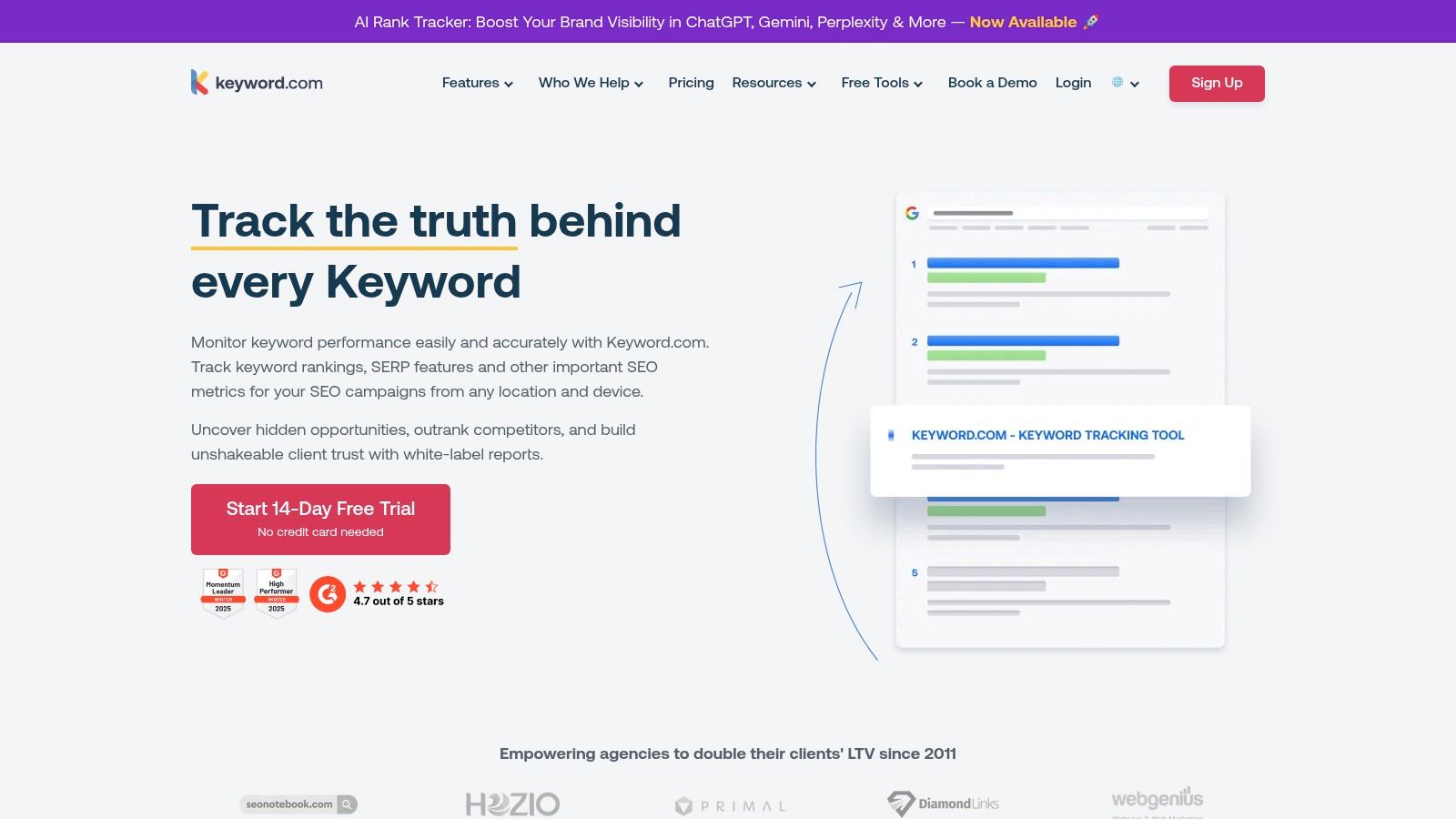
What sets Keyword.com apart is its dedication to simplicity and accuracy. While it includes essential competitor tracking and reporting features, its core mission is to be the most dependable source for your ranking data. The interface is clean and straightforward, ensuring you can find the information you need in seconds. This laser focus makes it a perfect supplementary tool for those already using a broader SEO platform but who demand the highest precision for their most important keywords.
Key Info & Use Case
- Best For: Agencies and SEO consultants who require high-accuracy, on-demand rank data for client reporting and campaign monitoring. It's also great for businesses that need to track high-stakes keywords in real-time.
- Pricing: Plans start at $24/month for tracking 100 keywords. The pricing scales with the number of keywords, making it flexible for various needs.
- Pro Tip: Use the white-label reporting feature to provide clients with clean, professional-looking ranking reports branded with your agency's logo. You can schedule these reports to be sent automatically, saving you valuable administrative time.
Pros:
- Accurate and real-time, on-demand data
- Extremely user-friendly and intuitive interface
- Excellent white-labeling and reporting options for agencies
Cons:
- Lacks the broader SEO tools found in all-in-one suites
- Can become pricey as you scale up the number of keywords tracked
Check out Keyword.com here: https://keyword.com
11. SERPstat
SERPstat positions itself as a "growth hacking tool" for SEO, and its keyword rank tracking capabilities live up to that promise. It's an all-in-one platform that combines keyword tracking with site audits and competitor analysis, but its strength lies in providing a robust feature set at a very accessible price point. This makes it a fantastic starting point for small businesses or freelancers who need comprehensive tools without the enterprise-level budget.
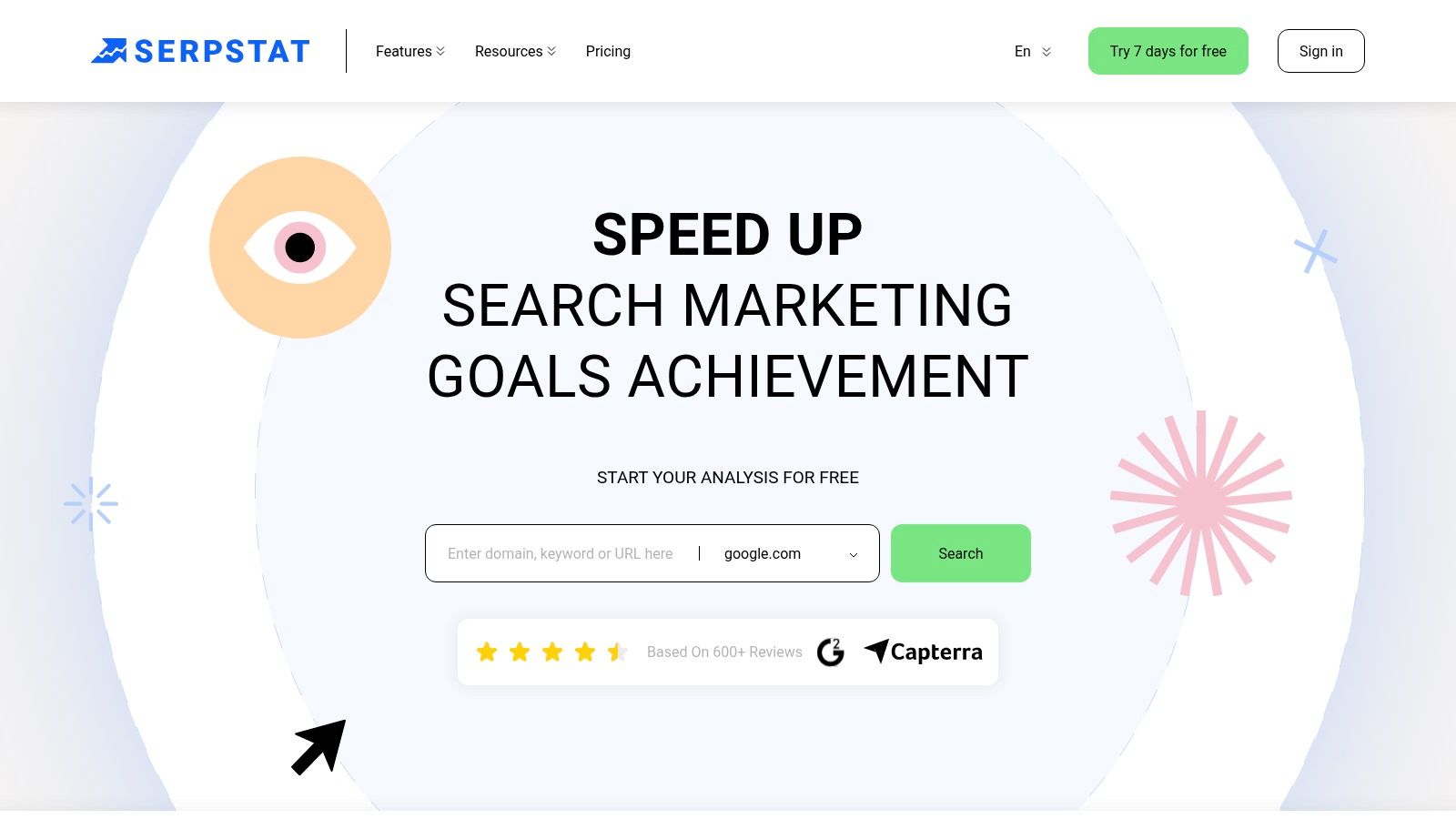
What makes SERPstat a strong contender is its focus on actionable data. Beyond just showing your position, it highlights keyword trends, SERP features you're winning or missing, and market share fluctuations for your tracked terms. The interface is clean and user-friendly, ensuring that even those new to using a dedicated keyword tracking software can get up and running quickly. It provides a solid balance of power and simplicity.
Key Info & Use Case
- Best For: Small businesses, freelance digital marketers, and agencies on a budget who need an all-in-one tool without breaking the bank. It’s also great for those just expanding into more advanced SEO.
- Pricing: Plans start at just $50/month when billed annually, making it one of the most affordable comprehensive platforms.
- Pro Tip: Dive into the "Missing Keywords" report within the Rank Tracking section. It compares your domain to your top competitors and shows you high-volume keywords they rank for that you don't. This is a goldmine for quick content gap analysis and finding new opportunities.
Pros:
- Very affordable pricing for an all-in-one suite
- Comprehensive feature set including backlink and site audits
- User-friendly and intuitive interface
Cons:
- Data limits on lower-tier plans can be restrictive
- Some advanced reports can have a slight learning curve
Check out SERPstat here: https://serpstat.com
Keyword Tracking Software Comparison of Top 11 Tools
| Tool | Core Features ★✨ | User Experience ★👥 | Value Proposition 💰 | Target Audience 👥 | Unique Selling Points 🏆✨ |
|---|---|---|---|---|---|
| Semrush | Keyword tracking, competitor & site audit | User-friendly, comprehensive reports ★ | Premium pricing 💰 | SEO pros, agencies, enterprises 👥 | Daily updates, content marketing tools ✨ |
| Ahrefs | Backlink & keyword rank tracking | Intuitive, accurate data ★ | Premium pricing 💰 | SEO specialists, agencies 👥 | Extensive backlink database 🏆 |
| Moz Pro | Keyword research, site audits | Friendly UI, strong community ★ | Mid to high cost 💰 | Small to enterprise users 👥 | Community support, custom reports ✨ |
| SpyFu | Competitor keyword & PPC analysis | Affordable, unlimited results 💰 | Budget-friendly pricing 💰 | Competitor-focused SEOs 👥 | Deep competitor insights 🏆 |
| SE Ranking | Daily rank tracking, site audits | User-friendly, robust features ★ | Affordable pricing 💰 | Small to medium businesses 👥 | All-in-one SEO solution ✨ |
| AccuRanker | On-demand rank updates, SERP history | Fast, scalable, user-friendly ★ | Higher pricing 💰 | Large projects, enterprises 👥 | Speed & accuracy focused 🏆 |
| Mangools | Daily rank tracking, backlink analysis | Affordable, intuitive, beginner friendly | Budget pricing 💰 | Beginners, small businesses 👥 | Simplicity & affordability ✨ |
| Nightwatch | Local/global tracking, site audits | Detailed segmentation, small biz friendly ★ | Affordable for SMBs 💰 | SMBs, enterprises needing granular data 👥 | Granular tracking options ✨ |
| Wincher | Daily tracking, on-page SEO tools | Easy to use, accurate data ★ | Very affordable pricing 💰 | Small to medium businesses 👥 | Straightforward and simple ✨ |
| Keyword.com | Real-time rank tracking, white-label reports | User-friendly, agency-focused ★ | Higher pricing for premium 💰 | Agencies, businesses of all sizes 👥 | Real-time data and white-labeling 🏆 |
| SERPstat | Keyword tracking, site audits, backlinks | User-friendly, comprehensive ★ | Affordable pricing 💰 | Businesses of all sizes 👥 | All-in-one SEO platform ✨ |
Making Your Final Pick: Which Tracker is Right for You?
Whew, that was a lot. We've journeyed through the all-in-one powerhouses, the laser-focused specialists, and the budget-friendly heroes of the keyword tracking software world. By now, you've seen that the "best" tool isn't a one-size-fits-all answer. It's the one that clicks with your workflow, respects your budget, and gives you the exact data you need to make smarter SEO decisions.
Let's distill this down. We saw giants like Semrush and Ahrefs that are more like entire SEO command centers than simple rank trackers. They’re perfect for agencies and in-house teams who need a deep, integrated toolkit for everything from competitive analysis to content ideation, with robust rank tracking as a core pillar.
Then we have the specialists. A tool like AccuRanker isn't trying to be your all-in-one solution. It has one job: to be the fastest, most accurate, on-demand rank tracker on the market. If you already have your research and auditing tools sorted and just need a best-in-class tracker that delivers data with military precision, this is your go-to.
A Quick Recap: Matching the Tool to the Job
Feeling a bit of decision paralysis? Let’s break it down by your most likely needs. Think of this as your cheat sheet for choosing the right keyword tracking software.
- For the All-in-One Power User (Agencies & Large Teams): Your best bets are Semrush and Ahrefs. Their comprehensive feature sets, from site audits to backlink analysis, justify the higher price tag by consolidating your tool stack. Moz Pro is another strong contender here, especially for those who value its proprietary metrics and educational resources.
- For the Value-Seeker (SMBs & Solopreneurs): You need maximum bang for your buck. SE Ranking and Mangools (SERPWatcher) are the clear winners. They offer surprisingly robust and accurate tracking, user-friendly interfaces, and pricing that won't make your accountant cry.
- For the Pure Tracking Specialist (Data-Driven SEOs): If your primary, non-negotiable need is speed and pinpoint accuracy, AccuRanker is unparalleled. Nightwatch also fits in this category, offering excellent local and mobile tracking capabilities with a flexible interface.
- For the Competitor-Obsessed Marketer: While many tools offer competitor analysis, SpyFu is built from the ground up for it. It gives you a historical look at your rivals' keyword performance that is hard to match, making it an incredible supplementary tool.
Key Factors to Guide Your Final Decision
Before you pull out your credit card for any of these platforms, run through this final checklist.
- Take Advantage of Free Trials: This is non-negotiable. An interface that looks great in screenshots might feel clunky in practice. Spend a week with your top two or three choices. Set up a project, import your most important keywords, and see which one feels right.
- Evaluate Update Frequency: How often do you really need your rankings checked? Daily updates are the standard, but some tools offer on-demand refreshes. For a fast-moving campaign, this is critical. For a slow-and-steady content site, weekly might be fine.
- Consider Scalability: The tool that's perfect for your 100 keywords today might crumble when you need to track 1,000 tomorrow. Look at the pricing tiers and feature sets for future growth. Don't pick a tool for where you are; pick one for where you want to be in a year.
- Check Integration Capabilities: Does the software play nice with other tools you rely on, like Google Data Studio, Analytics, or project management software? Seamless integration can save you hours of manual reporting work.
Ultimately, keyword tracking software is your GPS for the SERPs. It tells you where you are, how far you've come, and helps you chart a course to your destination. Choosing the right one is the first step toward turning raw ranking data into a winning SEO strategy. So, take a deep breath, trust your gut after a solid free trial, and get tracking.
Before you can track your keywords, you need to know you're targeting the right ones. RankHub complements your chosen keyword tracking software by using AI to automate your initial keyword research and build a strategic content plan. Stop guessing and start with a data-backed foundation by visiting RankHub to see how we can streamline your entire SEO content workflow.
More from Our Blog
7 Content Writing Tools That Boost Your SEO Rankings
Discover the top 9 SEO content writing tools to automate drafting, optimization, and publishing. Boost rankings with AI-assisted workflows.
Read more →
Zoho Marketing Automation Explained: Is It Right for You?
Compare Zoho Marketing Automation vs HubSpot on pricing, features, ease of use, and automation depth. See which wins for small teams and solo founders.
Read more →
Looking for an SEO Company? Here Are Your Best Options
Compare top SEO companies, AI platforms, and agencies. Find the best fit for your budget, from $49/month tools to full-service retainers.
Read more →