
Think of web competitor analysis as scouting the other team’s playbook before a big game. You're looking at their strategies, figuring out who their star players are, and finding weaknesses you can use to your advantage.
What Is Web Competitor Analysis Really
Imagine you’re a chef opening a new restaurant. You wouldn't just lock yourself in the kitchen and hope for the best, right? You'd go out and eat at the most popular spots in town. You’re not there to steal their recipes, but to understand what customers love, see what's missing from the local food scene, and find that perfect, unique angle for your own place.
Web competitor analysis is just that—but for the online world.
It's a methodical way of looking at what your rivals are doing online. This isn't about being sneaky; it's about being smart. By breaking down their digital presence piece by piece, you start to understand the "why" behind their wins and losses. This is the first step in building a strategy that doesn't just react to what's happening, but actually starts to influence it.
The Goal Beyond Simple Imitation
Let's be clear: the point isn't to create a carbon copy of your competitor. It’s all about gathering strategic intel. A solid analysis helps you answer the big questions that should be driving your entire marketing plan:
- Spotting Opportunities: What valuable keywords are they totally ignoring? What content topics have they missed?
- Avoiding Pitfalls: Where are they throwing money away on tactics that just aren't working?
- Sharpening Your Message: How can you position your brand to be the obvious choice in a noisy market?
- Setting Realistic Goals: What's actually achievable in your industry right now?
Knowing your competition's game plan is how you find your own unique space to dominate. This is especially true in modern SEO, where the stakes are incredibly high. The global SEO market was valued at around $82.3 billion in 2023 and is expected to soar to nearly $144 billion by 2030. That's a ton of money being spent because online competition is fierce. It's no surprise that 91% of digital marketers see positive results from their SEO work.
By analyzing the competition, you're not just looking at what they do, but understanding why it works (or doesn't). This insight turns reactive tactics into a proactive, data-driven strategy for growth.
A Framework for Smart Observation
At the end of the day, web competitor analysis gives you the context you need to stop guessing and start making informed decisions. It helps ensure every dollar and every hour you invest in marketing is geared for maximum impact. From their social media chatter to their technical SEO setup, every data point tells a part of the story about what your audience truly wants.
If you want to dive deeper into how this fits into the bigger picture, you can find great resources on competitor analysis for marketing. This knowledge is your map for navigating the digital world better than anyone else.
Why Analyzing Competitors Is a Game Changer

Honestly, investing time in a proper web competitor analysis is like swapping out an old paper map for a live GPS. It gives you a clear sense of direction and turns all that guesswork into a smart, data-backed plan.
The real magic isn't just seeing what your rivals are up to. It’s about truly understanding what their moves mean for your own brand. You get a clear lay of the land before you spend a single dollar, showing you what’s working, what’s a waste of time, and where the biggest opportunities are just sitting there, waiting for you.
Uncover Hidden Opportunities and Content Gaps
One of the best things to come out of competitor analysis is finding "content gaps." Think of these as topics your audience is actively searching for, but your competitors have somehow missed entirely. Finding these is like striking gold.
Let's say your top three competitors all have articles on "digital marketing tips," but not a single one has touched on "AI tools for small business marketing." A quick keyword check shows people are hungry for that topic. Boom. You've just found a huge chance to own a conversation and attract an audience without getting into a brawl over crowded keywords.
A good, deep dive will light up all sorts of opportunities:
- Underserved Audiences: You might spot specific groups of customers your competitors are either ignoring or just not connecting with.
- Keyword Gaps: Find those money-making keywords your competitors are ranking for that you haven't even thought to target yet.
- Format Gaps: Maybe everyone is writing blog posts, but nobody is making videos or hosting a podcast. If that's what your audience wants, it's a wide-open field.
Set Realistic Benchmarks for Success
Let's be real—without context, your goals are just numbers you pulled out of thin air. Is getting 1,000 monthly visitors a reason to celebrate or a sign you're lagging behind? Competitor analysis gives you the benchmarks you need to set goals that are both ambitious and achievable.
When you see what the established players in your space are pulling in, you can ground your own expectations in reality. If a top competitor gets 50,000 visitors a month and has 2,000 backlinks, you know you're not going to beat them by next Tuesday. It helps you build a smarter, phased-out strategy with short-term wins that build momentum toward that bigger vision.
Competitive analysis isn't about copying what others do. It's about understanding the market's standard for success so you can build a strategy to systematically exceed it.
Sharpen Your Unique Value Proposition
How can you stand out if you don't even know what you're up against? Seeing your competitors' strengths and weaknesses clearly is the first step to defining your own. This whole process forces you to nail down exactly what makes your brand, your product, or your service different—and better.
Our guide on competitor analysis in SEO digs into how you can use this data to really hone your market position.
By digging into their messaging, customer reviews, and feature lists, you start to see the cracks. Maybe their pricing is way too high, their support is notoriously slow, or their blog is just plain boring. Every single weakness they have is an opportunity for you to shine, making your unique value proposition that much stronger and more appealing to customers. At the end of the day, it's not just about getting more clicks; it's about winning over your audience for the long haul.
Choosing Your Competitor Analysis Toolkit
Any good project needs the right tools, and a solid web competitor analysis is no exception. The right software can turn a confusing mountain of data into a clear roadmap, showing you exactly where the opportunities are hiding. But with so many options out there, it’s easy to feel a bit lost.
Let's break it down. Think of your toolkit as having three main parts, each built to answer a different set of questions about your rivals. When you put them all together, you get a complete picture of their digital strategy—from big-picture traffic numbers all the way down to the specific words they’re using on social media.
SEO and Traffic Analysis Platforms
This is where you start—it’s the foundation of your entire analysis. These platforms are like getting a digital x-ray of a competitor's website, revealing the hidden structure that powers their online presence. They help you figure out how they get people to their site and what keeps them there.
The main goal here is to answer questions like:
- How much traffic are they really getting each month?
- Which keywords are sending them the most visitors from Google?
- Where are their most powerful backlinks coming from?
- Are they running Google Ads? And if so, which keywords are they betting on?
This kind of analysis lets you essentially reverse-engineer their search strategy and find the chinks in their armor. The image below gives you a quick snapshot of the high-level metrics you can pull.
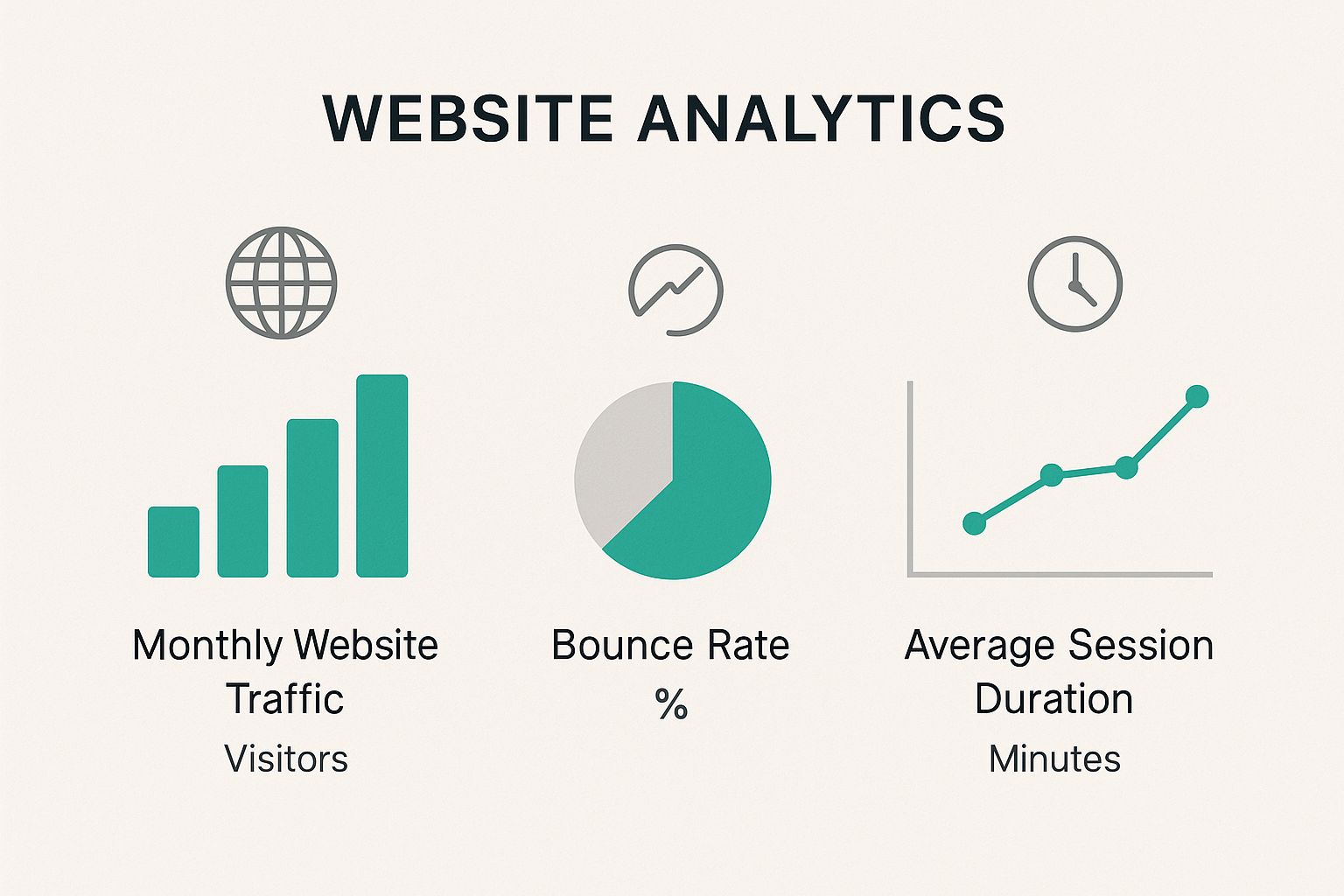
Looking at this, you can see that while Competitor A might be getting more visitors, Competitor B's visitors are sticking around longer and bouncing less. That could mean they have better content or a smoother website experience.
Content and Social Media Listening Tools
If SEO tools show you the how, content and social media platforms uncover the what and the why. These tools help you understand a brand's personality and how it actually connects with its audience. You get to move beyond the raw numbers and dig into things like sentiment, engagement, and brand voice.
With these tools in hand, you can find out:
- What topics are getting their audience excited?
- Which types of content (blogs, videos, etc.) are getting the most shares?
- What's the general vibe around their brand on social media?
- How are they handling customer comments and building their community?
A huge part of a successful analysis is picking the right gear, and checking out the best social media competitor analysis tools can give you a major leg up. These platforms help you get a feel for the qualitative side of your competitor's game, which is often where the real gold is.
Think of it this way: SEO tools tell you how many people showed up to the party. Social listening tools tell you if they had a good time, what they talked about, and if they’re planning to come back.
Finding the Right Platform for Your Needs
The market is packed with great options, each with its own specialty. Some are all-in-one powerhouses, while others focus on doing one thing really, really well. In fact, over 1.5 million marketers and SEO pros lean on data from these platforms to guide their decisions.
Here's a quick look at some of the most popular tools to give you an idea of what's out there.
Comparing Popular Competitor Analysis Tools
This table gives you a side-by-side look at some leading tools to help you choose the right one for your needs and budget.
| Tool Name | Primary Focus | Best For | Starting Price (Approx.) |
|---|---|---|---|
| SEMrush | All-in-One SEO & Marketing | Teams needing a comprehensive toolkit for SEO, PPC, and content. | $129/mo |
| Ahrefs | Backlink & Keyword Analysis | SEO professionals focused on deep link building and keyword research. | $99/mo |
| Similarweb | Traffic & Audience Insights | Market researchers and analysts wanting high-level traffic data. | Free (Limited) |
| SpyFu | PPC & Keyword "Spying" | Advertisers looking to uncover competitor ad strategies and keywords. | $39/mo |
Ultimately, the best toolkit is the one that fits your specific goals and budget. You don’t need every tool under the sun. A good strategy is to start with a solid SEO and traffic analysis platform, then layer in a social listening tool as needed to get a truly well-rounded view of the competitive landscape.
How to Analyze a Competitor's SEO Strategy
https://www.youtube.com/embed/I_6AVRGLXGA
Getting seen on Google is a massive battleground. If you want to win, you have to become a digital detective and uncover the secrets behind your competitors' search engine success. This isn't just about grabbing a list of their keywords; it's about understanding the entire story their SEO strategy is telling.
By piecing together the clues, you can map out their entire search footprint. This lets you pinpoint their strengths, exploit their weaknesses, and, most importantly, find those strategic openings you need to start climbing the search rankings yourself.
Uncovering Their Keyword Strategy
The first stop in any good SEO web competitor analysis is figuring out which keywords are actually sending traffic to your rivals. These are the exact search terms their customers are typing into Google, and they form the foundation of their entire organic search game plan.
You're looking for two main types of keywords here:
- "Money" Keywords: These are the high-intent phrases that lead directly to a sale, like "buy noise-cancelling headphones" or "emergency plumbing service."
- Informational Keywords: These are the terms people use when they're still in the research phase, like "how to choose the right headphones" or "what to do when a pipe bursts."
Looking at both gives you a full picture of their customer acquisition funnel. You can see how they attract people at every single stage of the buyer's journey, from the moment someone has a problem to the point they're ready to pull out their credit card.
Analyzing Backlink Profiles and Authority
Think of backlinks as votes of confidence from other websites. The more high-quality "votes" a site gets, the more Google sees it as a trusted authority. When you analyze a competitor’s backlink profile, you get to see exactly who is vouching for them and why.
Look for patterns. Are they getting links from major industry publications? Niche blogs? Local news sites? This not only spills the beans on their PR and outreach strategy but also hands you a ready-made list of potential link-building targets for your own campaigns.
The quality of backlinks is so much more important than the quantity. A single link from a highly respected industry source is worth way more than a hundred links from sketchy, low-quality directories.
And this stuff is critical. The fight for visibility is fierce. As of August 2025, Google holds a staggering 89.5% of the search engine market. But get this: around 94% of all web pages get zero organic traffic from Google, and only about 1% manage to get more than 11 clicks a month. It just goes to show how the top competitors often completely dominate the search results.
Performing a Content Gap Analysis
This is where you find the gold. A content gap analysis is all about identifying valuable keywords that your competitors are ranking for, but you aren't. It's a methodical way to find proven topics you can target to start stealing some of their traffic.
For example, you might find out your main competitor is sitting pretty on page one for "best project management software for remote teams"—a topic you haven't even touched. That's a huge signal that there's an audience for that content, giving you a data-backed reason to create your own (and better) version. If you want a deeper dive, you can learn more about how to perform a keyword gap analysis in our guide.
And remember, a truly thorough analysis doesn't stop at organic SEO. It pays to look at their paid strategies, too. A solid Google Ads competitor analysis can reveal even more about the keywords they value most. When you combine SEO and PPC data, you get the complete picture of how they bring in new customers online.
Peeking Behind the Curtain: Their Content and Social Media Game

If looking at SEO metrics is like checking under the hood of your competitor's car, then exploring their content and social media is like crashing their party. This is where you see their brand’s personality in full swing, moving beyond the raw numbers to figure out how they actually connect with people.
Think about it. Anyone can pull up traffic stats and see how many people are visiting a website. But the real magic is in understanding why they show up, what they love, and what makes them stick around. You’re essentially decoding the story your competitors are telling and seeing if the audience is buying it.
What's Their Content Playbook?
First things first, you need to get a feel for their whole content universe. Are they the go-to source for massive, in-depth articles, or are they cranking out quick, snappy video tutorials? The goal here is to map out their main content types and see where they're placing their bets.
As you dig in, keep an eye out for these key details:
- Go-To Formats: Are they all-in on blog posts? Or is their focus on videos, podcasts, or maybe even webinars? See where they’re clearly investing the most time and money.
- Core Topics: What subjects pop up again and again? This is a dead giveaway for the expertise they want to own in the market.
- Quality Check: Is their content just scratching the surface, or are they delivering real, meaty value that actually solves problems for their audience? Be honest here.
This quick audit will show you where they're strong. But more importantly, it'll highlight the gaps. If every single competitor is only writing long-form articles, maybe your ticket to standing out is a weekly podcast or a killer YouTube series.
Cracking Their Social Media Code
A competitor’s social media feed is a treasure trove of intel on how people really feel about them. The trick is to look right past the vanity metrics. Follower count means almost nothing on its own. A brand with 100,000 followers getting five likes per post is a ghost town compared to one with 10,000 dedicated fans who comment on and share everything.
When you're snooping on their social channels, try to answer these questions:
- What's their vibe? Are they cracking jokes and using memes, or are they more buttoned-up and professional? Or maybe they’re super friendly and supportive?
- Where do they hang out? Pinpoint the platforms where they're most active. That’s where they think their audience is.
- Are people actually listening? Check out the ratio of likes, comments, and shares to their follower count. Is it a real conversation, or are they just shouting into the void?
- How do they talk to people? Pay close attention to how they reply to comments—the good, the bad, and the ugly. This tells you everything about their customer service and how much they care about their community.
Looking at a competitor’s social media isn’t just about counting likes. It’s about sensing the room. You’re trying to gauge the overall feeling the audience has for their brand. This is the blueprint for building a more authentic and loved community of your own.
When you put the content and social media puzzle pieces together, you get a full picture of how your rivals are trying to win hearts and minds. You’ll see what’s working, what’s bombing, and what the audience is secretly wishing for. This is your roadmap for finding a unique voice, creating content that truly connects, and building a community that blows theirs out of the water.
Putting Your Competitor Insights Into Action
Alright, so you’ve done the digging. You’ve gathered a ton of data on your competition. Honestly, that’s the easy part. The real work in any web competitor analysis is figuring out what to do with that mountain of information to build a marketing plan that actually works.
It’s one thing to know your rival runs a 6-minute mile; it’s another thing entirely to create a training plan to beat them. You've peeked behind their curtain, seen their SEO tricks, their content strategy, and how they talk to their audience. Now what? It's time to connect the dots and decide where to focus your energy first.
Organizing Your Findings with a SWOT Framework
One of the best ways to get your head around all this data is to use a classic SWOT analysis. It’s simple but incredibly effective. SWOT stands for Strengths, Weaknesses, Opportunities, and Threats. Dropping your findings into these four buckets helps you see the bigger picture instantly.
Here’s how to think about it:
- Strengths (Internal): What are you already knocking out of the park? Maybe your social media engagement is off the charts, or your website is lightning-fast. These are your existing advantages.
- Weaknesses (Internal): Let’s be real—where are you lagging? Maybe your backlink profile is looking a little thin, or you haven’t published a new blog post in months.
- Opportunities (External): What did you find that nobody else is capitalizing on? This could be a juicy keyword with high search volume that your competitors are ignoring or a new content format your audience is craving.
- Threats (External): What are your competitors doing that could seriously mess with your business? This might be their huge ad spend or the fact they own the top spot for every important keyword.
Using a SWOT framework transforms a chaotic spreadsheet into a clear, strategic map, making it so much easier to figure out your next move.
From Analysis to Actionable Steps
Once your SWOT is filled out, you can start building a real plan. The goal is simple: lean into your strengths, fix your weaknesses, jump on the opportunities, and build a defense against the threats. Every insight should inspire a specific, measurable task.
For instance, your analysis might point you toward actions like these:
- Launch a Targeted Content Campaign: You found a keyword cluster that’s wide open (an Opportunity). Your move? Create a series of killer blog posts or videos to own that topic.
- Overhaul Your Landing Pages: Competitors are converting visitors better because their user experience is seamless (a Threat). Your priority becomes redesigning your key pages to be just as good, if not better.
- Start a Link-Building Initiative: Your backlink profile is weak (a Weakness). The clear next step is to launch a smart outreach campaign to earn links from respected sites in your niche.
The point of a web competitor analysis isn't to create a fancy report that gathers dust. It’s to trigger a response. Every single data point should lead to an action that makes you stronger.
Ultimately, this whole process shifts you from playing defense to playing offense. You’ll be making moves based on hard evidence, not just gut feelings. For a deeper dive into this entire process, check out our complete guide on a full competitor website analysis. By turning these insights into action, you stop just reacting to what everyone else is doing and start shaping the market in your favor.
Frequently Asked Questions

Even after laying out the whole process, you've probably got a few questions buzzing around your head about the finer points of web competitor analysis. Don't worry, that's normal.
This section tackles the most common questions we get, with quick, no-fluff answers. The idea is to clear up any lingering confusion so you can jump in and get started.
How Often Should I Analyze My Competitors?
There isn't a single "right" answer here, but thinking of it as an ongoing routine rather than a one-off task is key.
A deep-dive analysis every quarter is a great starting point for most businesses. That’s enough time to see meaningful shifts in their SEO, content, or social media game. But you don't want to be caught off guard, so I also recommend lighter, monthly check-ins. A quick monthly peek at their top keywords or new ad campaigns keeps you nimble and ready to react.
Which Metrics Are Most Important to Track?
It’s incredibly easy to drown in data. The trick is to focus on the numbers that tell you what's actually working for them.
If you only track four things, make them these:
- Organic Search Traffic: How much attention are they getting from Google?
- Top Organic Keywords: Which search terms are bringing them their best customers?
- Backlink Profile Growth: Are they actively building authority and getting good press?
- Social Media Engagement Rate: Is their audience just following, or are they actually listening?
Sticking to these core metrics helps you avoid "analysis paralysis." They give you a clean, high-level picture of what your competitors are prioritizing and how well it's paying off.
How Do I Identify My True Online Competitors?
This is a big one. The competitor you worry about down the street might not be the one you're fighting for clicks online. Your real digital competitors are the ones ranking for the keywords you want.
Go to Google and search for your top 10-15 most important keywords—the ones that make you money. The names you see popping up again and again on the first page? Those are your primary online competitors. You’re in a direct battle with them for your audience’s attention, even if you’ve never heard of them before. Tools like SEMrush or Ahrefs can also crunch the numbers and show you exactly who you share the most keywords with.
Can I Do This Without Expensive Tools?
You absolutely can. While premium tools are fantastic time-savers that offer incredible depth, you can get a surprisingly long way with free options if you're on a tight budget.
A manual web competitor analysis just requires a bit more elbow grease. You can use Google itself to see what the search results look like, browse competitor websites to see what they're publishing, and check their social media feeds by hand. Free tools like Google Alerts can keep an eye on their brand mentions, and browser extensions like MozBar give you a quick snapshot of on-page SEO data. The process is the same, it just takes more hands-on work.
Ready to stop guessing and start winning? RankHub uses AI to automate your competitor analysis, uncovering high-value keyword opportunities and content gaps in under a minute. Get the data you need to outrank the competition without the complexity. Start your analysis today at https://www.rankhub.ai.
More from Our Blog
7 Content Writing Tools That Boost Your SEO Rankings
Discover the top 9 SEO content writing tools to automate drafting, optimization, and publishing. Boost rankings with AI-assisted workflows.
Read more →
Zoho Marketing Automation Explained: Is It Right for You?
Compare Zoho Marketing Automation vs HubSpot on pricing, features, ease of use, and automation depth. See which wins for small teams and solo founders.
Read more →
Looking for an SEO Company? Here Are Your Best Options
Compare top SEO companies, AI platforms, and agencies. Find the best fit for your budget, from $49/month tools to full-service retainers.
Read more →